
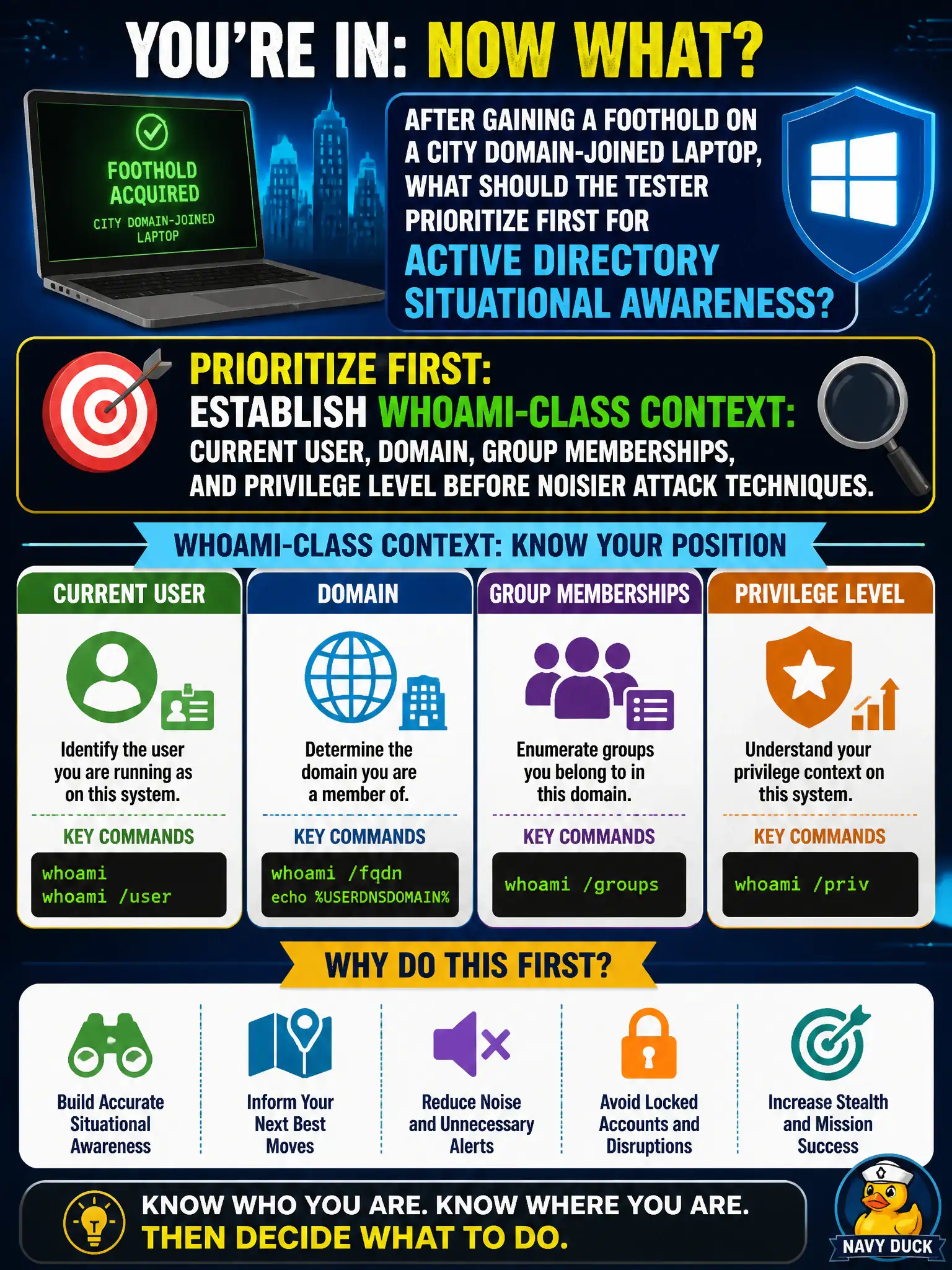
After gaining a foothold on a city domain-joined laptop, what should the tester prioritize first for Active Directory situational awareness?
Select an answer to reveal the explanation.
Short Explanation
Before you start swinging tools, look at the badge you are wearing. Who are you, which domain, which groups, how privileged? That quick situational check keeps the next moves purposeful instead of loud and random.
Full Explanation
After gaining a foothold on a city domain-joined laptop, the tester should prioritize establishing whoami-class context: current user, domain, group memberships, and privilege level before noisier attack techniques. Immediately deploying every AD attack framework before knowing identity context creates noise without direction. Formatting the laptop’s local disk to force a cleaner domain rejoin is destructive and unauthorized. Skipping identity context to begin forest-wide password spraying by default ignores least-impact sequencing and RoE rate limits. Exam caveat: situational awareness precedes attack-tool fireworks in professional AD work. Operational check: capture whoami/id-class output, note privileged group hits, align next techniques to that context and RoE, and only then escalate to louder enumeration or attack themes. In municipal operations, record the rationale in the engagement notes so future testers and city defenders understand which approach was chosen and which failure modes the rejected options would create for civic services. Re-validate the same judgment after the next change window so the control still holds under the city’s current tooling, identity posture, and RoE amendments.