
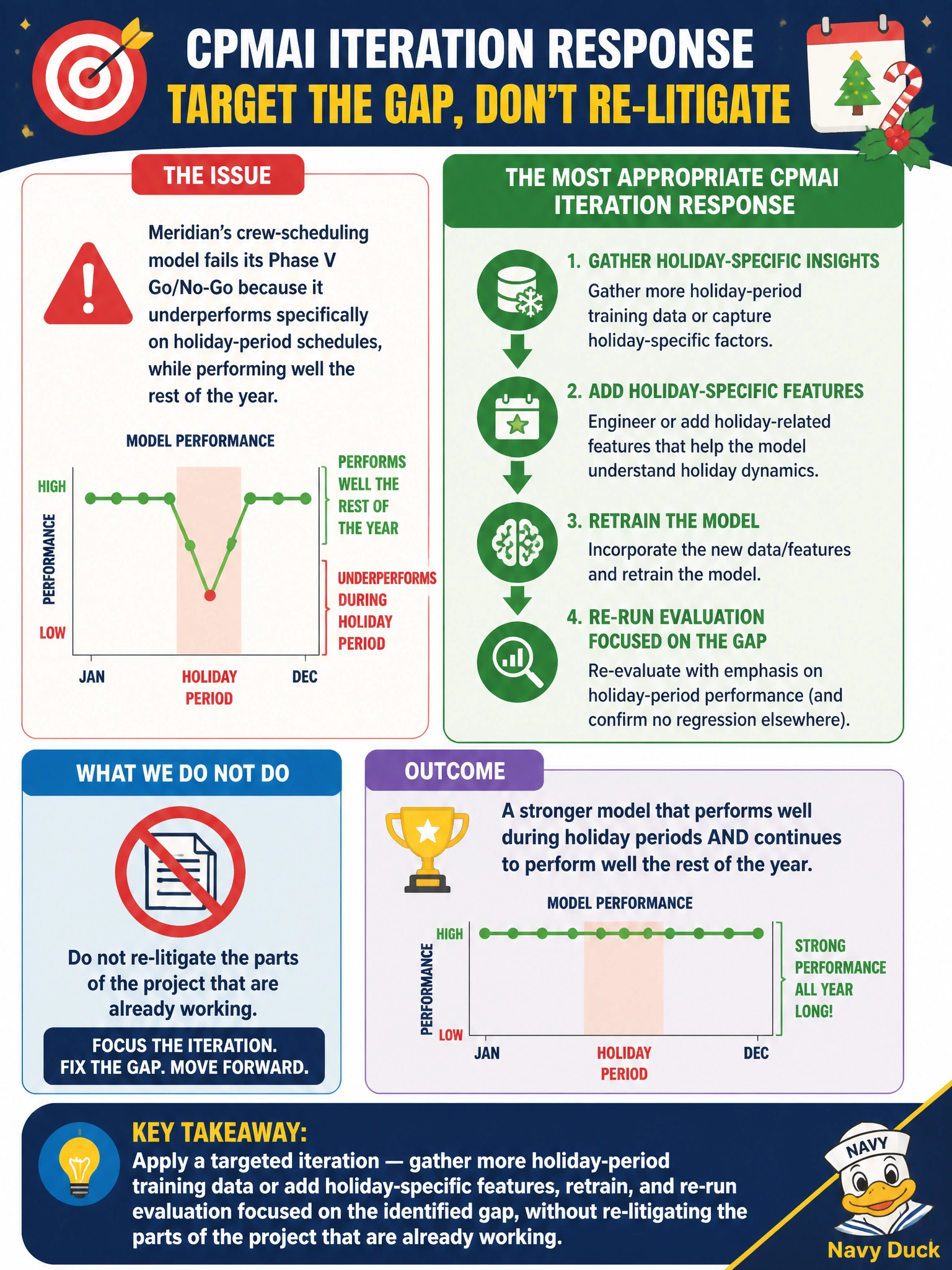
Meridian's crew-scheduling model fails its Phase V Go/No-Go because it underperforms specifically on holiday-period schedules, while performing well the rest of the year. What is the most appropriate CPMAI iteration response?
Select an answer to reveal the explanation.
Short Explanation
A specific, narrow failure gets a specific, narrow fix. The model's fine most of the year — just feed it more holiday data and retest that slice, don't blow up everything that's already working.
Full Explanation
CPMAI's model iteration process is meant to be targeted and proportional to the specific finding, not a trigger for a full project restart. A Go/No-Go failure isolated to holiday-period performance points to a specific, addressable gap — likely insufficient holiday-period training data or missing features that capture holiday-specific scheduling patterns (extra flights, different crew availability, higher disruption risk) — so the appropriate response is a targeted iteration: gather more relevant data or features, retrain, and re-run evaluation focused on that gap, leaving the well-performing rest of the model alone. Restarting from Business Understanding is a wild overcorrection to a narrow, specific technical gap and wastes the substantial work already validated for the rest of the year. Abandoning the initiative permanently after one Go/No-Go failure ignores that this is exactly the kind of iterable finding CPMAI's process is designed to handle, not a signal the whole use case is unworkable. Quietly deploying a known-flawed model and disabling it undocumented during the exact period it's known to fail is a serious governance and transparency failure — it hides a known gap from stakeholders and risks real scheduling harm during the airline's highest-traffic, highest-stakes period. The exam point: iteration scope should match the finding's scope — narrow problem, narrow, targeted fix.