
Legal counsel reasonably expects a former employee to file a lawsuit about their termination. The company's retention schedule will automatically delete that employee's email and HR records next week. What should the company do?
Select an answer to reveal the explanation.
Short Explanation
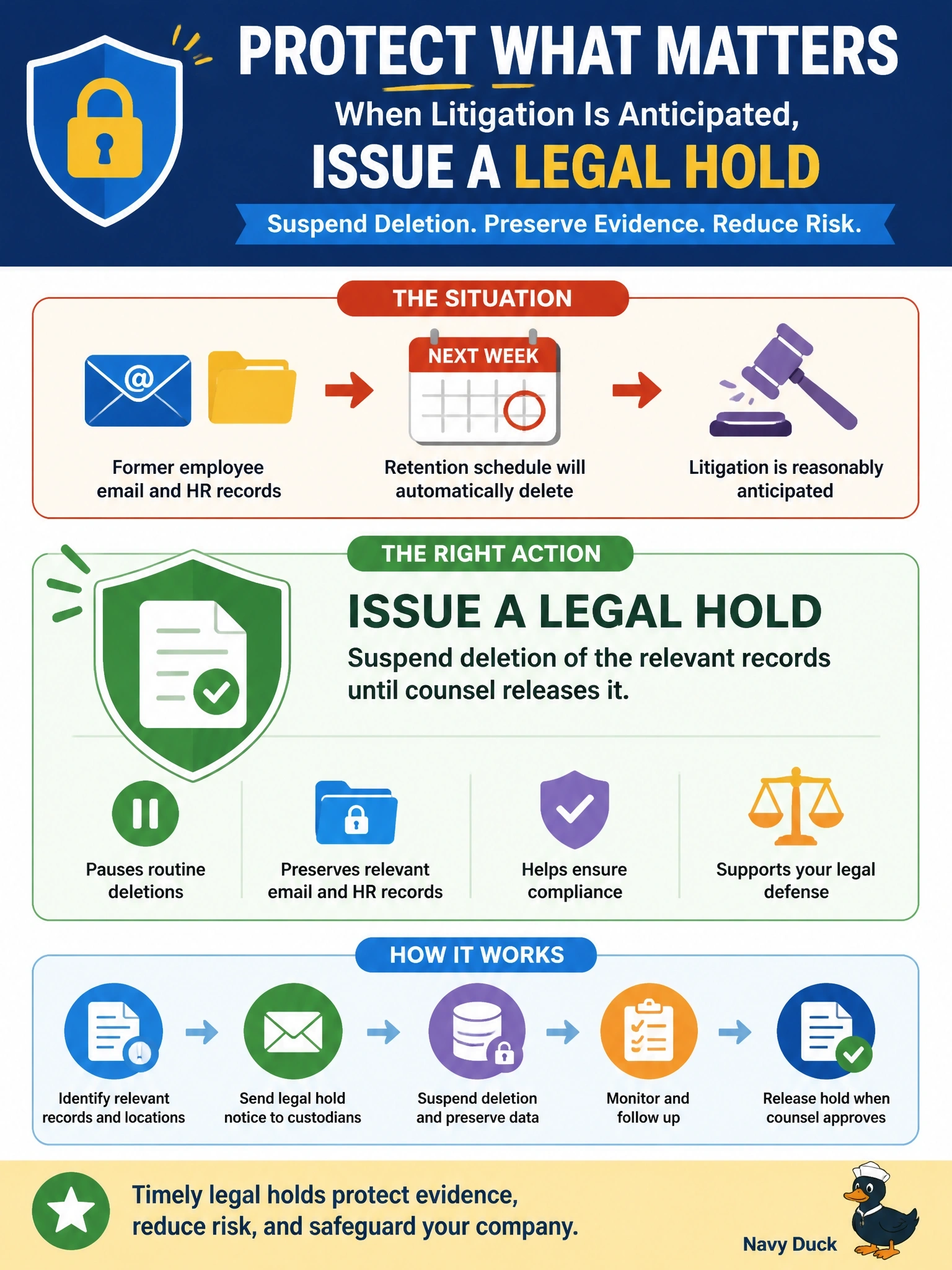
Once litigation is reasonably expected, your normal shredding schedule takes a back seat. A legal hold freezes everything relevant so nothing disappears, even by accident. The trap is 'we always delete on schedule'; that excuse stops working the moment you know a lawsuit is coming.
Full Explanation
A legal hold, sometimes called a litigation hold, is an instruction that suspends normal retention and deletion for information relevant to actual or reasonably anticipated litigation, investigation, or audit. Once counsel reasonably expects a lawsuit, the organization has a duty to preserve relevant evidence, which overrides the routine retention schedule. Issuing a hold covering the former employee's email, HR files, and related records, and confirming that automated deletion jobs exclude them, protects the organization from claims of spoliation. Letting the schedule run treats routine disposal as a defense, but routine practice does not excuse destroying evidence once the duty to preserve has arisen, and courts can impose sanctions or adverse inferences. Deleting records early to limit exposure is deliberate destruction of potential evidence, which is the most serious form of spoliation and can create legal liability far worse than the underlying dispute. Moving records to cold storage while keeping the deletion date changes where the data sits but not its fate; the records would still be destroyed on schedule. Exam caveat: holds must be released formally by counsel when the matter ends so normal retention can resume. Operational check: confirm hold notices were sent to custodians, automated deletion is suspended for the affected mailboxes and records, and acknowledgements from custodians are logged.