
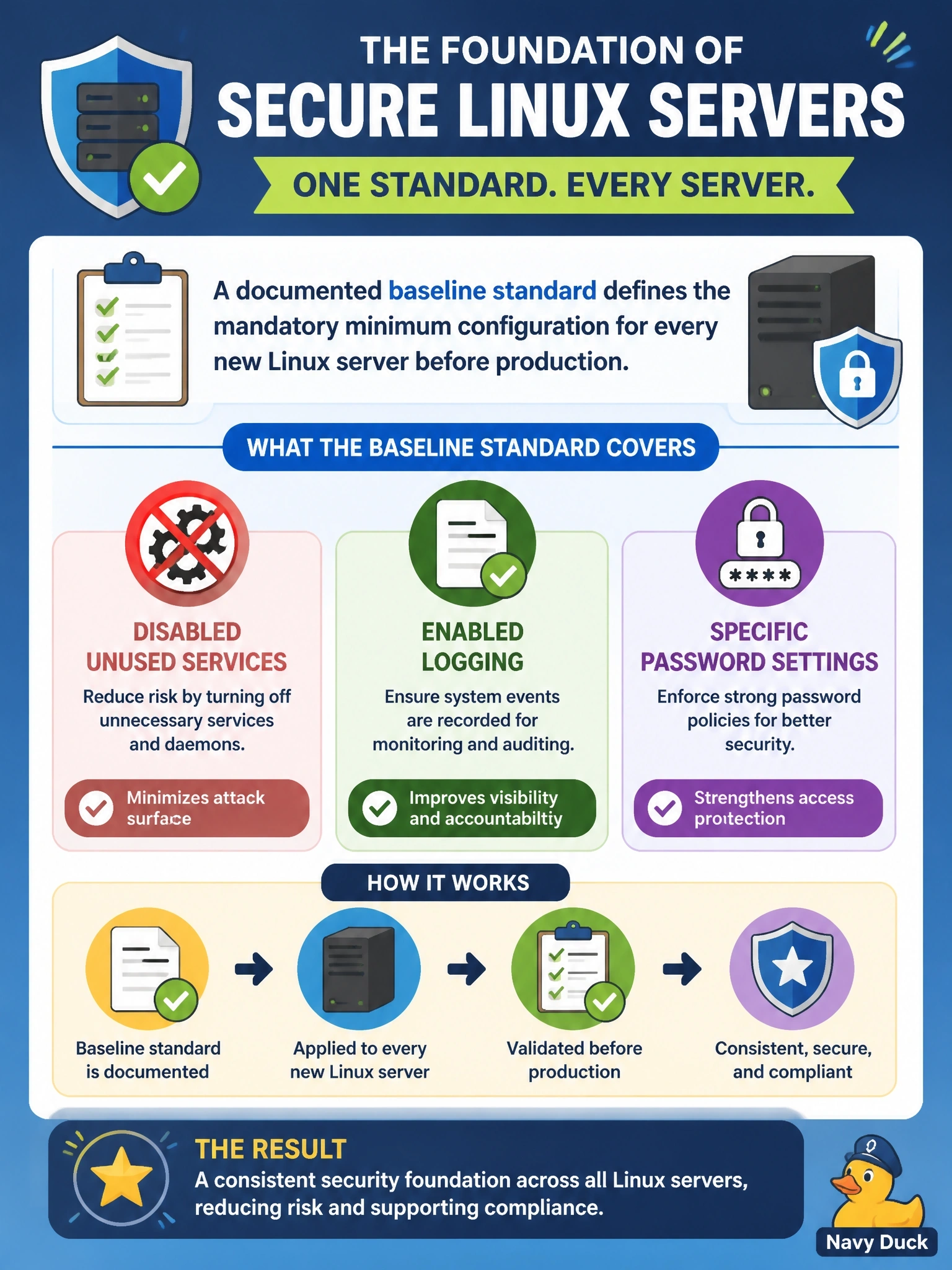
An organization requires every new Linux server to meet a documented minimum set of configuration settings, including disabled unused services, enabled logging, and specific password settings, before it can enter production. What does this document represent?
Select an answer to reveal the explanation.
Short Explanation
A baseline is the floor: nothing goes into production below this line. Because it's required and measurable, it's a standard, not a suggestion. Watch for the guideline distractor; once you see the word 'requires' in the scenario, it's out.
Full Explanation
Standards define mandatory, specific, measurable requirements, and a baseline is a standard that sets the minimum secure configuration for a class of system. Requiring every new Linux server to have unused services disabled, logging enabled, and defined password settings before production is a classic baseline standard: it can be checked automatically, deviations are findings, and it gives every server a known secure starting point. A guideline would recommend hardening choices but leave them optional; the scenario says the settings are required, so a guideline does not fit. A runbook is a procedural document with step-by-step instructions for an operational task such as restoring a service; it describes how to do something rather than what state a system must be in. An acceptable use policy defines how people may use organizational resources, such as prohibiting personal use or unauthorized software; it governs user behavior, not server configuration. Exam caveat: the 5.1 standards list also includes passwords, encryption, physical security, and RFCs, so a question about a mandatory encryption algorithm or key length is also a standard. Operational check: express the baseline as a configuration-compliance scan profile, run it against each new server before go-live, and require a documented exception for any setting that cannot be met.