
SOC analysts spend much of each shift copying SIEM alert details into the ticketing system by hand, and some alerts are never ticketed. Which automation BEST addresses this problem?
Select an answer to reveal the explanation.
Short Explanation
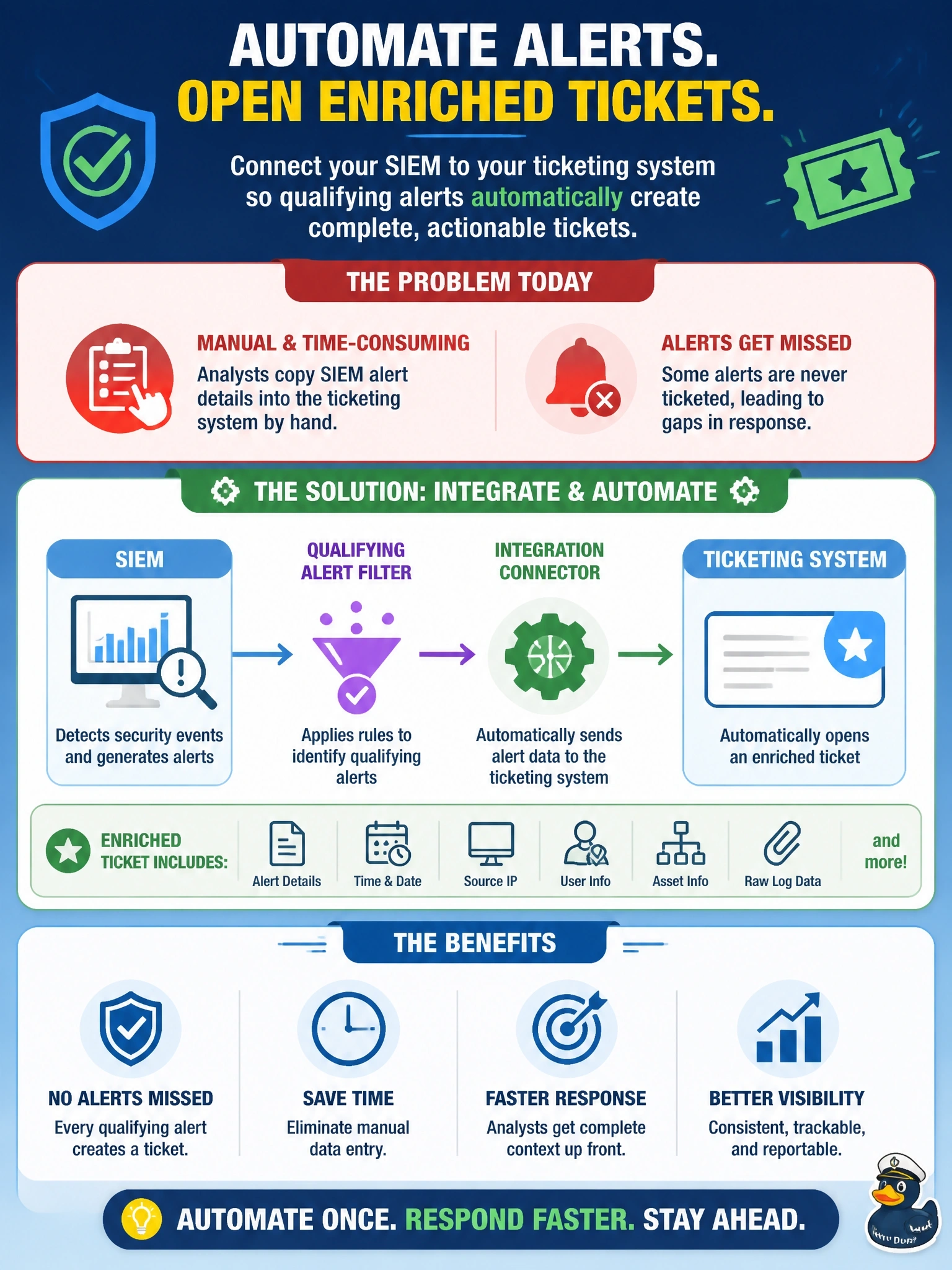
Copy-and-paste is where alerts go to get lost. Hook the SIEM straight into ticketing and every qualifying alert becomes a ticket with the details already filled in. Turning off rules so you have less to type is the trap - you're cutting detection to save keystrokes.
Full Explanation
Ticket management is a common automation use case. An integration between the SIEM and the ticketing system creates a ticket whenever an alert meets defined criteria, populating it with the alert details and enrichment such as asset owner, user information, and related events, then routing it to the correct queue with a priority. Nothing depends on an analyst remembering to copy information, so alerts are not lost, response metrics become measurable, and analysts spend their time investigating rather than transcribing. Batching manual copying at the end of a shift keeps the same labor and error rate and adds delay, since alerts wait hours before tracking begins. Sending every alert to a shared mailbox reviewed weekly creates an unstructured backlog with no ownership and a response delay measured in days. Disabling lower-severity rules reduces typing by removing detection coverage, which trades a workflow problem for blind spots; low-severity alerts often provide early signs of larger incidents. Exam caveat: automated ticket creation should include deduplication or grouping so a noisy rule does not flood the queue. Operational check: trigger a test alert that meets the criteria, confirm a ticket appears with the expected enrichment and assignment, and verify the ticket links back to the original SIEM event.