
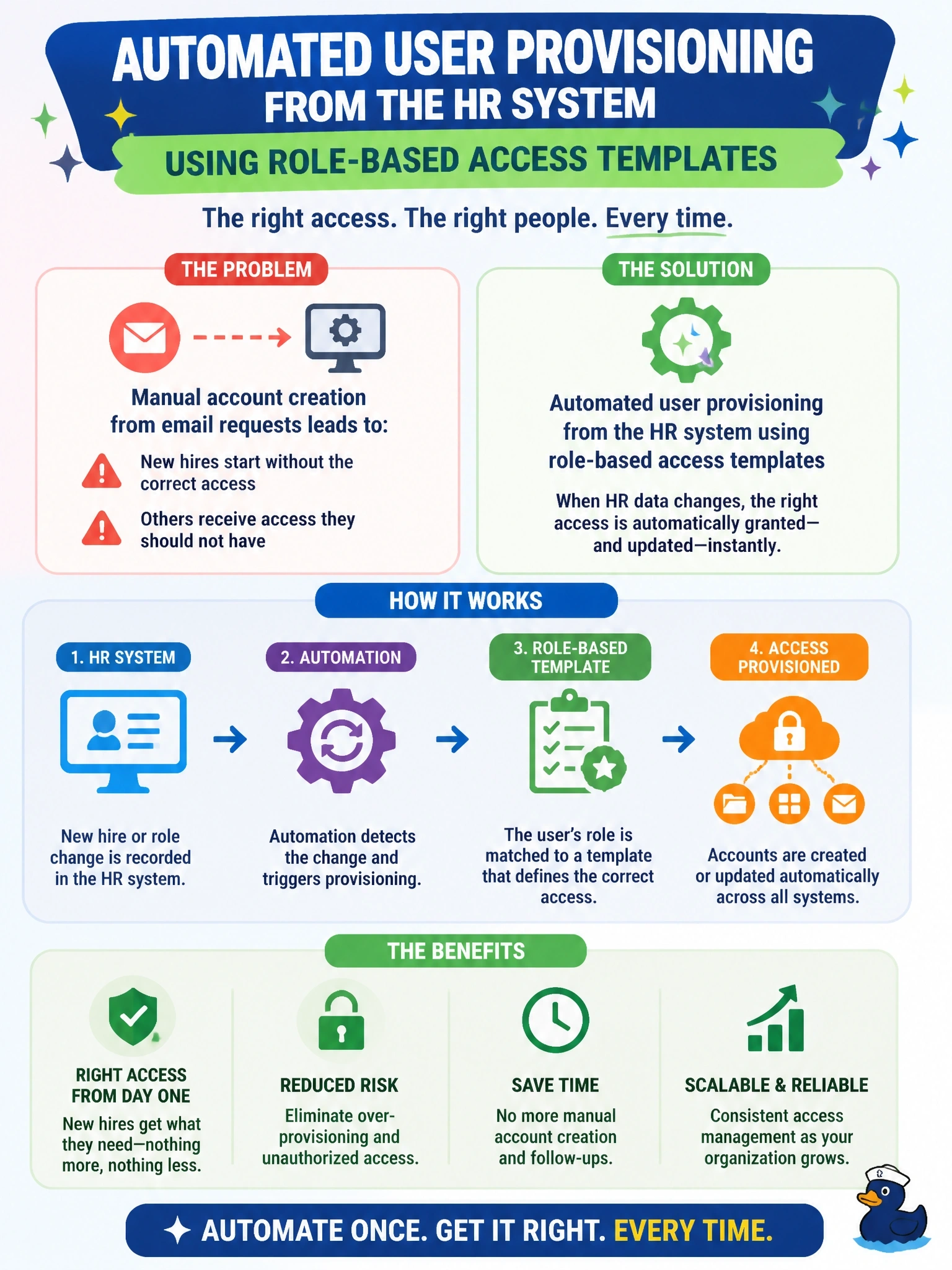
New hires frequently start without the correct application access, while others receive access they should not have, because IT creates each account manually from email requests. Which automation use case BEST addresses this?
Select an answer to reveal the explanation.
Short Explanation
Manual onboarding is like hand-copying a recipe every time - sooner or later you skip an ingredient. Automated provisioning reads the HR record and builds the account from a role template the same way every time. A second checker just means two people copying by hand.
Full Explanation
User provisioning automation creates and configures accounts based on an authoritative source, typically the HR system, and applies role-based templates that define the groups, licenses, and application access for each job. When a new hire record appears, workflows create the directory account, assign the role's entitlements, and notify the manager, producing consistent results on the first day and an audit trail of what was granted and why. It eliminates both failure modes in the scenario: missing access from forgotten steps and excess access from ad hoc grants. Adding a second administrator to check manual work may catch some errors, but it doubles labor and leaves the process dependent on interpreting free-form email. Granting broad default access and trimming later violates least privilege during the riskiest period, when the account is new and roles are still being learned. Requiring new hires to request each application separately shifts the burden onto the employee, delays productivity, and still relies on manual fulfillment. Exam caveat: provisioning automation is only as accurate as its source data and role definitions, so templates need owners and periodic review. Operational check: create a test hire in the HR system and verify that the resulting account receives exactly the template's entitlements.