
An organization requires all administrative access through its cloud identity provider with MFA. Leadership worries that an outage of the identity provider or MFA service could lock administrators out of critical systems. Which control BEST addresses this concern?
Select an answer to reveal the explanation.
Short Explanation
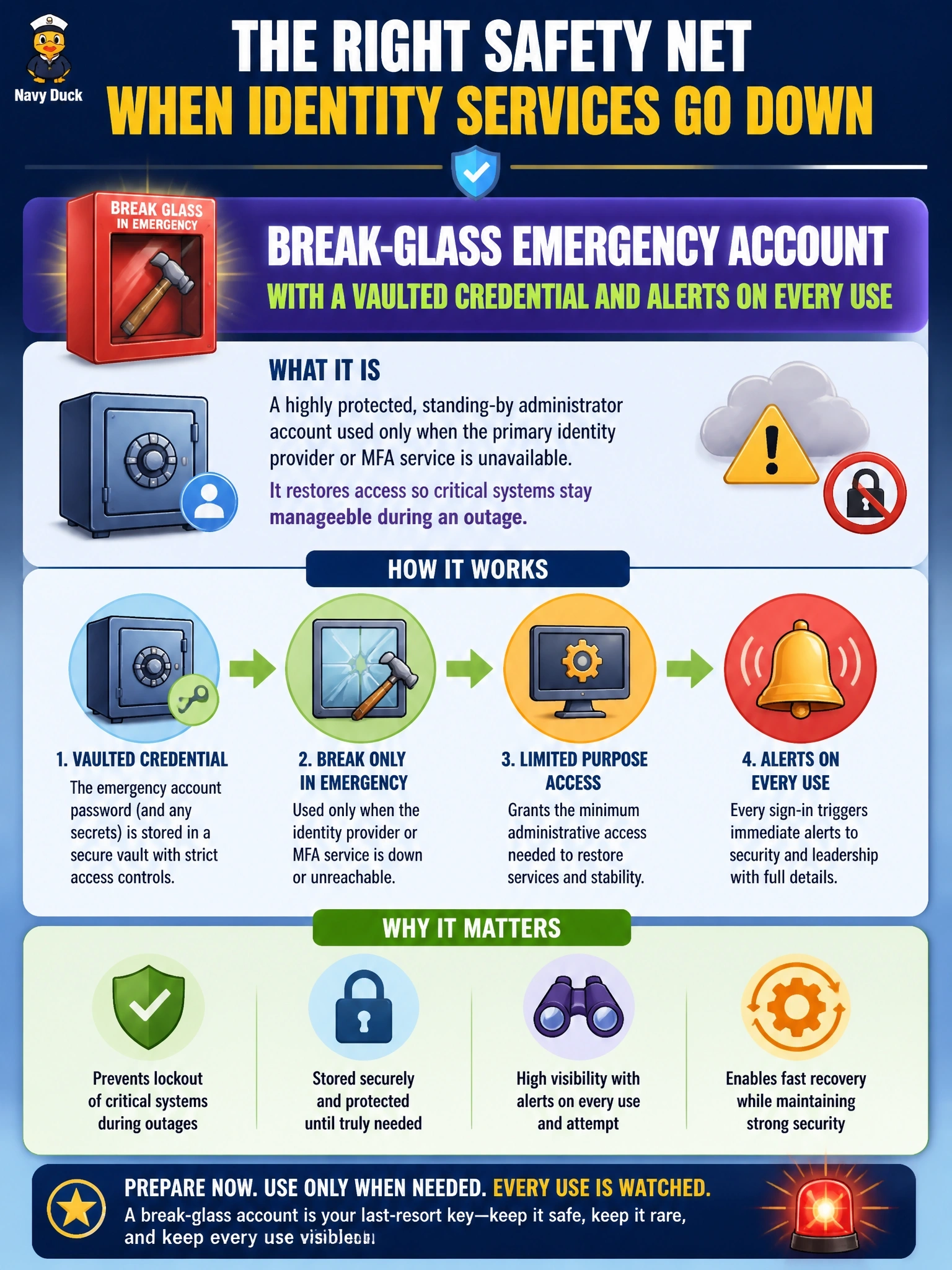
A break-glass account is the fire axe behind the glass: you use it only in emergencies, everybody notices when it's used, and nobody carries it around day to day. Giving every admin a backdoor account is the trap - that's twenty fire axes lying in the hallway.
Full Explanation
Emergency access accounts, often called break-glass accounts, provide a controlled way to regain administrative control when normal authentication paths fail. They are few in number, configured to avoid dependence on the component that could fail, protected by strong credentials or hardware tokens held in a secured vault with dual control, excluded from routine use, and monitored so that every sign-in generates an immediate alert and review. That balances availability against the risk of a powerful standing account. Permanent local accounts for every administrator multiply privileged credentials that bypass MFA, creating many unmonitored paths that attackers can target daily. Disabling MFA tenant-wide during an outage weakens every account at the moment defenders are most distracted, and may itself be impossible if the identity provider is down. A password stored in a shared document is exposed to anyone with access to that document, offers no dual control, and leaves no reliable audit trail of who retrieved it. Exam caveat: break-glass procedures must be tested periodically, because an emergency account that fails when needed provides false assurance. Operational check: perform a scheduled test sign-in with the emergency account, confirm the alert reaches the security team, and rotate the credential afterward.