
A remote company issues laptops and accounts to new hires it has never met in person. A recent fraud case involved a person who used stolen personal details to get hired and obtain credentials. Which control BEST addresses this before credentials are issued?
Select an answer to reveal the explanation.
Short Explanation
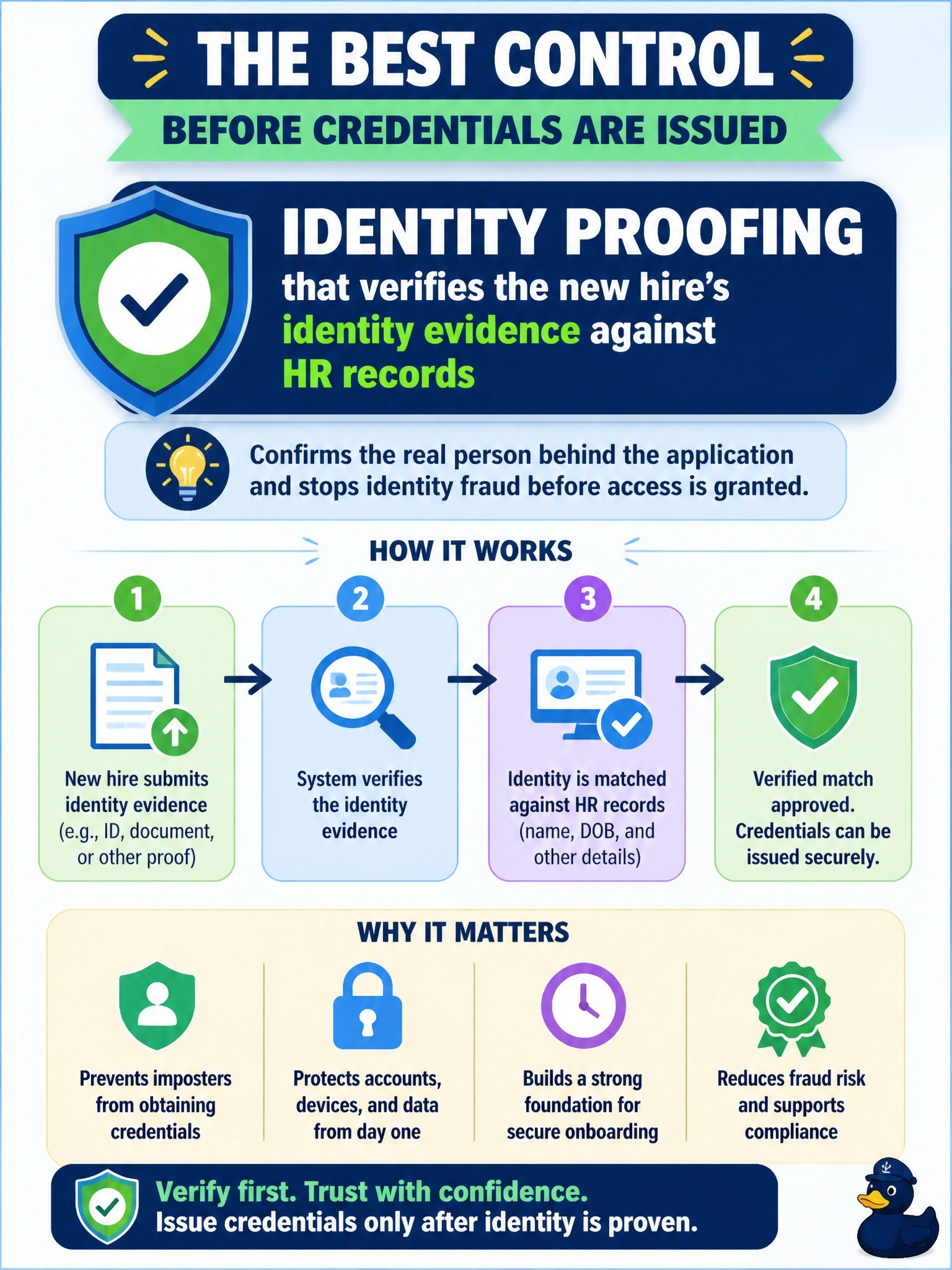
Identity proofing answers 'are you really who you say you are?' before you hand over the keys. Enrolling a fingerprint just proves the same person keeps showing up - it doesn't prove they're the person HR hired. That's the trap.
Full Explanation
Identity proofing establishes that a claimed identity belongs to the person presenting it before an account is created or credentials are issued. It typically involves collecting identity evidence such as government-issued documents, validating that the evidence is genuine, and verifying that the person presenting it is its rightful owner, for example through a supervised live video check, before linking the result to the HR record. That is precisely the gap a fraudster with stolen personal details exploits. Emailing credentials to the address on a resume trusts information the applicant supplied, so an impostor simply receives the credentials. Enrolling a fingerprint at first login binds the account to whoever shows up; it proves continuity, not that this person is the identity that was hired, so the impostor's own fingerprint becomes the trusted factor. Self-registration on the first day skips verification altogether and hands account creation to an unverified individual. Exam caveat: identity proofing happens once, at enrollment, while authentication happens at every subsequent login; strong authentication cannot compensate for weak proofing. Operational check: confirm the onboarding workflow records the proofing method and verifier for each hire and blocks credential issuance until that record is complete.