
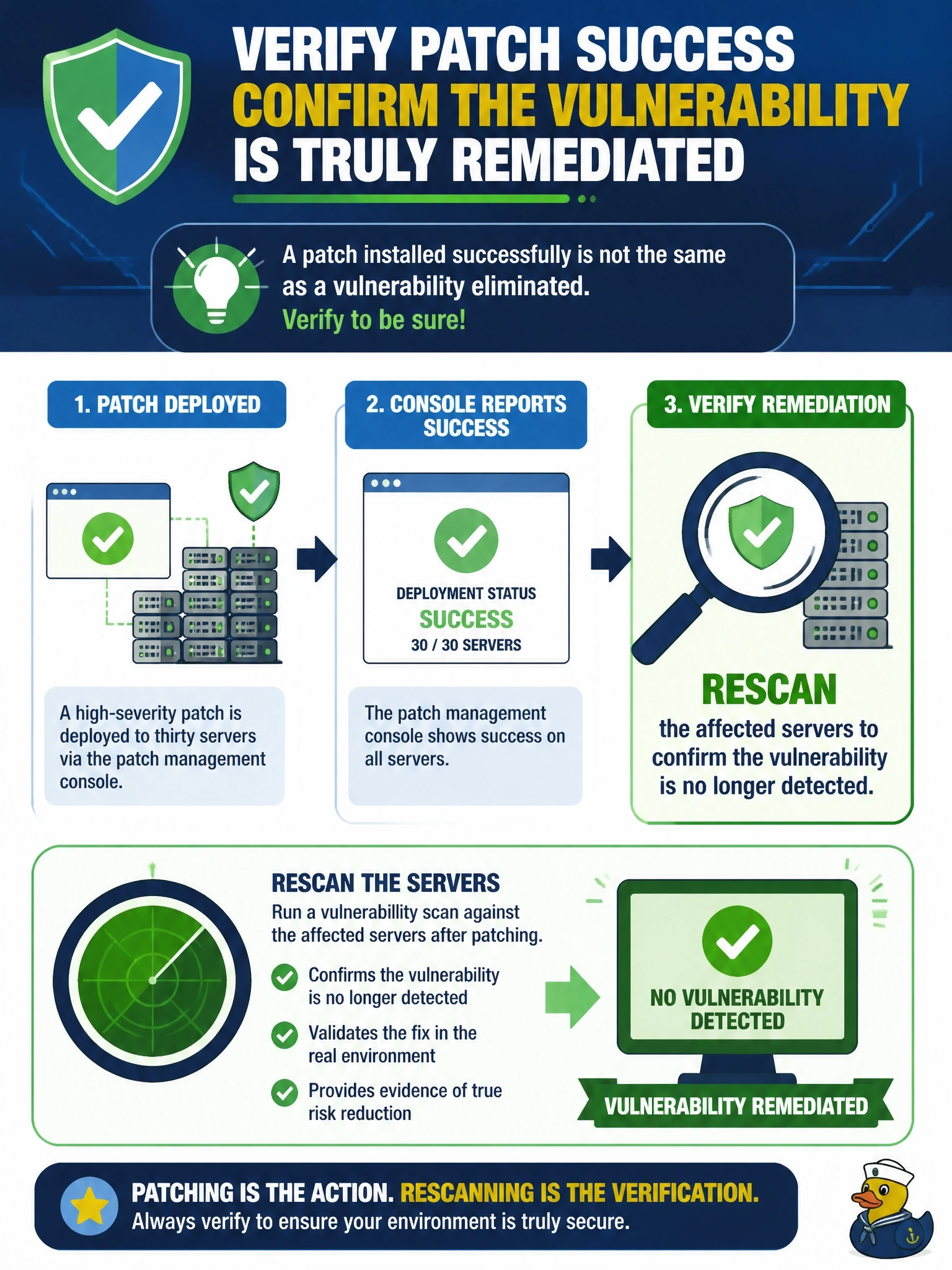
An administrator deploys a vendor patch for a high-severity vulnerability to thirty servers, and the patch management console reports success on all of them. Which step provides verification that the vulnerability has actually been remediated?
Select an answer to reveal the explanation.
Short Explanation
'Installed' and 'fixed' aren't the same thing - a reboot that never happened or a service that didn't restart can leave the hole wide open. A rescan is you checking the lock yourself instead of trusting the note that says it's locked. That's verification.
Full Explanation
Verification confirms that remediation actually removed the weakness, using the same type of evidence that originally identified it. Rescanning the affected servers tests whether the vulnerable version, configuration, or exposed condition is still present. This catches common failure modes: a pending reboot, a service still running old binaries, a patch that applied to one component but not another, or hosts that were offline when the deployment ran. Closing the ticket based on the deployment console trusts a status message about installation, which is not evidence that the vulnerability is gone. Written confirmation from server owners is an attestation, and it is even weaker than the console, because it adds a human step with no technical check. Release notes describe what the vendor intended the patch to fix; they do not show whether this environment received and activated it correctly. Exam caveat: verification can also include a targeted manual test or a credentialed check of file versions, but the principle is independent confirmation after the change. Operational check: run a targeted rescan of the thirty servers, compare results against the original finding, and keep any host that still shows the vulnerability open with a new remediation ticket.