
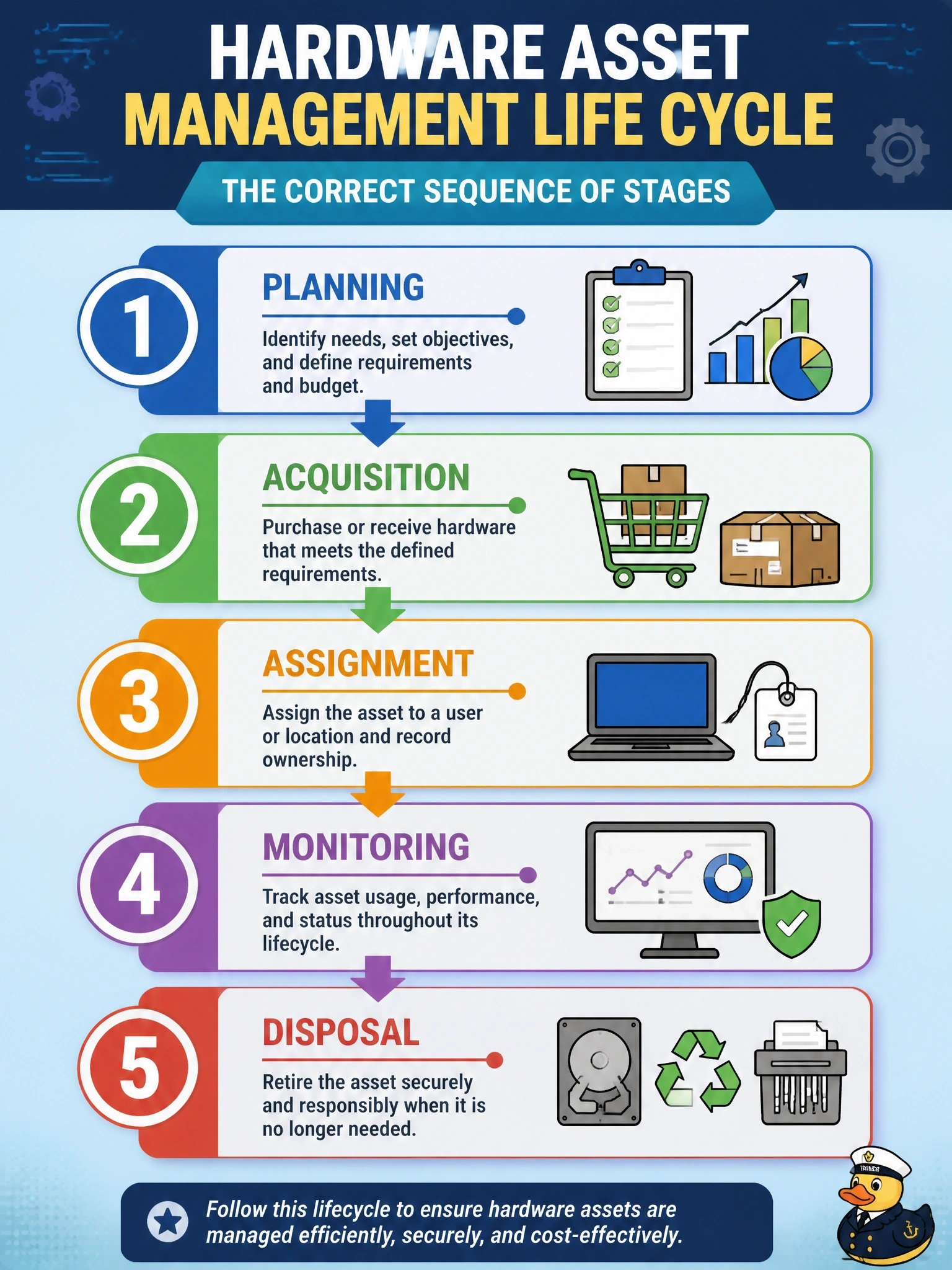
A security manager is documenting the hardware asset management life cycle for new staff. Which sequence lists the stages in the correct order?
Select an answer to reveal the explanation.
Short Explanation
Think of it like getting a new car: you decide what you need, buy it, put it in someone's name, keep an eye on it, and finally get rid of it properly. Plan, acquire, assign, monitor, dispose. If you see buying before planning, you're looking at the trap.
Full Explanation
The asset management life cycle begins with planning and scoping, which defines requirements, what counts as an asset and how assets will be tracked. Acquisition and procurement follow, bringing assets in through approved channels with security requirements applied. Assignment and accounting then link each asset to an owner and record it. Monitoring and asset tracking keep the inventory accurate and the asset's status known while it is in service. Disposal and decommissioning end the cycle by sanitizing or destroying the asset and updating records. Sequences that begin with acquisition before planning describe buying assets before deciding what is needed or how they will be governed, which is how unmanaged and unapproved assets enter an environment. Placing disposal before monitoring reverses the in-service and end-of-life stages, implying an asset is retired before it is ever tracked. Placing assignment before acquisition is impossible in practice, because an asset cannot be issued to an owner before it has been obtained, and putting planning in the middle of the cycle means requirements are set only after assets are already bought and issued. Exam caveat: the life cycle is continuous; disposal of one generation often feeds planning for its replacement. Operational check: map the organization's current asset procedures to each stage, confirm every stage has a documented owner and record, and look for assets that skipped any stage.