
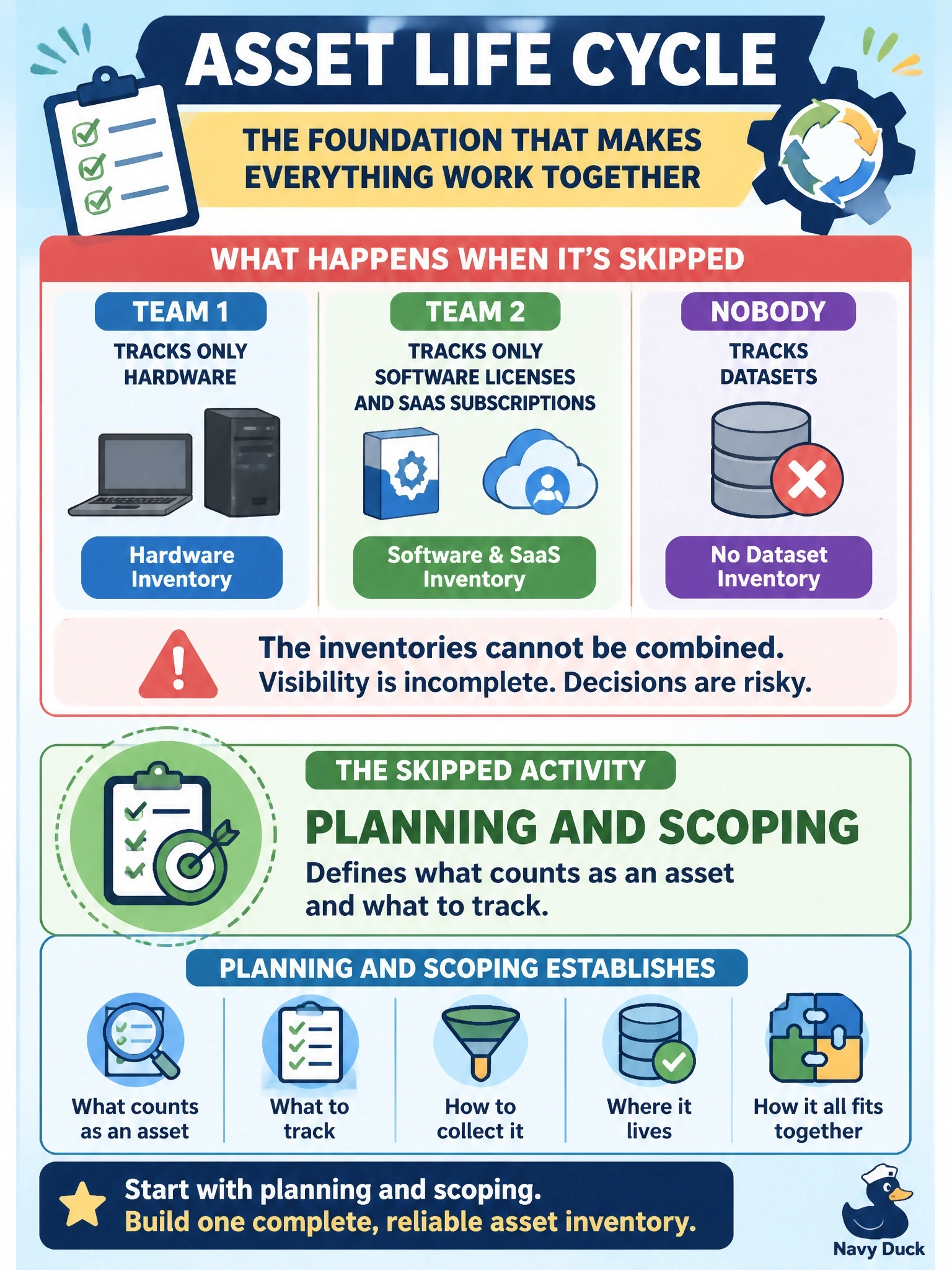
A company launches an asset management program, but one team tracks only hardware, another tracks software licenses and SaaS subscriptions, and nobody tracks datasets, so the inventories cannot be combined. Which asset life cycle activity was skipped?
Select an answer to reveal the explanation.
Short Explanation
Before you start counting, you have to agree on what you're counting. Planning and scoping sets the rules: hardware, software, SaaS, data, all of it, and what to record for each. Skip it and every team builds its own list, which is exactly the mess you've got here.
Full Explanation
Planning and scoping is the first stage of the asset management life cycle. It defines which categories count as assets, such as hardware, software, cloud and SaaS services and data, what attributes must be recorded for each, who is responsible, and what tools and processes will maintain the inventory. Without that shared definition, teams build incompatible lists with different boundaries, and entire categories such as datasets are never tracked, which is precisely what happened. Acquisition and procurement governs how assets are bought, from approved vendors and with security requirements, but it does not decide which asset types the program covers or what the inventory must contain. Disposal and decommissioning governs how retired assets are sanitized, destroyed or released, which happens at the end of the life cycle and cannot fix an inconsistent inventory at the start. Assignment and accounting ties each asset to a responsible owner and records it, but that step depends on scope having been defined first; otherwise there is no agreement on which items need an owner at all. Exam caveat: unknown assets cannot be patched, monitored or protected, so scoping gaps become security gaps. Operational check: confirm a documented asset management scope exists that lists every asset category and required attributes, then confirm each team's inventory conforms to it and that datasets now appear.