
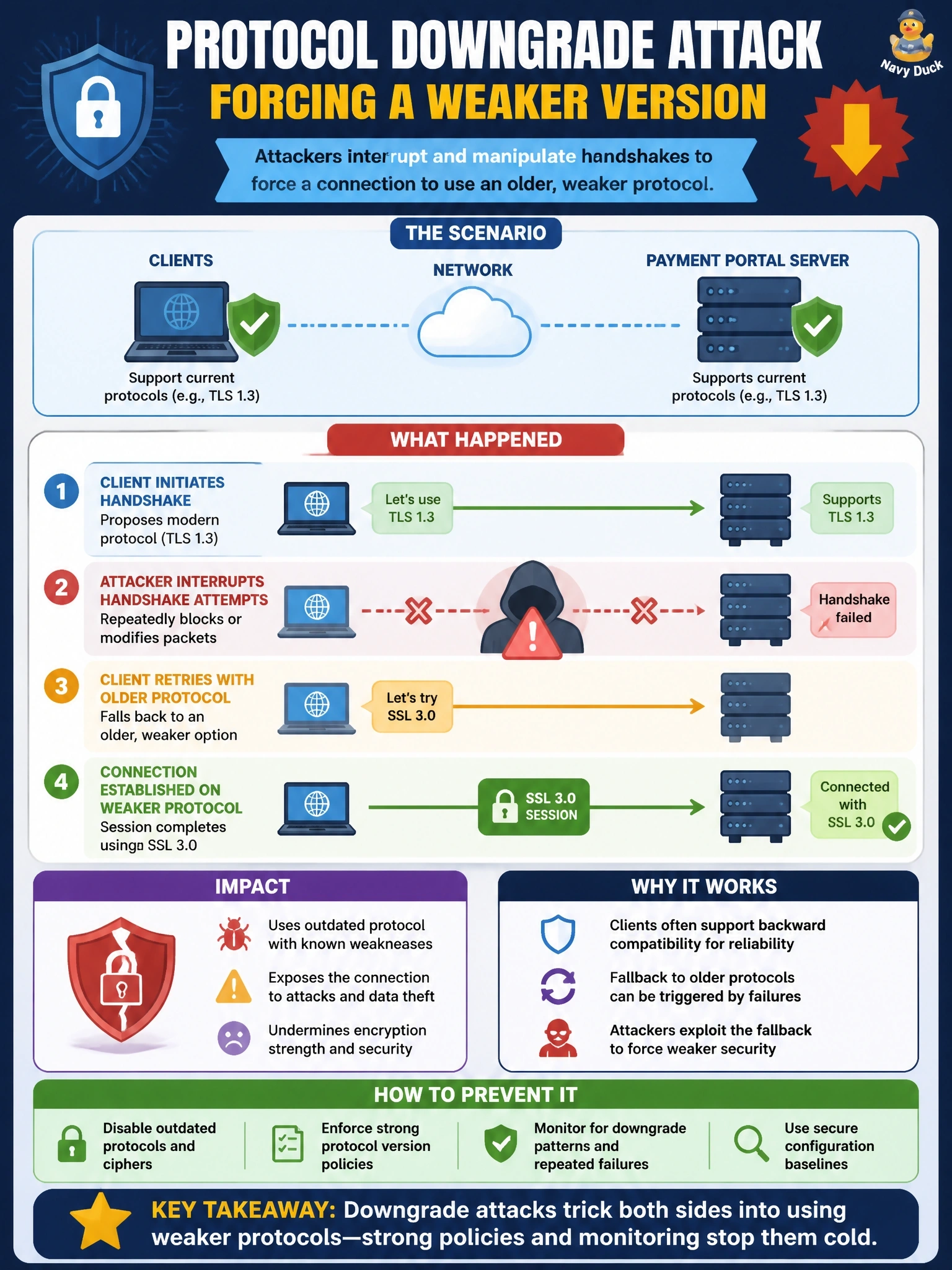
A security analyst reviewing handshake logs for a payment portal sees that several client sessions normally negotiated with TLS 1.3 were instead completed with SSL 3.0 after the first handshake attempts were repeatedly interrupted. Both the clients and the server support current protocol versions. Which attack do these indicators MOST likely point to?
Select an answer to reveal the explanation.
Short Explanation
Think of it like a bouncer who gets pestered until he waves you in through the old side door. When modern clients and a modern server suddenly settle on SSL 3.0 after interrupted handshakes, someone in the middle is forcing the fallback. Don't get distracted by the interruptions themselves; it's the weaker negotiated version that gives the downgrade away.
Full Explanation
A protocol downgrade attack manipulates the negotiation between a client and server so they settle on an older, weaker protocol version or cipher suite than both actually support. An on-path attacker commonly does this by interfering with the first handshake attempts so that clients with fallback behavior retry using legacy versions such as SSL 3.0, which carry known cryptographic weaknesses the attacker can then exploit. The key indicator is the mismatch: capable endpoints ending up on a deprecated version. DNS cache poisoning redirects clients to a different destination by corrupting name resolution; it would surface as connections to an unexpected address or certificate, not as a legitimate server negotiating an old protocol. A replay attack resends captured messages to repeat a transaction or reuse a credential, and a replayed handshake does not change which version capable endpoints agree on. A distributed denial of service flood aims to exhaust capacity and causes failed or slow connections rather than successful sessions on a weaker version. Exam caveat: interrupted handshakes alone are weak evidence; the decisive indicator is the negotiated version falling below what both sides support. Operational check: disable SSL 3.0 and early TLS versions on the server, enable downgrade protection such as the TLS fallback signaling value, and alert on any session negotiated below the minimum approved version.