
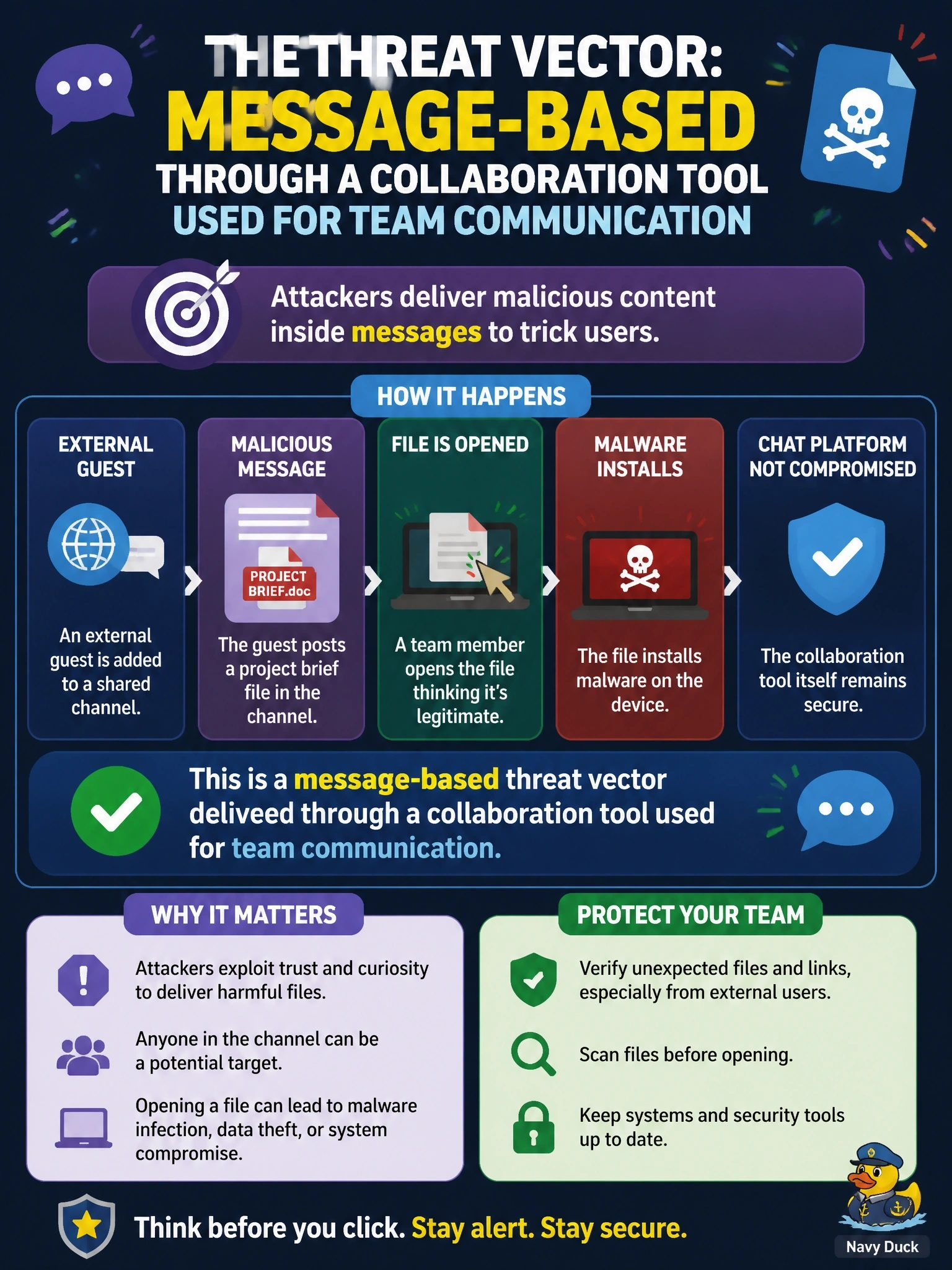
An external guest added to a shared channel in the company's team chat workspace posts a project brief file that installs malware when opened. The chat platform itself was not compromised. Which threat vector is this?
Select an answer to reveal the explanation.
Short Explanation
Your team chat is just another inbox -- and attackers know people trust it more than email. A guest dropping a booby-trapped file in a shared channel is using the collaboration tool as a message-based vector. The trap is blaming the platform; it worked fine, it just carried the bad message.
Full Explanation
Message-based threat vectors now include collaboration tools alongside email, SMS, RCS and instant messaging. Shared channels, guest access and file sharing let an outsider deliver content directly into a trusted workspace, where recipients are often less cautious than with email because the platform feels internal. Posting a malicious file in a shared channel is therefore a message-based vector through a collaboration tool. A supply chain-based vector through a SaaS provider would require the provider's service, code or infrastructure to introduce the threat, but the scenario states the platform was not compromised; it simply delivered content posted by a legitimate guest account. An external media-based vector involves physical devices such as malicious USB drives, which play no part here. A human-based vector involving a visitor refers to someone physically present on site exploiting that access, while this guest acted entirely online. Exam caveat: guest and external access features expand the message-based attack surface, so treat them as such during risk reviews. Operational check: confirm that file scanning applies to guest uploads, review which channels permit external guests, restrict file types guests can share, and search the workspace for the same file hash in other channels.