
An auditor flags a VPN gateway that uses a short key length with an otherwise sound encryption algorithm. Why does increasing the key length improve security in this case?
Select an answer to reveal the explanation.
Short Explanation
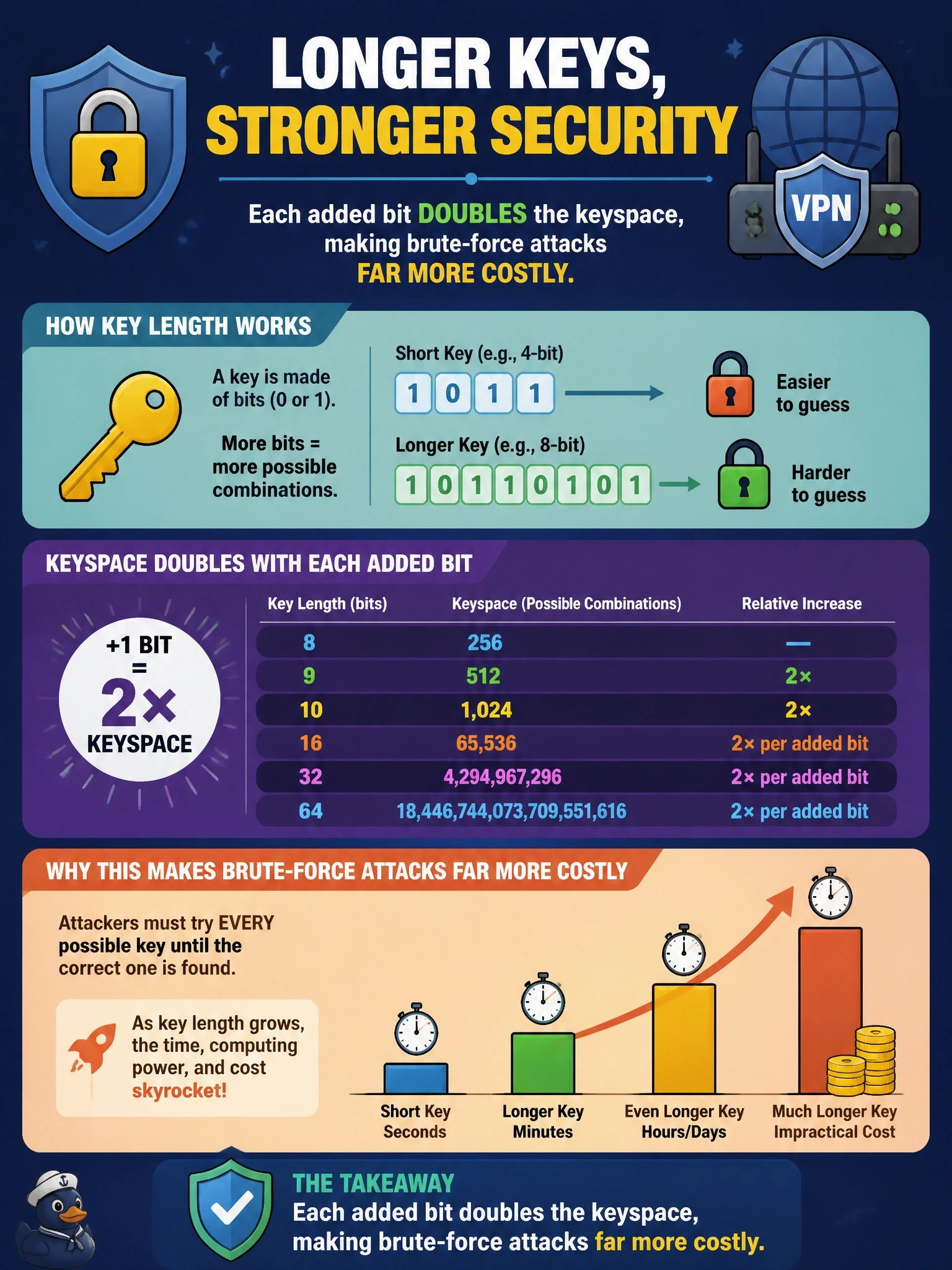
Every extra bit doubles the number of combinations an attacker has to try, kind of like adding one more digit to a lock, then another. Add enough and brute force stops being practical. The algorithm stays the same; you're just making the haystack enormous.
Full Explanation
Key length determines the size of the keyspace, the number of possible keys an attacker must try in a brute-force search. For a sound algorithm with no shortcut attacks, adding one bit doubles the keyspace, so modest increases in length raise the work factor exponentially. As computing power grows, key lengths that once required impractical effort become feasible to attack, which is why standards deprecate short keys over time. Increasing the key length does not change an algorithm from symmetric to asymmetric; those are different families of algorithms, and each supports its own key sizes. Longer keys do not eliminate the need for rotation; rotation limits exposure if a key is compromised through theft, leakage, or implementation flaws, regardless of length. Longer keys do not make ciphertext smaller or faster; for symmetric ciphers, payload size is largely unaffected, and for asymmetric operations, longer keys generally increase processing time. Exam caveat: key length matters only within a sound algorithm; a long key in a broken or deprecated algorithm does not deliver the expected strength, so both algorithm choice and key length must meet current guidance. Operational check: compare the gateway's configured algorithms and key lengths against the organization's cryptographic standard, update the configuration through change management, and confirm that peers negotiate the stronger settings.