
A warehouse uses motion sensors that write an alert to the security log when movement occurs after hours, and guards review recorded camera footage after a break-in to identify the intruder. Which control type do both of these represent?
Select an answer to reveal the explanation.
Short Explanation
A motion sensor is like a smoke detector: it won't put out the fire, but it sure tells you there's one. Reviewing footage afterward is the same idea. Both spot activity, and neither one actually blocks the door.
Full Explanation
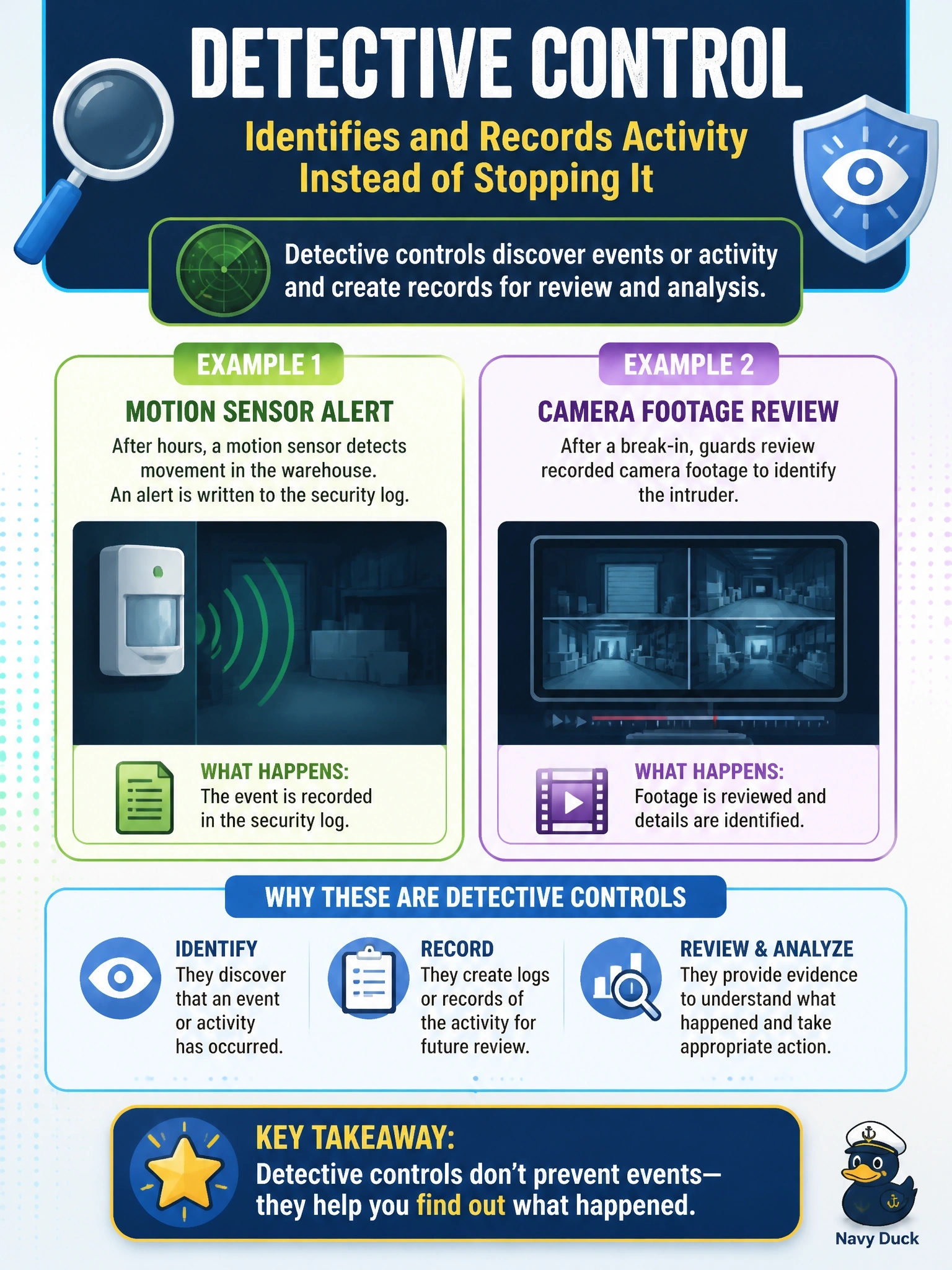
Detective controls discover and record that an event has occurred so that people can respond or investigate. A motion sensor that logs an alert after hours detects activity in real time, and reviewing recorded footage after a break-in identifies what happened and who was involved. Neither control prevents an intruder from entering; both supply evidence and awareness. Preventive controls stop an action from succeeding, such as locked doors, fences, or bollards; sensors and recordings allow entry to occur and only report it. Corrective controls restore normal operation after an incident, such as replacing a broken lock or restoring systems; detecting and identifying an intruder is a step before any correction. Directive controls instruct people about required behavior, typically in policies or posted procedures; an alert may trigger a response procedure, but the sensor itself is not an instruction. Exam caveat: a visible camera can be described as deterring when the stem emphasizes discouraging intruders, while recording and later review is detective; choose based on the function described. Operational check: test each motion sensor to confirm alerts reach the monitoring console and log with accurate timestamps, verify camera retention covers the period needed for investigations, and confirm a guard response procedure exists for after-hours alerts.