
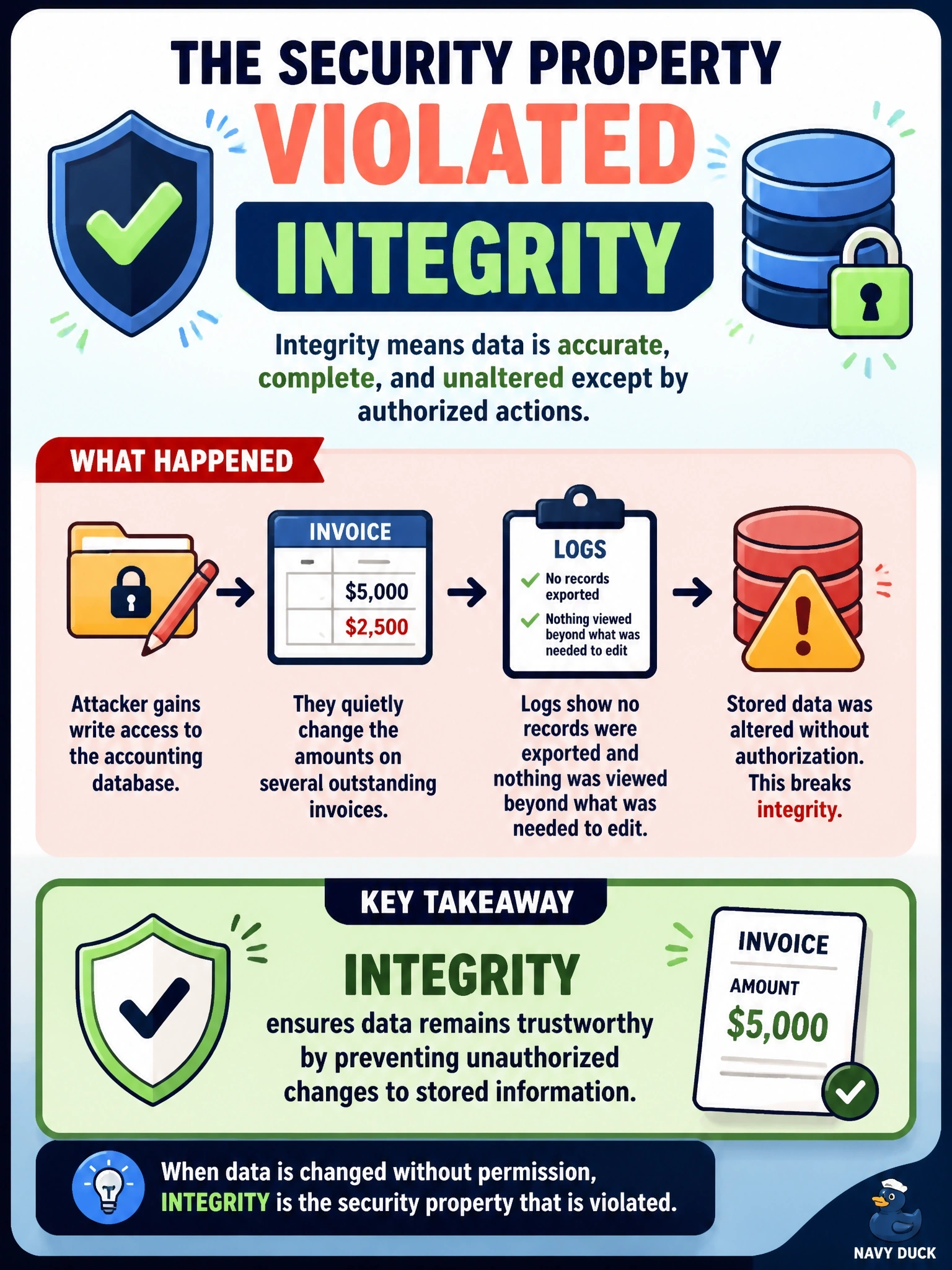
An attacker gains write access to an accounting database and quietly changes the amounts on several outstanding invoices. Logs show that no records were exported and nothing was viewed beyond what was needed to make the edits. Which security property was PRIMARILY violated?
Select an answer to reveal the explanation.
Short Explanation
Picture someone sneaking into your checkbook and changing the numbers but never reading your account balance. Nothing leaked, the system is still up, but you can't trust what's written there anymore. That's integrity, and the trap is reaching for confidentiality just because an intruder was inside.
Full Explanation
Integrity is the assurance that data is accurate and has not been modified by an unauthorized party. Changing invoice amounts is a direct integrity violation: the records still exist and are reachable, but their content can no longer be trusted, and decisions made from them, such as payments or collections, become wrong. Controls aimed at this leg of the triad include strict write permissions, hashing or checksums on critical records, database change auditing, and reconciliation against independent sources. Confidentiality concerns unauthorized disclosure; the scenario states nothing was exported or read beyond what the edit required, so disclosure is not the primary harm. Availability is about authorized users being able to reach data and services when needed; the invoices remain accessible, and incorrect values are a trust problem rather than an access outage. Non-repudiation is a property that binds an action to its originator, typically through digital signatures; the attacker's anonymity is a consequence for investigation but not the CIA property the attack targeted. Exam caveat: when a stem says data was changed but not disclosed, integrity is the intended answer even though some access obviously occurred. Operational check: enable change auditing on financial tables, compare current invoice totals against a trusted backup or ledger, and alert on direct writes that bypass the application.