
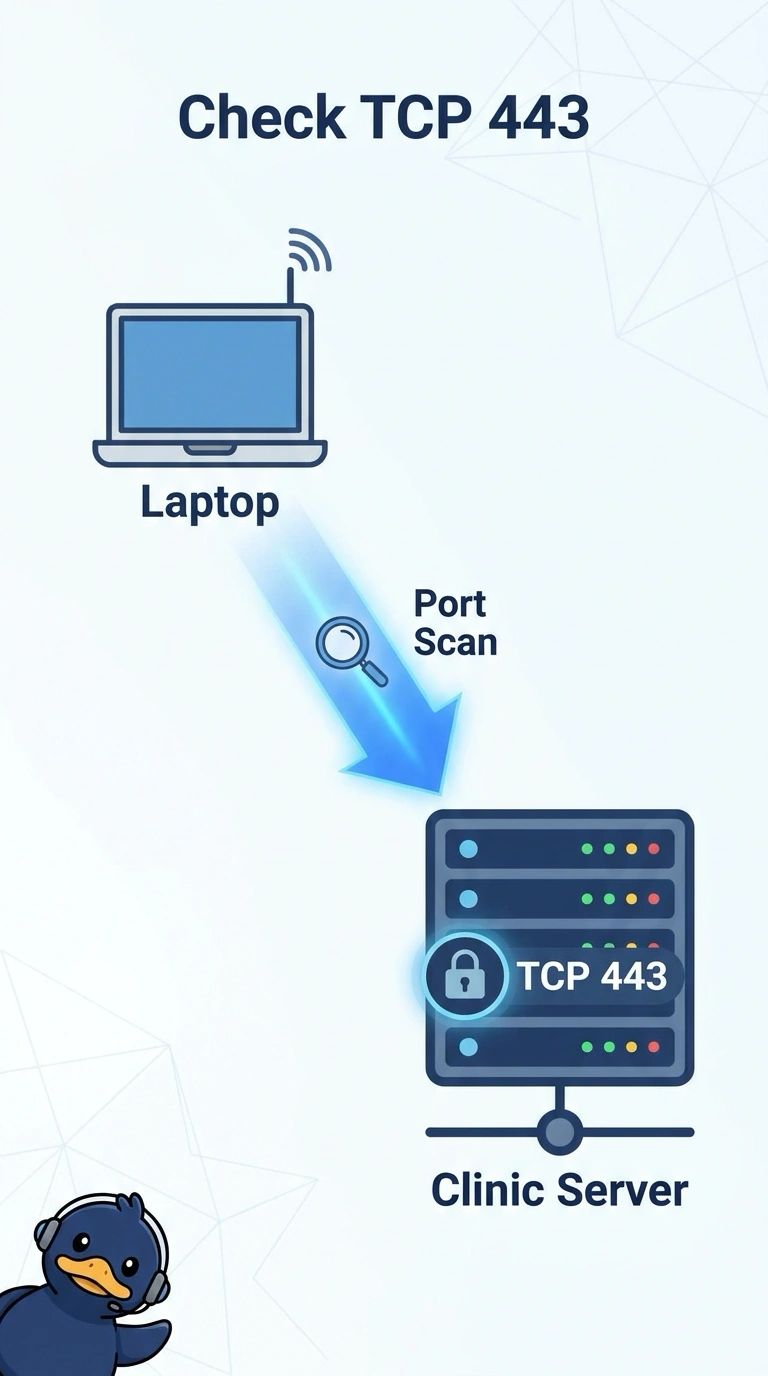
A technician's laptop must learn whether TCP 443 is open on a clinic server. The technician cannot log in to the server. Which tool fits?
Select an answer to reveal the explanation.
Short Explanation
You are outside the building and you want to know if a particular door opens, without a key to the office. A port scan knocks on TCP 443 and reports whether it opens. Your own laptop's socket list, a cable grader, and a power display do not know what the server is listening for.
Full Explanation
A port scan, such as the scan nmap performs, sends probes to a target and reports which ports respond. From the technician's laptop, aimed at TCP 443 on the clinic server, it answers the question without a login on the server. The laptop's own socket display lists sockets on the laptop. It does not list listeners on the clinic server. A cable certifier measures a copper or fiber run. It does not report an open TCP port. The switch PoE display shows power budgets and powered devices. It does not show a server's open ports. Exam caveat: scanning a server you do not own is not authorized just because the tool exists. This scan is the technician's own clinic server. Operational check: scan TCP 443, confirm the result with the application owner, and if the port is closed while the application should be up, check the service and the host firewall. Scan only the clinic server you are responsible for, and confirm a closed port with the application owner. If the scan shows the port open and the application still fails, look at the certificate or the application itself next.