
An office VPN asks for a code from an authenticator app that changes every 30 seconds, so a code someone copied from the screen stops working at the next change. Which factor is that code?
Select an answer to reveal the explanation.
Short Explanation
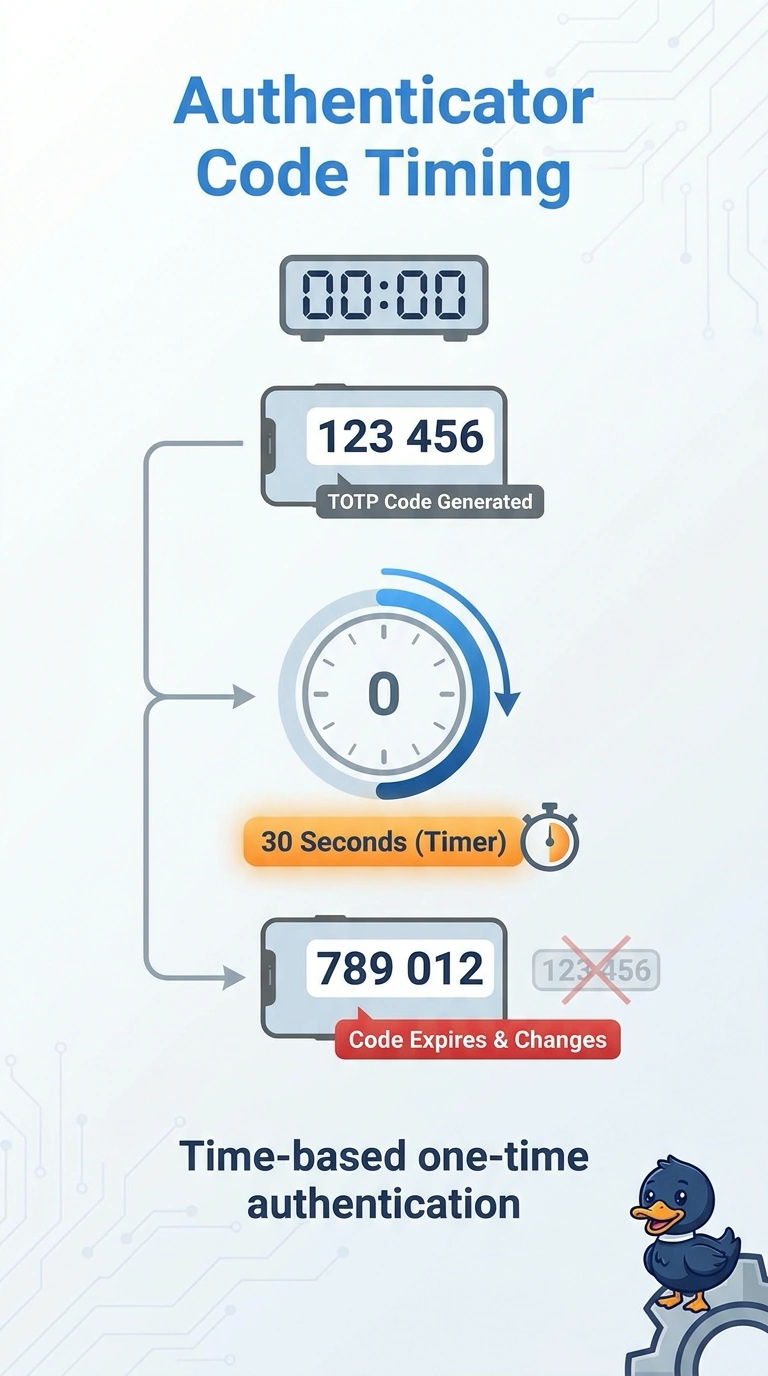
A code that rots on a timer is useful only in the moment someone copies it. You are looking at time-based one-time authentication: the authenticator changes the code every 30 seconds, so the copied value dies at the next interval. A PIN that never changes, a code that changes only when someone uses it, or one login reused everywhere is not this factor.
Full Explanation
Time-based one-time authentication produces a short code from a shared secret and the current time. This office authenticator changes the code every 30 seconds, so a copied value dies at the next change. A static PIN works all day. Calling it time-based does not make it so. A code that changes only when it is used is the tempting twin because it is also a one-time code. It does not expire on the 30-second clock the stem describes. Single sign-on reuses one login across applications. It is not the rotating code, and it can sit in front of one without replacing it. Exam caveat: the phone's clock and the VPN's clock have to stay close. A legitimate code fails if the authenticator's time is far off. Operational check: sign in with the current code, wait for the next 30-second change, confirm the old code is rejected, and confirm the new code from the same authenticator is accepted. Record the reading before the change and the reading after it so the next shift can see the symptom actually moved.