
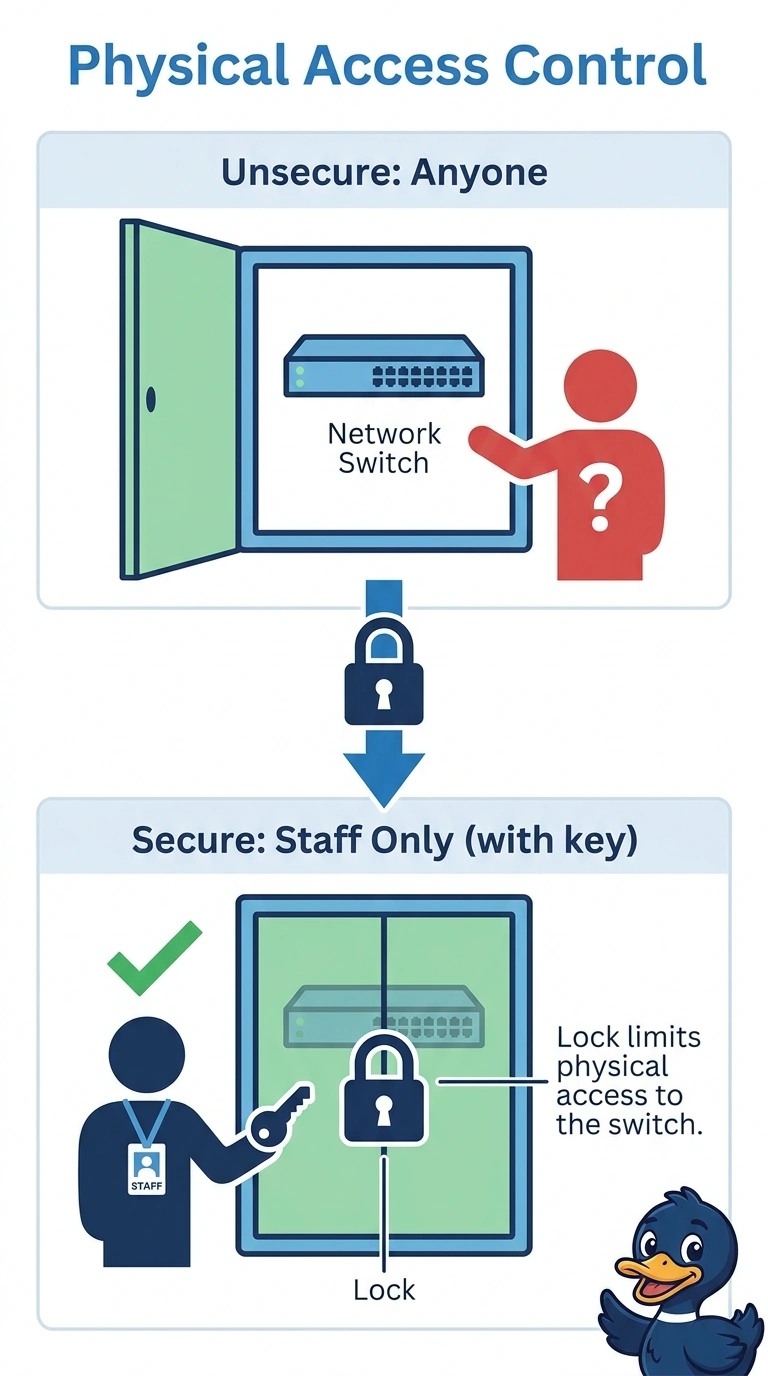
People who are not staff can walk into an unlocked school closet and plug a laptop into a switch. Which control addresses that?
Select an answer to reveal the explanation.
Short Explanation
When anyone can open the door and plug in, your other safeguards are standing outside. You address the exposure with a lock on the closet, so only staff can reach the switch. The internet firewall never sees that inside connection, the camera only records the visit, and port security may learn the walk-in’s laptop without stopping them from plugging in.
Full Explanation
Physical security controls who can touch the equipment. An unlocked school closet lets anyone plug a laptop into a switch without crossing the internet firewall, so a lock on the closet is the control that matches the exposure: it limits access to the switch to staff. A deeper access list on the internet firewall never sees a laptop that stays inside the closet. A camera records who entered, but it does not stop that person from plugging into the switch. Port security is tempting because it reacts to the plug-in, but it learns the first hardware address, which can be the stranger’s laptop, and still lets the walk-in onto the switch before anyone notices. Exam caveat: distinguish stopping an outsider from reaching the equipment from deciding whether a device plugged in by someone with access is approved; this question asks about the outsider’s physical access. Practical check: confirm the closet door latches, is not propped open, and that a badge or key log shows who entered. A camera can remain useful as a record of who used the door, but recording the visit does not replace the lock that stops the walk-in.