
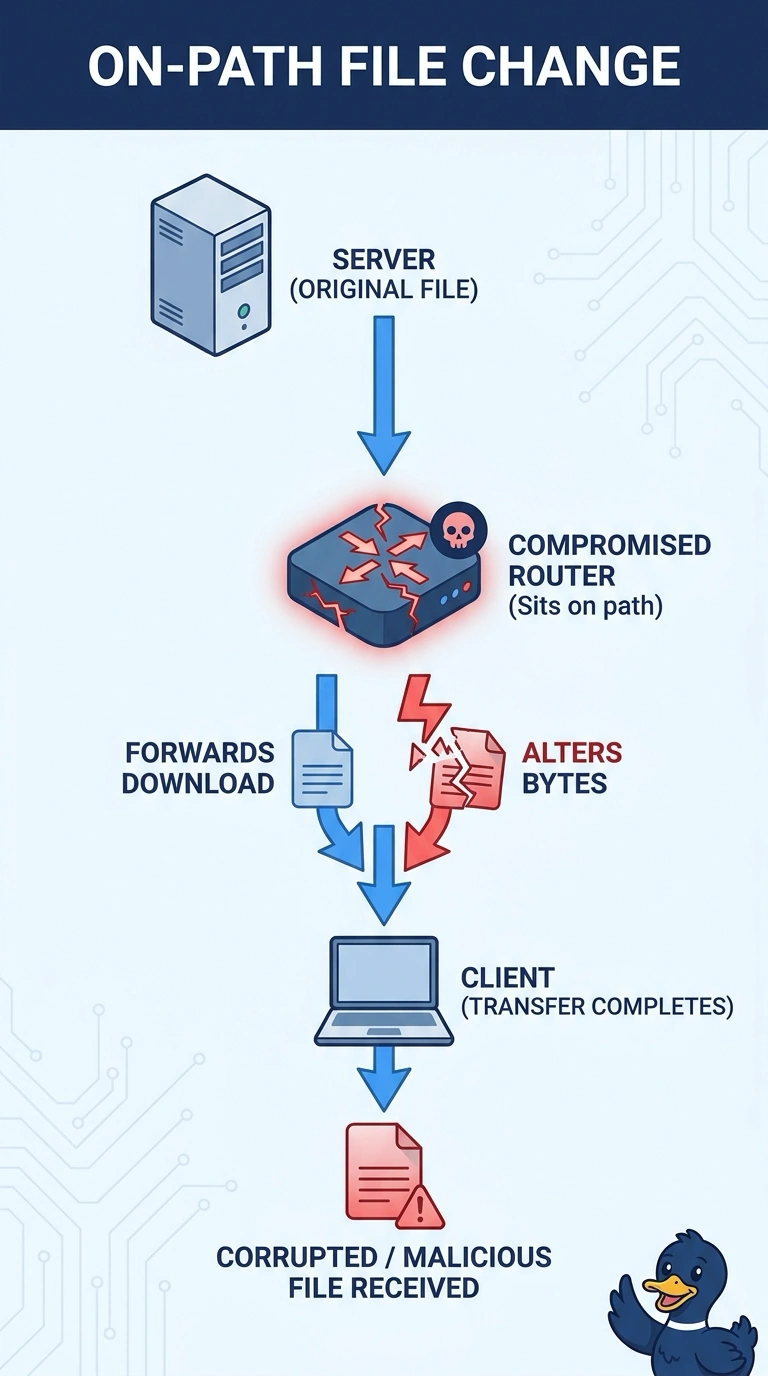
A retail file download finishes, yet bytes in the file were changed by a compromised router that forwarded the transfer. Which attack fits?
Select an answer to reveal the explanation.
Short Explanation
The package arrived, and someone along the delivery road rewrote the contents before handing it over. You still got the file, so this is not an outage, and the router that changed those bytes is an on-path attack. Resending an old copy, pretending to be the server, or stopping the transfer does not match a completed file that was altered in flight.
Full Explanation
An on-path attack is performed by a system that is already forwarding the traffic, so it can alter bytes and still pass the flow onward. The retail download completes, which means the router did not drop the transfer, and the file differs from what the server sent because that router changed bytes on the way. A replay sends a captured transfer again. It does not edit the bytes of the download that just finished. Spoofing would have the router pretend to be the file server. The stem says the router forwarded the real transfer and changed it, which is the forwarder's position, not a fake server. A denial-of-service condition is meant to keep the transfer from finishing. This one finished, so the harm is integrity, not availability. Exam caveat: the exam name for a device in the forwarding path that can modify traffic is on-path. This router was already the forwarder. Operational check: compare the file hash with the publisher's hash, capture on both sides of the suspect router, and confirm the bytes differ after that hop and match before it.