
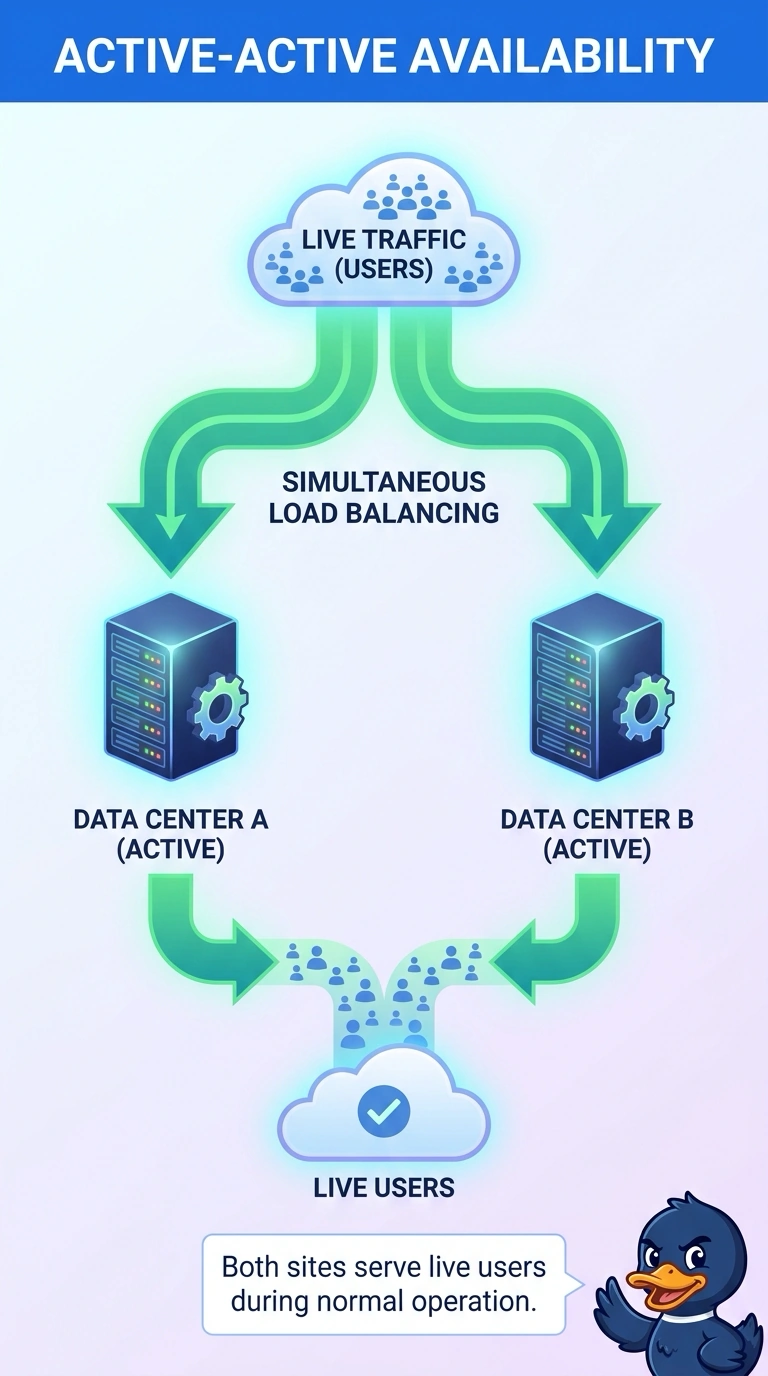
Both of a university's data centers serve live students at the same time, and either center can keep serving if the other one stops. Which availability design is that?
Select an answer to reveal the explanation.
Short Explanation
Two kitchens that are both cooking lunch can cover for each other if one stove dies. You have an active-active pair: both university data centers serve live users now, and either can continue if the other stops. A standby center, a warm site that is not serving yet, or an empty room is not this design.
Full Explanation
Active-active means both sites handle live work at the same time, and the surviving site continues if one site stops. Both university data centers already serve students, so a stop at one does not require waking an idle site. Active-passive keeps the second site ready and not serving. It takes over only after the first fails, which contradicts both centers serving now. A warm site is the tempting twin because it is closer to ready than a cold site. It can hold recent data and still is not serving the live students today. A cold site offers space and power and is not serving anyone. Exam caveat: active-active still needs consistent data between the centers. Both sites serving users does not help if a write in one is invisible to the other. Operational check: during a maintenance window, stop one center's user path and confirm sessions continue on the other, then restore the first and confirm both are serving again. Record the reading before the change and the reading after it so the next shift can see the symptom actually moved.