
Two office technicians assigned the same address to two new servers because each copied an old spreadsheet. Which practice stops the next duplicate?
Select an answer to reveal the explanation.
Short Explanation
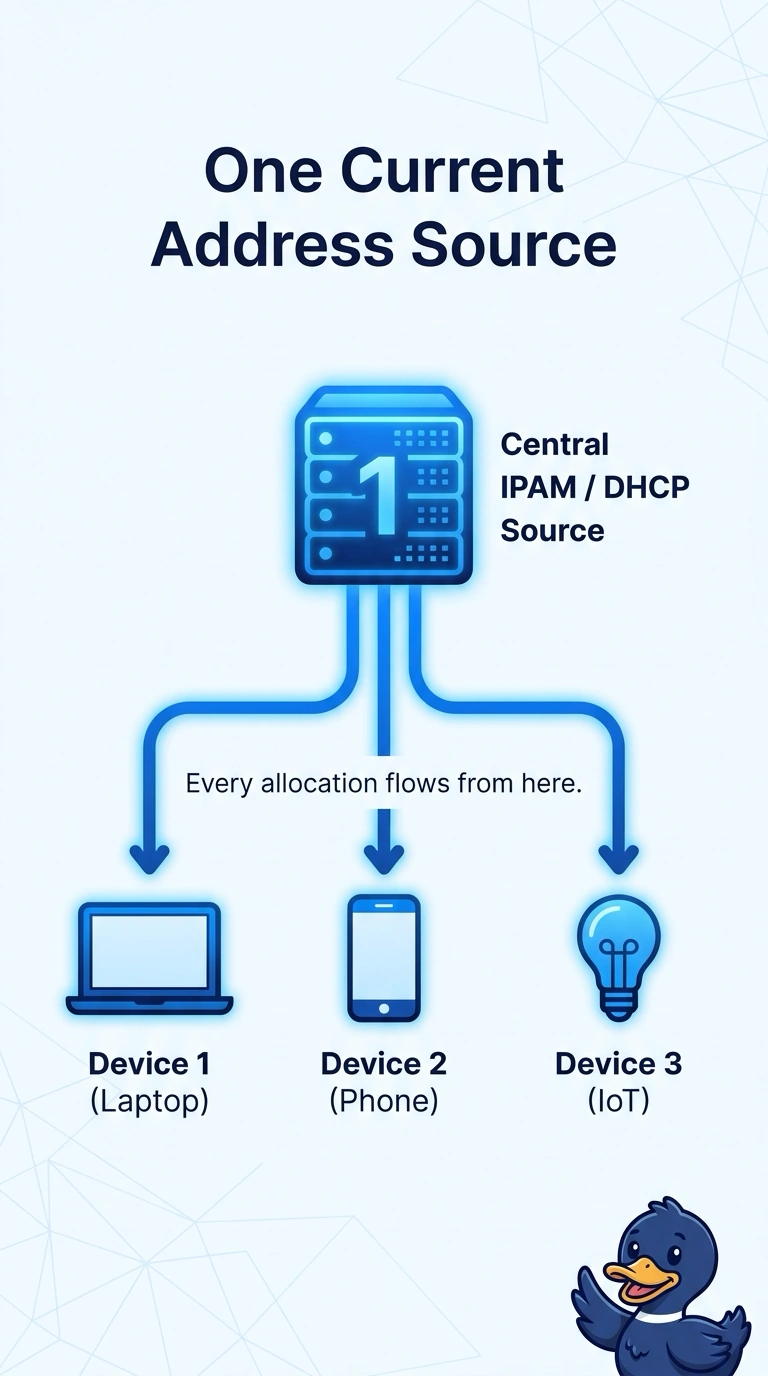
A stale spreadsheet is a photocopy of a clipboard someone else already marked up. You both wrote the same server address because neither of you was looking at a single live list, so IP address management has to be that list. A locked cell, a DNS record after the fact, or one reservation for two servers does not stop the next copy.
Full Explanation
IP address management is the record of which addresses are free, reserved, or in use. When every technician allocates from that system, a second person cannot hand out an address the first person took. That is how the office produced two servers with one address from a stale spreadsheet. A locked cell is the tempting fix, and anyone can still copy the file and assign from the copy. DNS publishes a name after an address exists. It does not decide which address is free. A DHCP reservation binds one MAC to one address. It cannot give that address to two servers, and these servers were assigned by hand. Exam caveat: the record works only if people use it. A perfect database that technicians bypass with another spreadsheet recreates the duplicate. Operational check: record the next allocation in the management system, confirm the address shows as in use before the second technician starts, and verify the two servers no longer share an address. Ping the address from a third host and expect one reply.