
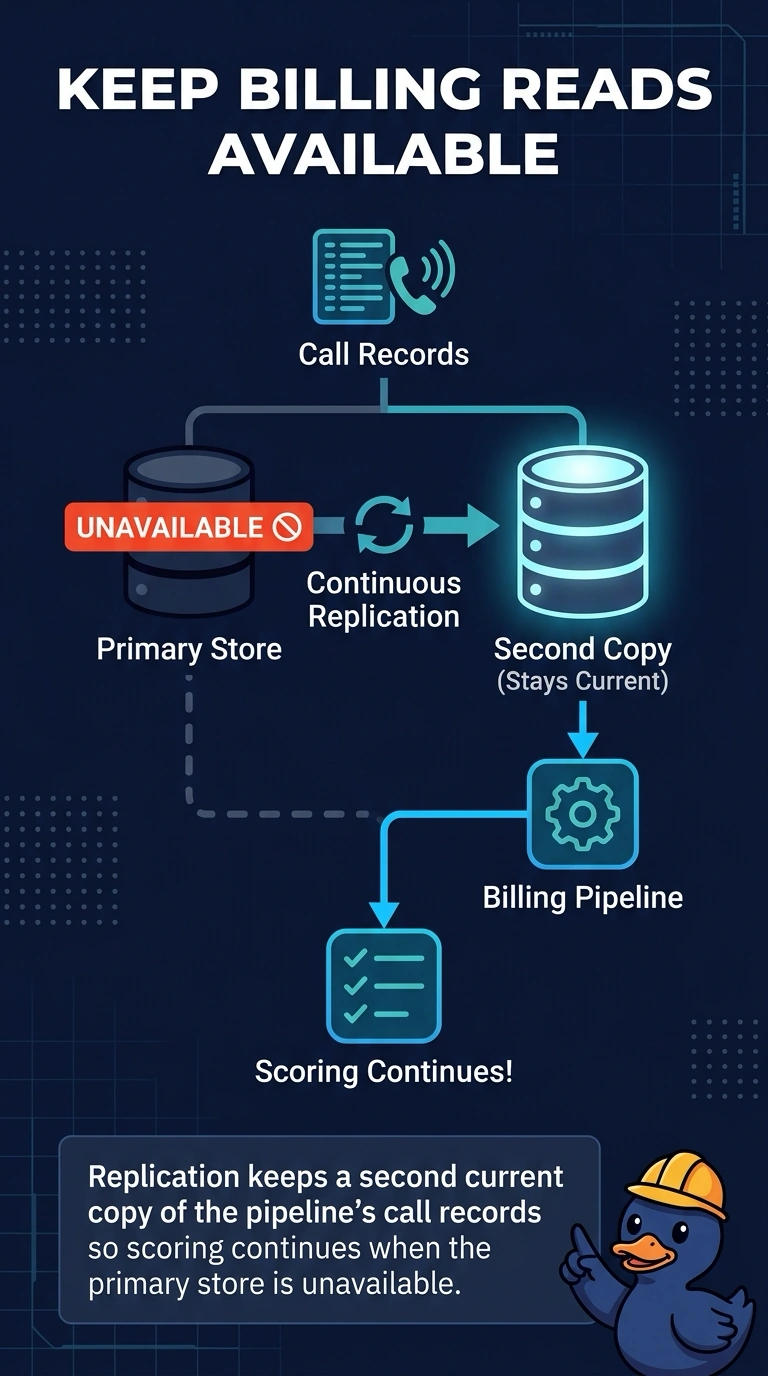
A telecom billing pipeline reads call records from one store, and scoring stops when that store is down. The team wants another live copy of those same records so the pipeline can keep reading. Which practice supplies that second copy?
Select an answer to reveal the explanation.
Short Explanation
A spare copy of the ledger is what keeps the books open when the first cabinet is locked. You need replication of the call records the pipeline reads, not a restart of the scorer or a prettier package. The trap is fixing the process while leaving a single copy of the data.
Full Explanation
Replication maintains another copy of the data a pipeline reads so a failure of the first store does not stop the job. The billing pipeline needs a second live copy of the same call records, and replication is the practice that keeps that copy. The spare has to be another copy of those records, with the same fields the job already reads, or the pipeline still has only one store to lose. Container orchestration can restart the scoring process on a host, but restarting a reader does not create another copy of the records it lost. Code isolation packages libraries so the job is not tied to one person's notebook, which makes the code portable and still leaves one data store. Offline validation scores a frozen extract and is a test of the model, not a second live source for the pipeline. Exam caveat: a replica can lag the primary, so a copy that exists is not automatically as current as the pipeline requires. Operational check: take the primary call-record store offline in a drill and confirm the scoring job keeps reading from the replica.