
An agency evaluates a model meant to flag incomplete grant applications. Accuracy looks high, but the labels mark formatting complaints, not missing required documents. What should the workflow do next?
Select an answer to reveal the explanation.
Short Explanation
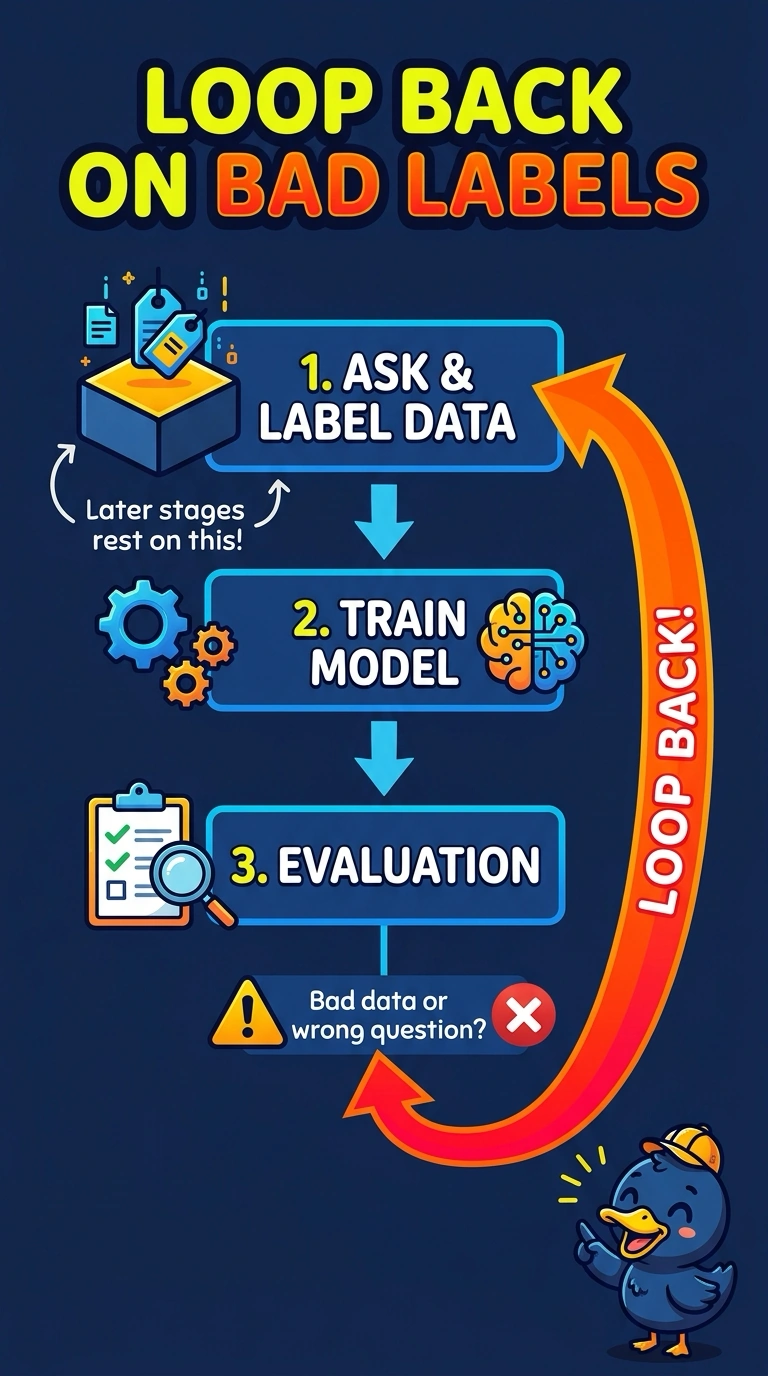
When the answer key graded the wrong homework, you go back and fix the assignment before you celebrate the score. Here evaluation showed the labels answered a different question, so the workflow loops back. Shipping the model, or only retuning knobs, leaves that mistake in place.
Full Explanation
An analysis workflow is iterative. Evaluation is the stage that asks whether the model answered the business question. Here the labels mark formatting complaints while the agency needed missing required documents, so the target definition is wrong even though accuracy against those labels looks high. The correct next move is to loop back to the question and the data, then rebuild from the corrected labels. Deploying treats a high score as sufficient when the score measures the wrong outcome. Retuning only hyperparameters keeps the same features and the same mistaken labels, so the knobs cannot repair a target that answers a different question. Closing the project permanently treats one failed evaluation as a ban on revision, which throws away the point of an iterative life cycle. Exam caveat: a strong metric is not evidence the labels match the decision, so the metric and the label definition have to be read together. Operational check: sample rows where the model and the label agree, and confirm the label text describes a missing required document rather than a formatting complaint.