
A factory wants to know whether a new torque check cuts rework. One study only records which lines already use the check. A second study assigns the check at random to lines for a month and then compares rework. What is the defining difference in the second study?
Select an answer to reveal the explanation.
Short Explanation
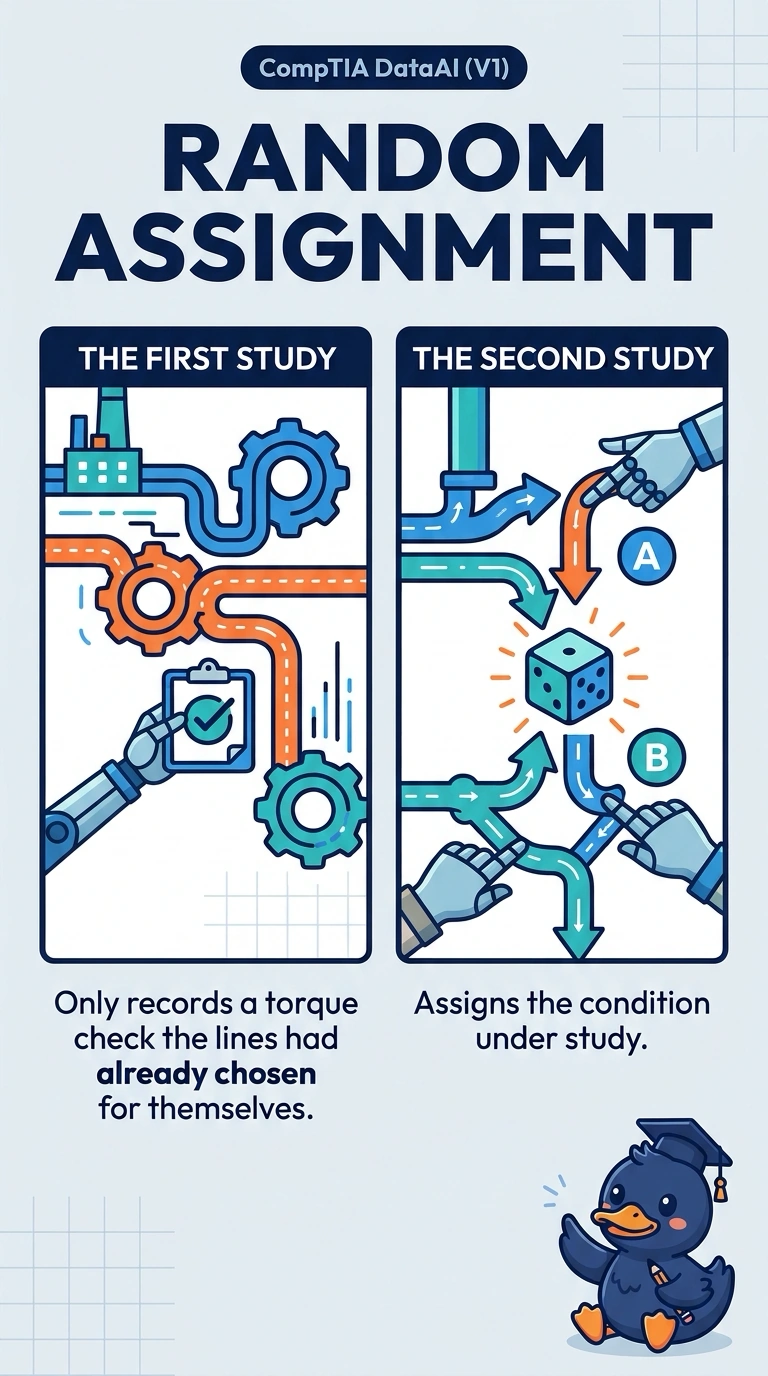
Watching who already brought an umbrella is not the same as handing umbrellas out by lot. You assigned the torque check to lines, while the other study only recorded a check the lines had already chosen. The trap is calling both studies experiments because they both mention the same check.
Full Explanation
An experiment is defined by assignment of the condition. Someone decides which lines receive the torque check, here by random assignment, and the outcome is then compared. An observational study only records a condition that was already in place. The first study watches which lines had chosen the check. The second study creates the contrast by assigning it. That assignment is the defining difference, not the mere fact that both studies mention torque and rework. Production logs kept for scheduling or payroll are administrative records of how the factory already runs. They do not, by themselves, assign the check for the sake of the study. Simulated rework rows would be synthetic data, and the second study does the opposite: it changes which real lines use the check. Measuring rework more often might reduce noise, but the stem's second study does not leave the check where each line already had it. If the check never moves, the study is still only recording an existing choice. Exam caveat: random assignment supports a causal contrast only when the assigned check is the thing that actually changes and the rework comparison follows that assignment. Operational check: read the protocol and confirm a random draw, not each line's prior habit, determined which lines used the check during the month.