
A DBA configures database mirroring between a principal server and a mirror server, then adds a third server that holds no copy of the database. The goal is for the mirror to take over automatically if the principal fails. What is the purpose of the third server?
Select an answer to reveal the explanation.
Short Explanation
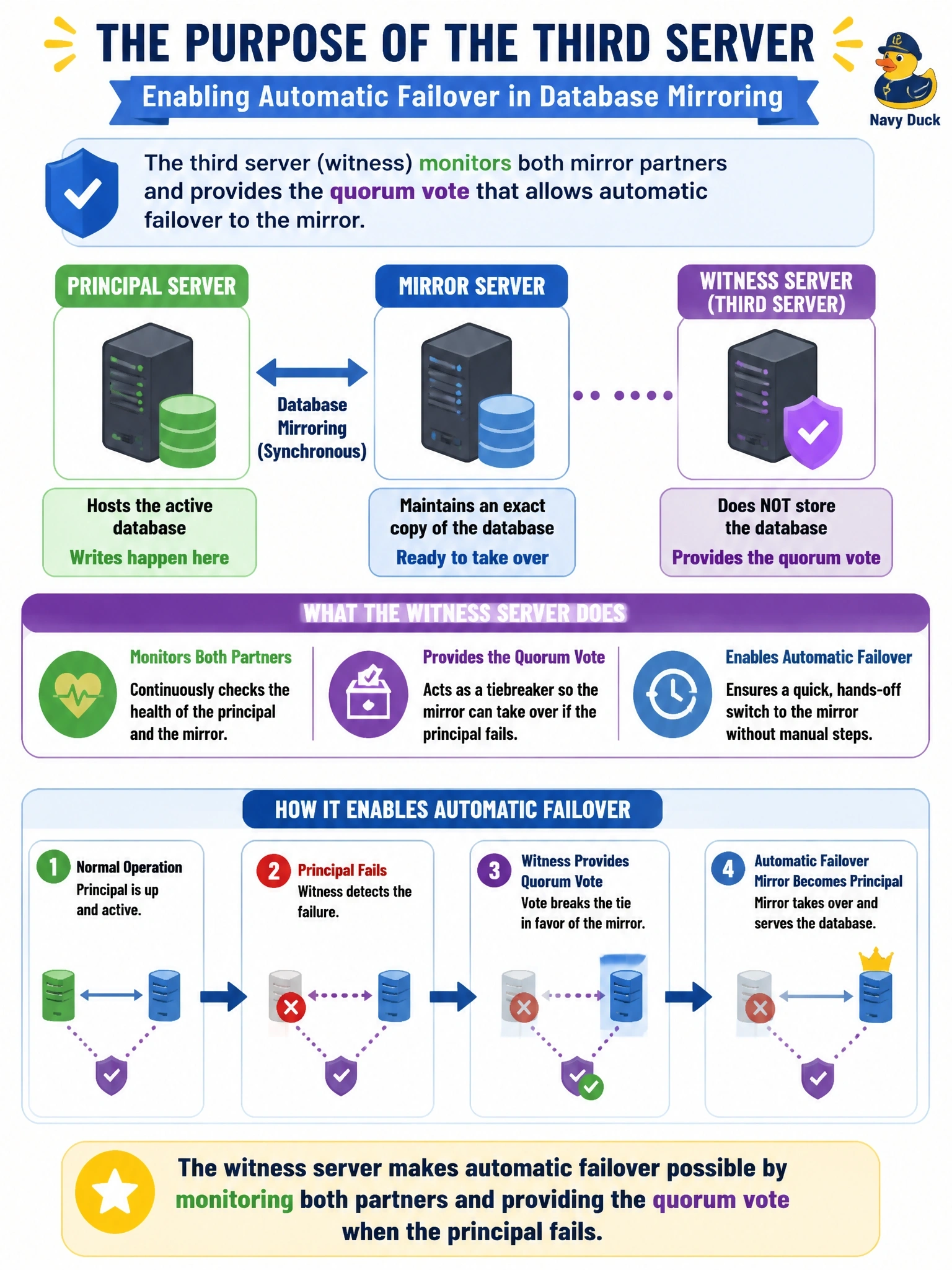
Think of the third server as a referee with no team jersey. It doesn't hold any data you care about; it just watches both players and casts the deciding vote so the mirror can take over without a human. Don't fall for "it's another copy": the whole point is that it carries no database at all.
Full Explanation
In database mirroring, the principal serves clients and streams its transaction log records to the mirror, which keeps a hot copy ready to take over. Automatic failover is risky with only two servers, because if they lose contact neither can tell whether the partner is down or the network between them failed. A witness solves this: it holds no database, but it monitors both partners and participates in a quorum. If the mirror and the witness both agree the principal is unreachable, the mirror can promote itself safely; if the principal is isolated from both, it stops serving. The idea of a third readable copy describes a read replica, not a witness, and the scenario states the server holds no copy of the database. Receiving log backups and restoring them on a delay describes delayed log shipping, which protects against logical mistakes but provides no failover vote. Encrypting the log stream is a transport security feature configured on the connection itself; a separate server is not needed for it and it has nothing to do with failover decisions. Exam caveat: without a witness or equivalent quorum, failover is normally manual to avoid split-brain. Operational check: verify that the mirroring session reports the witness as connected and run a controlled failover test during a maintenance window.