
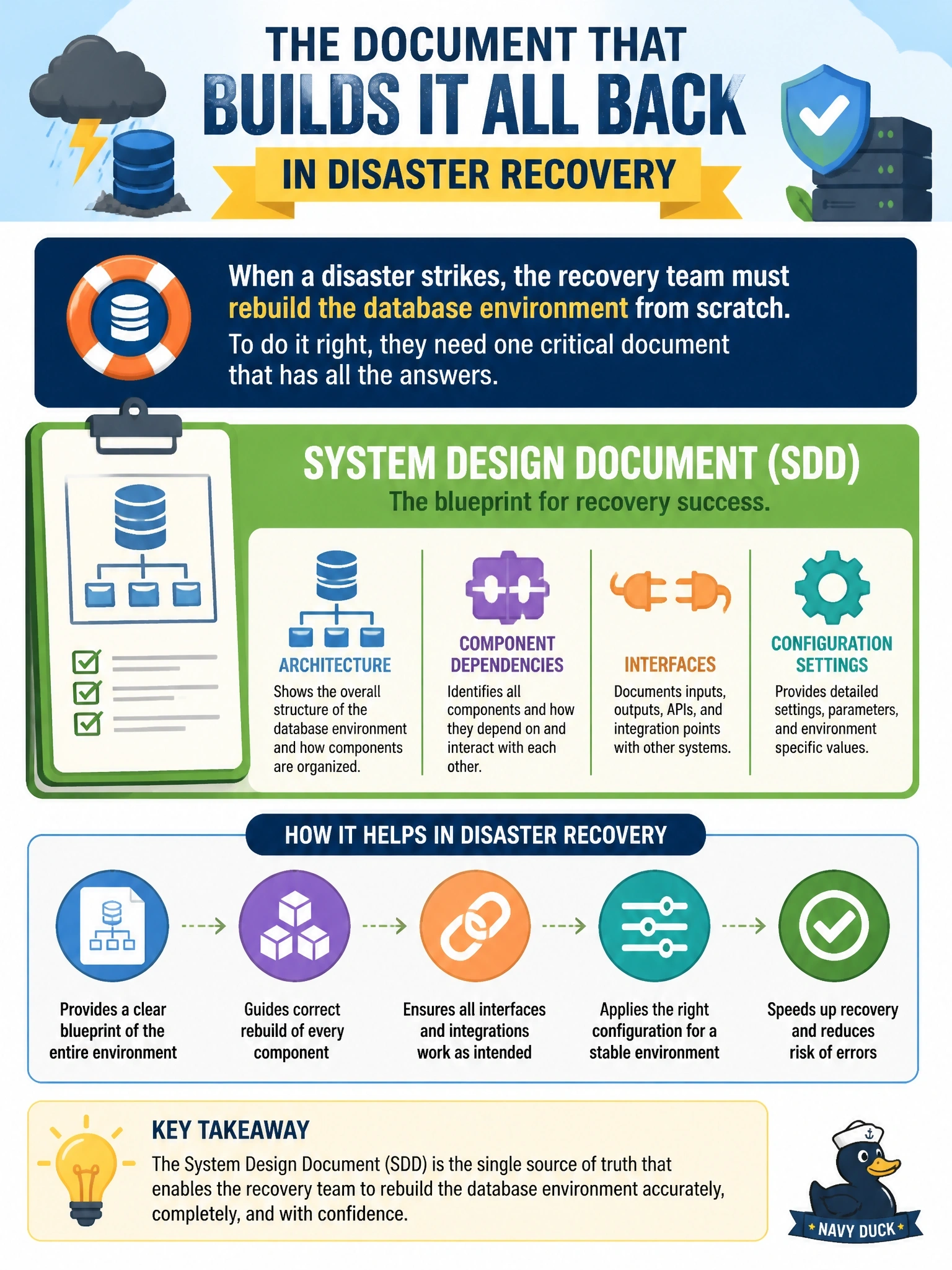
During a disaster recovery exercise, the recovery team must rebuild a database environment from scratch. They need documentation of its architecture, component dependencies, interfaces, and configuration settings. Which document provides this?
Select an answer to reveal the explanation.
Short Explanation
The SDD is the blueprint for the house: rooms, wiring, plumbing and how they connect. When you're rebuilding from nothing, that's what you reach for. The SSP lists the locks and alarms, and the COOP tells you where the family stays meanwhile.
Full Explanation
A system design document describes how a system is constructed: its architecture, hardware and software components, dependencies on other systems, interfaces and data flows, and configuration details. For disaster recovery, it gives a recovery team what it needs to rebuild the environment correctly, such as which servers host which databases, how applications connect, which services must exist first and which settings must match. A system security plan documents security requirements, the authorization boundary and implemented controls; it complements the design document but does not provide the architectural and configuration detail needed for a rebuild. A continuity of operations plan addresses sustaining essential organizational functions through alternate facilities, succession and priorities; it tells the organization which functions to keep running, not how a particular database environment is built. A business impact analysis identifies critical processes and the impact of their disruption over time, informing recovery objectives and priorities; it guides what to recover first rather than how to rebuild it. Exam caveat: on DataSys+, the DR documentation trio is SSP, COOP plan and SDD, each answering a different question. Operational check: compare the SDD with the current environment after each significant change so the recovery team is not rebuilding from an outdated description.