
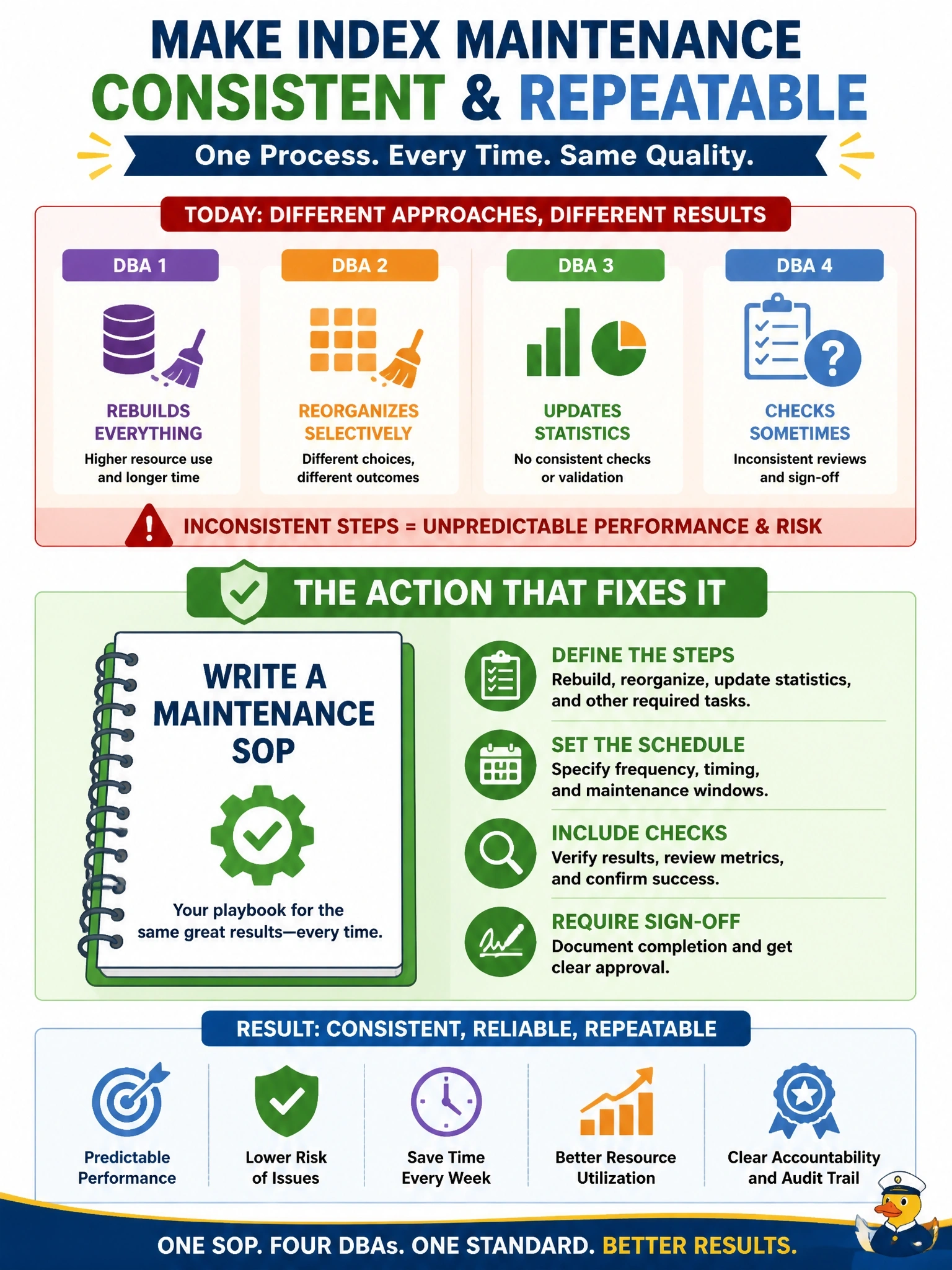
Each of a company's four DBAs performs the weekly index maintenance differently: some rebuild everything, some reorganize selectively, and only some update statistics or check the results. Which action best makes this task consistent and repeatable?
Select an answer to reveal the explanation.
Short Explanation
An SOP is the recipe everyone cooks from, so the dish tastes the same no matter who's in the kitchen. Four people doing it four ways means four different results and no way to audit any of them. Don't confuse documenting the data with documenting the procedure you follow.
Full Explanation
A standard operating procedure documents how a recurring task is performed: its purpose, scope, prerequisites, step-by-step actions, decision criteria, schedule, verification checks, escalation and sign-off. For index maintenance it would specify how fragmentation is assessed, when to reorganize versus rebuild according to the organization's own thresholds, when statistics are updated, which maintenance window is used and how results are logged and reviewed. With an SOP, any DBA produces the same outcome, new staff can be trained and audits can confirm the procedure was followed. Allowing each DBA to keep a personal method preserves the inconsistency the stem describes and makes troubleshooting and auditing difficult. The data dictionary describes the meaning, type and allowed values of data elements; it is the wrong place for operational procedures and would not enforce consistent execution. Making index maintenance a KPI in the SLA confuses an internal task with a customer-facing measure; SLAs state service outcomes such as availability, not how the team performs maintenance. Exam caveat: SOPs should be version-controlled and reviewed when tools or platforms change. Operational check: have two DBAs execute the new SOP independently on a test system and confirm their logs and results match.