
Marketing cannot use generative ads with resident photos until consent and compliance review clear. Which impact is this?
Select an answer to reveal the explanation.
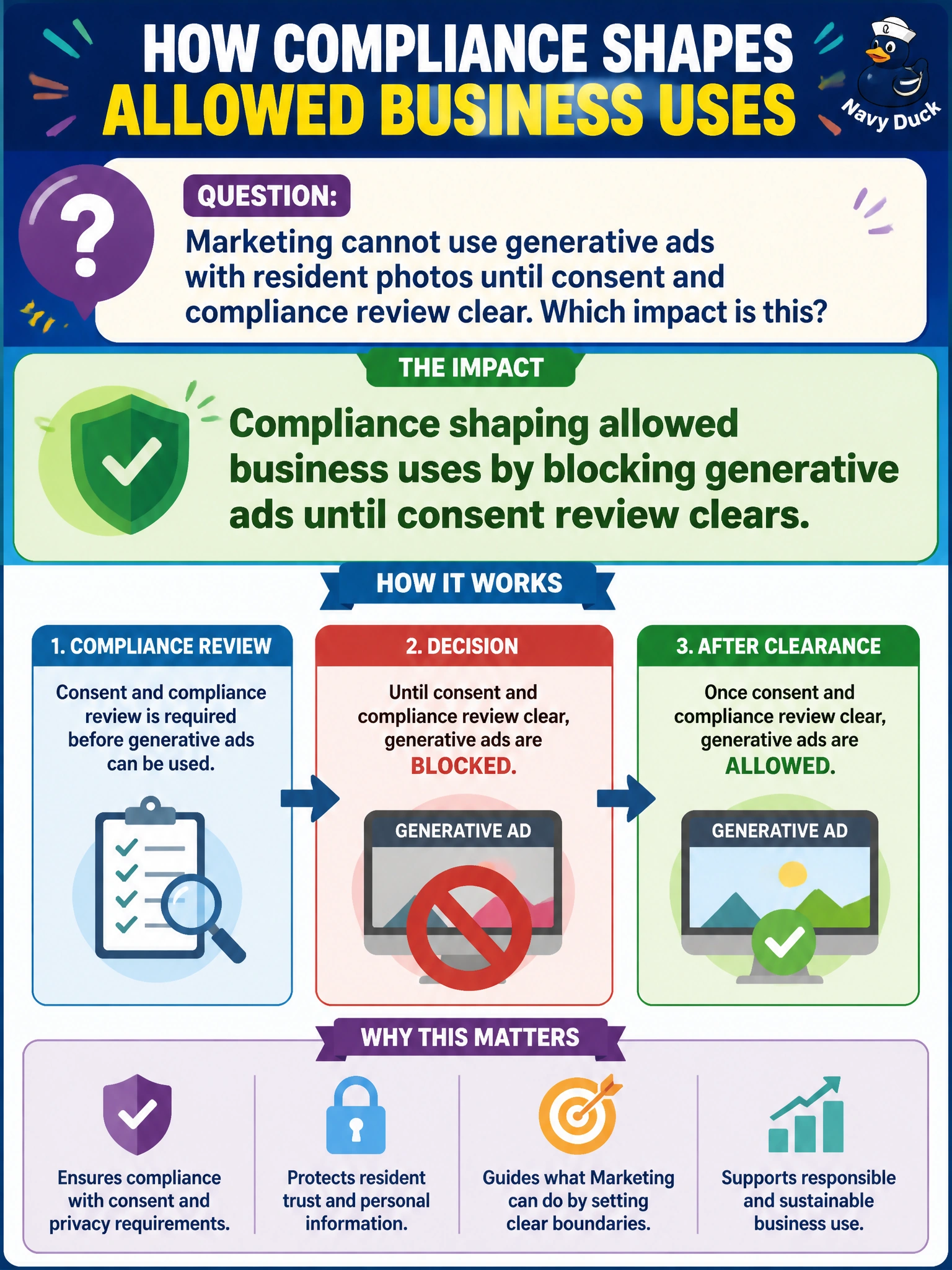
Short Explanation
Resident photos in generative ads wait on consent and compliance — you'll keep that business use blocked until both clear. Labeling the ads, purging stored shoots, or locking edit tools isn't the same as that compliance gate.
Full Explanation
Compliance shapes which business uses of AI are allowed, including marketing that involves resident images and generative tooling. Blocking generative ads until consent and compliance review clear illustrates that impact: campaign calendars do not override consent, publicity rights, or municipal privacy rules just because generative editors make remixing easy. An existing photo file on hand is not automatic clearance for generative advertising reuse with resident photos.
Disclosure shaping deployed outputs by labeling generative ads until consent documentation posts fails because labeling is transparency for an output that is already deployed, while the stem requires blocking the business use itself until consent and compliance actually clear, not deploying with a disclaimer while documentation is still pending. Retention limiting stored assets by purging resident photo shoots until consent renewal triggers fails because purging stored files is a retention lifecycle limit, not a description of how compliance shapes the allowed marketing use — the stem is about blocking generative ads from being used, not about when stored shoots are deleted. Access gating creative tools by restricting background edit features until consent review clears fails differently: restricting an editing feature is tool-level access control, not the business-use gate the stem is illustrating, which blocks the generative-ad campaign itself even if the tool could technically make the edit.
Exam caveat: compliance shaping business use means gating generative marketing on consent/review — labeling deployed outputs, purging stored shoots, and restricting edit features are classic distractors that describe disclosure, retention, and tool access rather than the compliance gate on business use itself.
Operational check: require documented consent and compliance sign-off before generative ads with resident photos, reject labeling the ads or limiting tool features as substitutes for that blocked-use authorization, and keep marketing blocked until both clear.
Prefer to study offline? Printable PDF study book + test engine ($7.50, unofficial). These questions stay free here.