
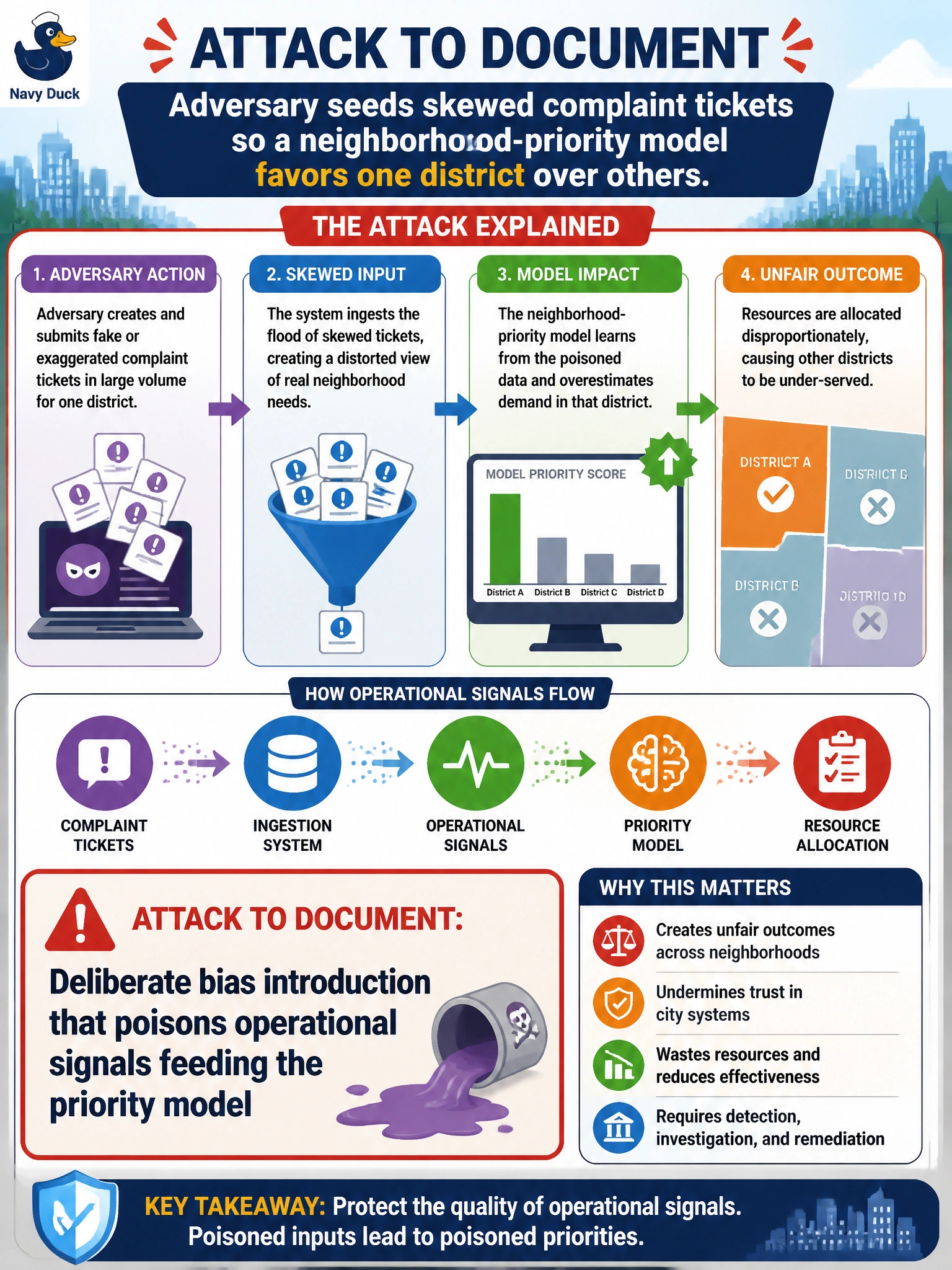
An adversary seeds skewed complaint tickets so a neighborhood-priority model favors one district over others. What attack should the city document?
Select an answer to reveal the explanation.
Short Explanation
Flooding the ticket pile so one neighborhood always ‘wins’ is bias introduction on purpose. That’s an attack on the priority model’s fairness, not adversarial evasion at inference, corrupted annotation guidelines that misgrade training examples shaping the priority model, or tampered weight deployments that shift scoring thresholds in the deployed priority model. Document the skewed seeding and harden intake.
Full Explanation
Documenting skewed complaint tickets that bias a neighborhood-priority model toward one district as deliberate bias introduction is correct because the attacker poisons the operational signals the model consumes so outcomes systematically favor a chosen geography. Bias introduction can target training data or live feedback loops; here, seeded complaints distort priority ranking used for scarce municipal response. Fairness and equity obligations make this an integrity and governance incident, not merely noisy citizen engagement. Adversarial evasion inputs that manipulate priority scores during live inference fail as the attack class because evasion targets the model at inference time rather than poisoning the complaint data that feeds the priority model. Corrupted annotation guidelines that misgrade training examples shaping the priority model fail conceptually because misgraded labeling corrupts training supervision rather than injecting skewed complaints to bias district outcomes. Tampered weight deployments that shift scoring thresholds in the deployed priority model fail because weight tampering alters the deployed model artifact directly rather than injecting skewed complaints to bias district outcomes. Exam caveat: organic spikes (storms, outages, viral social posts) can mimic poisoning; attribution requires evidence of coordinated seeding, anomalous submitter patterns, or content templates inconsistent with genuine resident reporting. Operational check: monitor per-district complaint rates and source diversity, quarantine outlier campaigns for human review before they retrain or reweight the priority model, and publish a fairness dashboard that flags sudden rank shifts unexplained by verified service need.
Prefer to study offline? Printable PDF study book + test engine ($7.50, unofficial). These questions stay free here.