
The security operations manager asks an analyst to add mean time to detect and mean time to respond to the monthly SOC report. Which purpose do these metrics primarily support?
Select an answer to reveal the explanation.
Short Explanation
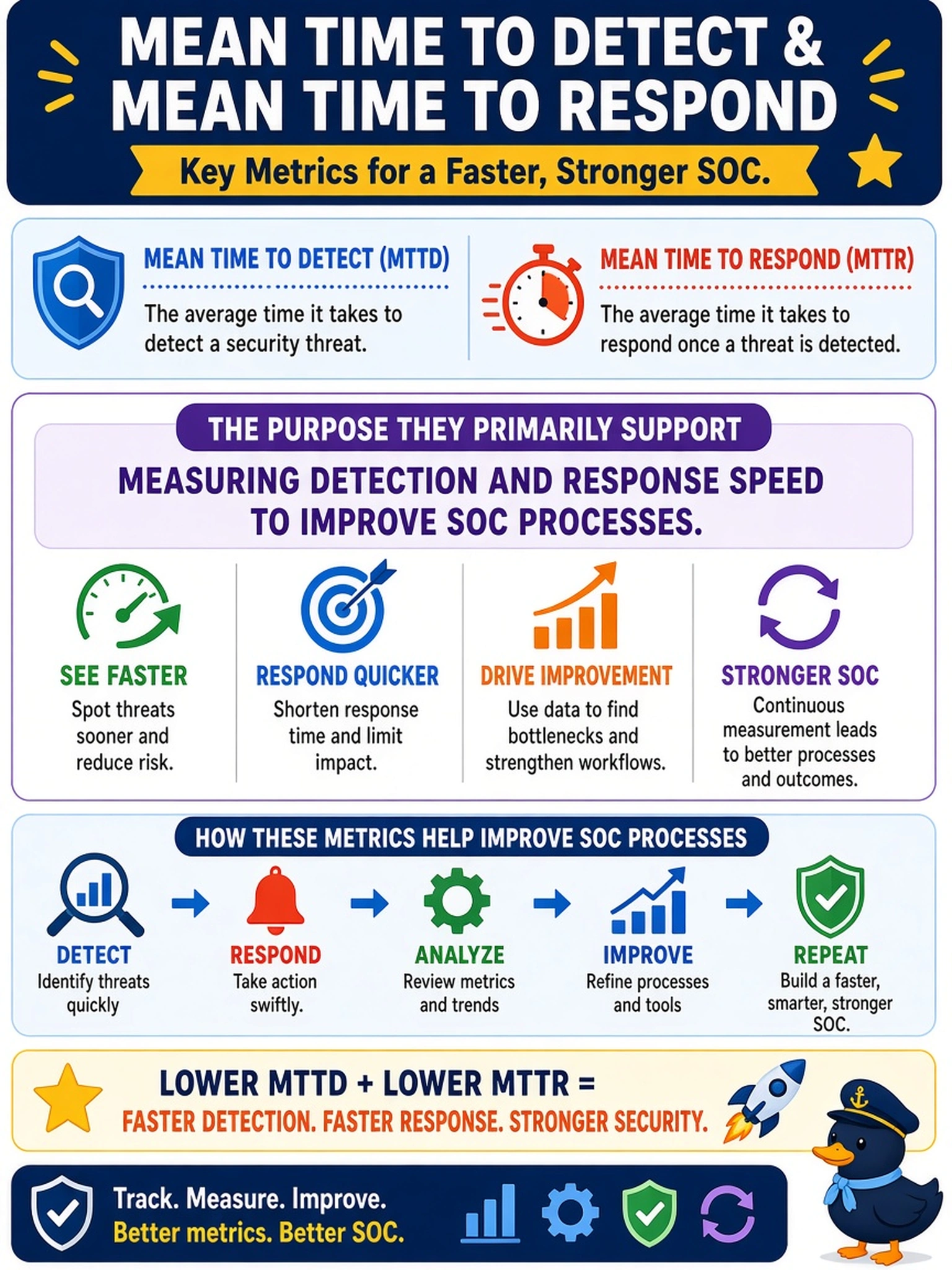
Think of MTTR and MTTD like the stopwatch on your incident workflow: they tell you if your team is getting faster at spotting and stopping trouble. They aren't there to put analysts on the hot seat or price out a disaster - they're there to show where your process is dragging so you can tune it.
Full Explanation
Mean time to detect and mean time to respond are operational indicators that convert incident activity into comparable timing data. Detection time starts when an indicator appears in telemetry and ends when the SOC recognizes a threat; response time continues until containment or remediation. When leadership reviews trends, the value is the pattern, not the timestamp: rising values can reveal slow triage, weak enrichment, fragmented tooling, unclear playbooks, or staffing gaps. These metrics support workflow improvement, automation decisions, training, and resource allocation. Using them only to discipline individuals misses the systemic purpose, because timing depends on tooling, alert quality, shift load, and incident severity, not one person's effort. Financial loss avoidance requires cost models, downtime valuation, and revenue assumptions; timing data alone cannot calculate avoided loss. Scanner reporting completeness is a coverage health check shown by sensor status or log-source completeness, not detection and response clocks. Exam caveat: performance metrics should drive measurable process improvement, not punishment or unrelated asset inventory. Operational check: chart monthly values by severity and compare them against the incident response SLA to find the workflow step needing tuning.