
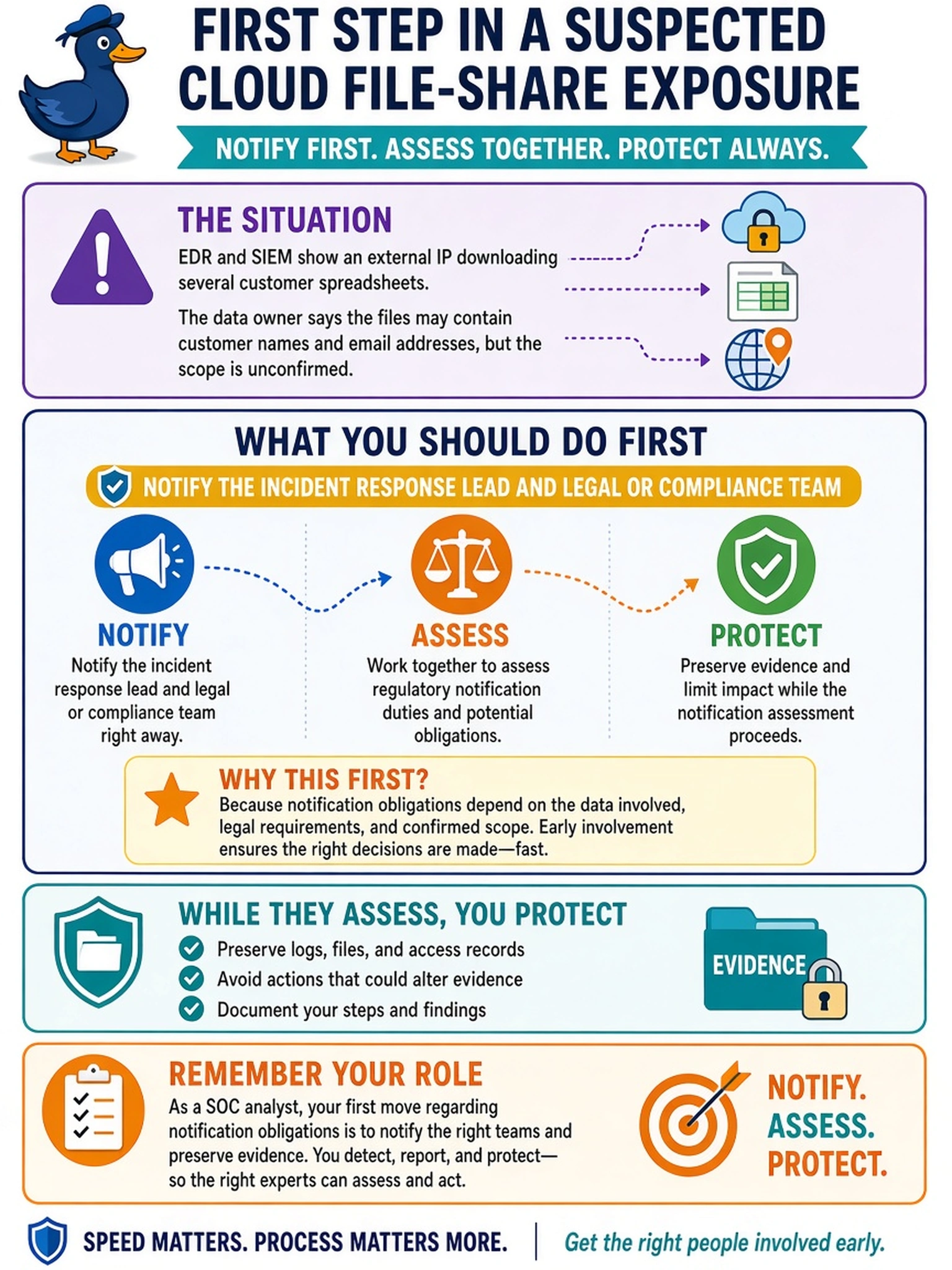
During a suspected cloud file-share exposure, EDR and SIEM show an external IP downloading several customer spreadsheets. The data owner says the files may contain customer names and email addresses, but the scope is unconfirmed. As a SOC analyst, what should you do first regarding notification obligations?
Select an answer to reveal the explanation.
Short Explanation
Think of notification like a fire alarm: you don't wait for the smoke to turn into a flame to tell the safety officer. You flag the suspected PII exposure to IR and legal/compliance now, then let them decide who has to be told. The trap is thinking complete proof is required before escalating - it isn't.
Full Explanation
Potential notification obligations are triggered by credible indications that regulated personal data may have been accessed or disclosed, not by final proof. In this scenario, the analyst should escalate to the incident response lead and legal or compliance notification team because those groups own regulatory analysis, privilege, external messaging, and deadlines. The SOC's role is to preserve evidence, establish scope indicators, and provide factual incident details to the authorized decision-makers. Waiting for complete confirmation can delay statutory timelines and cause the organization to miss notification windows. A public notice is inappropriate before legal, privacy, and customer-support teams assess affected parties, jurisdictions, and messaging. A SIEM vendor or correlation rule cannot make a legal breach determination; automated detection only supports technical triage. Exam caveat: choose the action that hands facts to the accountable notification owners while preserving evidence and limiting disclosure. Operational check: document the suspected data type, affected systems, time window, indicators of compromise, and who has been notified, then confirm the legal or privacy team has opened the regulatory assessment.