
During a ransomware incident, a SOC analyst must update both the incident response engineers and the business unit manager. The engineers need immediate containment actions, while the manager needs to understand operational impact and next steps. Which communication approach is most appropriate?
Select an answer to reveal the explanation.
Short Explanation
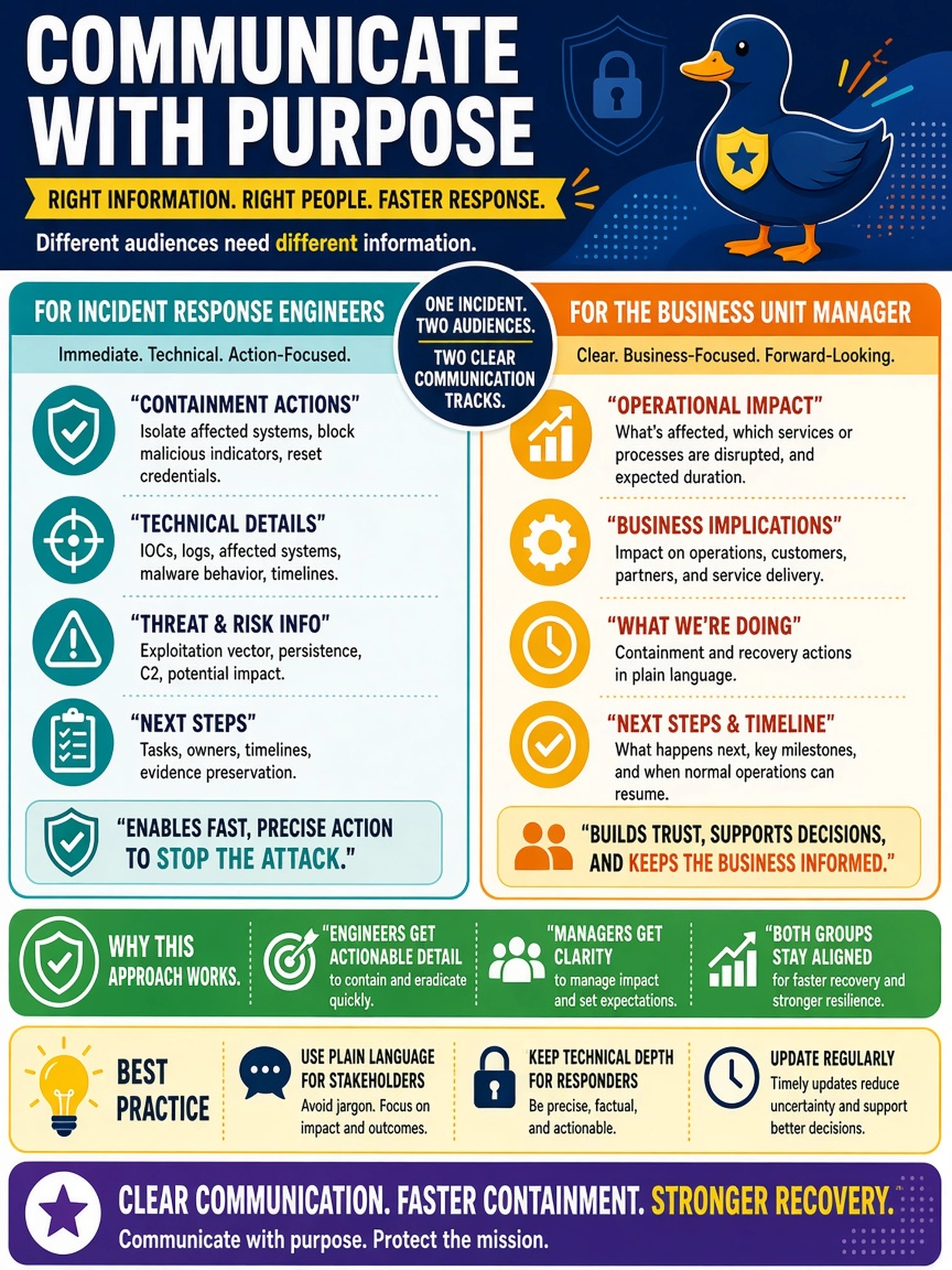
Think of it like a fire alarm: the firefighters need the room map, but the tenant needs the exit plan. You give responders the technical containment steps they can act on, and you give stakeholders plain-language impact and next steps. The trap is thinking one detailed technical update fits everyone — you confuse business readers and delay decisions.
Full Explanation
Effective incident reporting is audience-aware: technical responders need actionable telemetry, containment steps, and system identifiers, while business stakeholders need concise operational impact, risk to services, and decision timelines. Tailoring the message preserves speed and accuracy, because engineers can act on IOC, host, and process details without translation, whereas managers need consequences and next actions without unnecessary jargon. A uniform detailed technical narrative is wrong because business stakeholders are unlikely to understand containment mechanics or validate responder actions, which can obscure business impact and slow executive decisions. Removing technical indicators from responders is also wrong, since containment and eradication depend on precise artifacts; a high-level summary alone can cause delayed isolation or missed lateral movement. Legal terminology in all updates is wrong because legal wording does not improve operational clarity and can obscure actionable technical or business information for both audiences. Exam caveat: choose the option that matches audience need, not the most detailed or most formal wording. Operational check: before sending an update, list the audience’s required decisions, then include only the technical artifacts or business impact needed to support those decisions.