
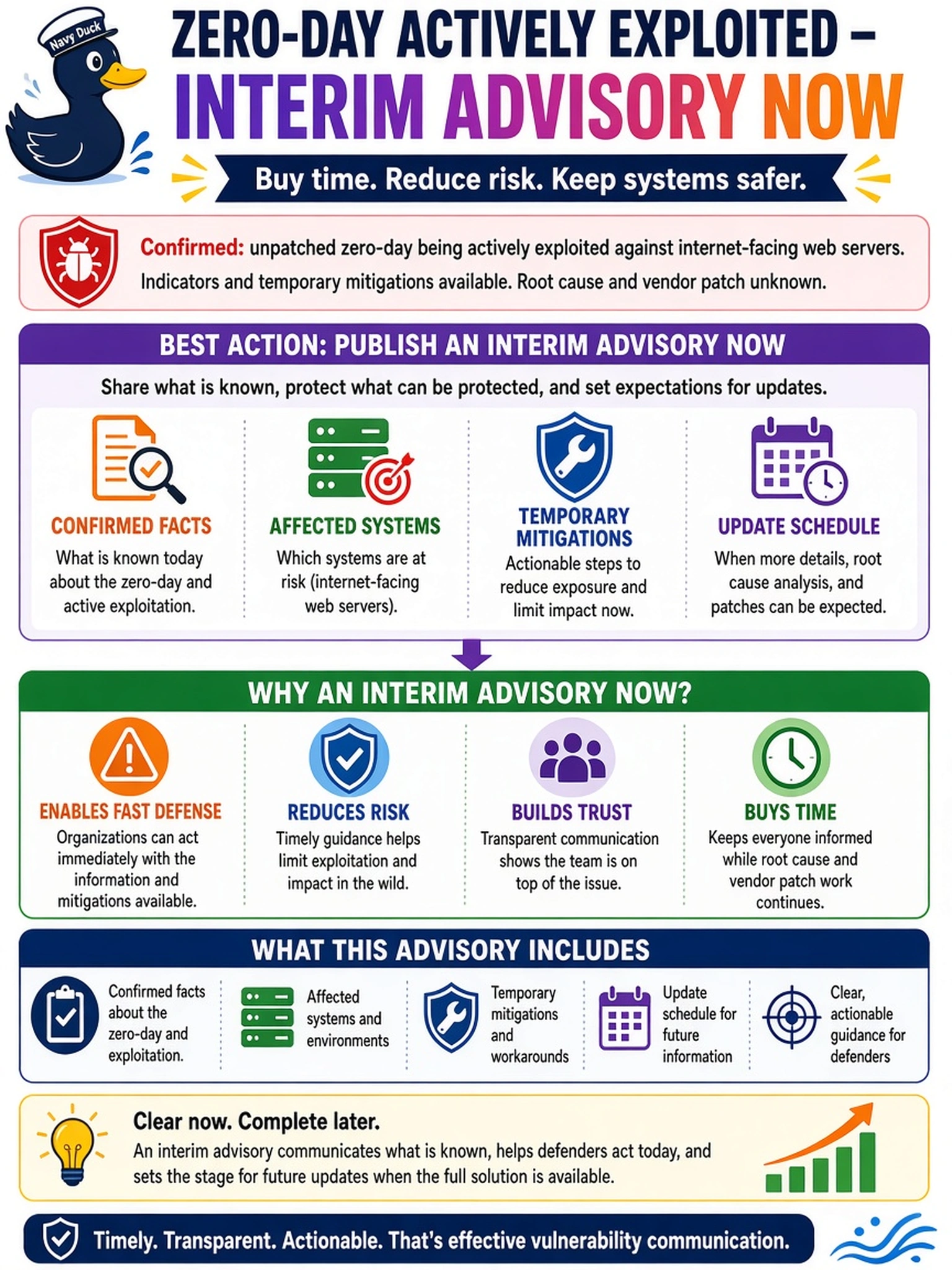
An analyst confirms an unpatched zero-day is being actively exploited against internet-facing web servers. The team has indicators and temporary mitigations, but root cause and vendor patch are unknown. What is the most appropriate vulnerability communication action?
Select an answer to reveal the explanation.
Short Explanation
Think of it like a fire alarm: you don't wait for the full arson report before telling people to get out. If a zero-day is actively exploited, you issue a clear interim advisory with what's known, what's affected, and what to do while the investigation continues. The trap is chasing perfect accuracy while the clock is burning.
Full Explanation
During active exploitation, vulnerability communication is a risk-reduction control, not a final forensic report. An interim advisory lets stakeholders make timely decisions by separating confirmed facts, affected systems, temporary mitigations, and the next update time. This reduces exposure while preserving credibility because unknowns are labeled unknown. A full root-cause and CVSS score can improve precision later, but waiting for them allows exploitation to continue against unpatched assets. Distributing raw SIEM alerts and incident tickets to a broad audience is also inappropriate: it mixes technical evidence with actionable guidance, can expose sensitive telemetry, and does not tell recipients what to do. Waiting for a vendor patch and notifying only application owners similarly fails because the threat is already active and other teams need awareness of mitigations and update expectations. Exam caveat: CS0-004 values actionable, timely reporting under uncertainty, not perfection or over-sharing. Operational check: before sending, confirm the advisory includes affected asset scope, confirmed indicators, immediate mitigations, severity context, and a scheduled next update.