
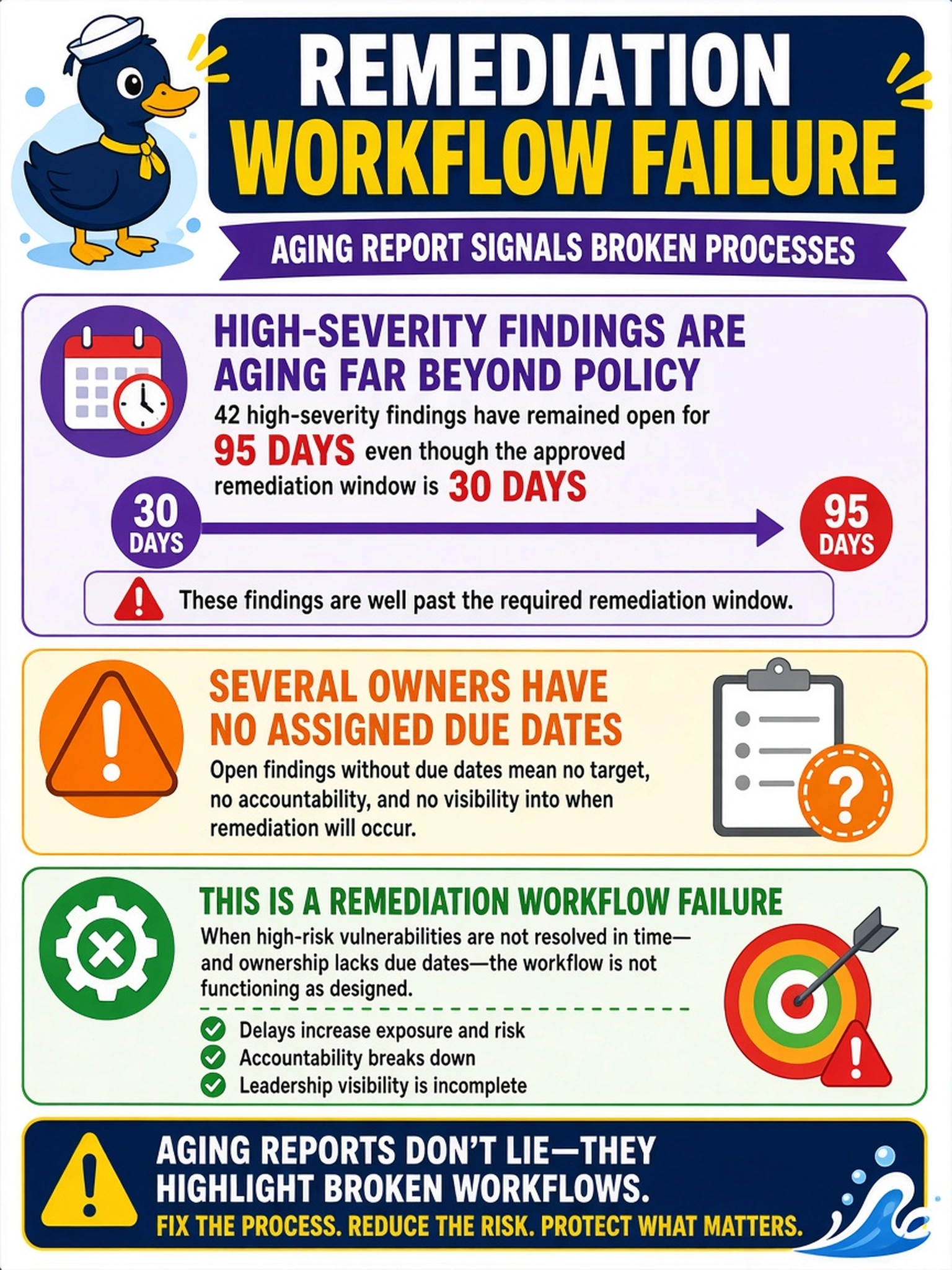
An analyst reviews a vulnerability aging report and finds that 42 high-severity findings have remained open for 95 days, even though the approved remediation window is 30 days. The report also shows several owners have no assigned due dates. What does this aging report most directly indicate?
Select an answer to reveal the explanation.
Short Explanation
Think of an aging report like a parking meter: if the time is up, the problem is not the car's engine, it is the enforcement process. You should see overdue tickets and missing owners as a workflow breakdown, not proof that the vulnerabilities are unfixable. The trap is blaming the scanner or intel feed when the due dates and ownership simply never happened.
Full Explanation
Vulnerability aging reports measure elapsed time against approved remediation windows, so findings open beyond the window expose breakdowns in ownership, ticketing, and SLA enforcement. Missing due dates make the problem process-oriented: work is not being assigned, tracked, or escalated. False-positive backlogs can delay remediation, but the primary evidence would be validation queues, duplicate detections, or scanner tuning metrics rather than overdue open findings with no owners. Threat-intelligence outages may weaken enrichment and prioritization, yet they do not explain why already identified findings have no assigned due dates or remain past their remediation deadline. Unsigned risk-acceptance policies could prevent formal exceptions, but accepted risks should be documented and excluded from open aging or tracked separately; they would not by themselves create overdue open findings without owners. Exam caveat: aging metrics assess timeliness of remediation process, not the technical exploitability of the vulnerabilities. Operational check: extract all past-due findings, then compare owner assignment, ticket status, SLA start date, and exception records to locate the stalled workflow stage.