
An analyst publishes a vulnerability report covering application, infrastructure, and cloud findings. Several teams say they cannot tell who must fix each issue, and deadlines are missed. Which report feature most directly improves remediation accountability?
Select an answer to reveal the explanation.
Short Explanation
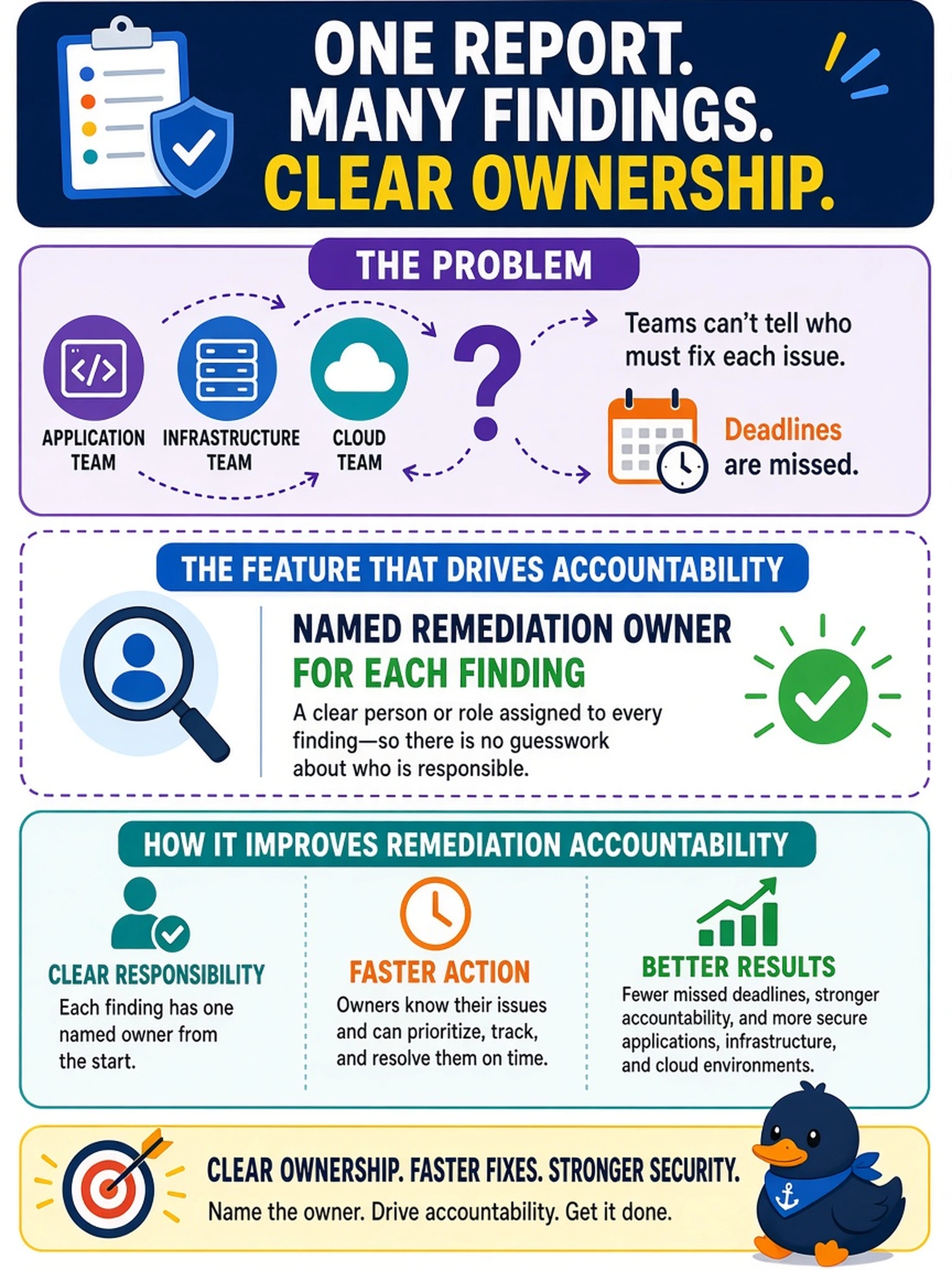
Think of a vulnerability report like a punch list at a construction site: if every item has a name on it, work gets done. Put a real remediation owner on each finding, and you stop teams from passing the buck. Severity and mailboxes help, but they don’t tell you who’s on the hook.
Full Explanation
Vulnerability management reporting becomes actionable when each finding has a clearly identified accountable owner, because accountability moves the item from a shared queue to a specific team or role that can accept, schedule, and close the remediation task. In hybrid estates, application, infrastructure, and cloud teams own different remediation paths, so a report that names the owner for each finding reduces ambiguity, prevents duplicate or dropped work, and supports deadline tracking. A severity ranking alone does not create accountability; it only tells teams which findings are most urgent and still leaves the question of who must act. Automatic assignment to the SOC analyst who opened the ticket confuses detection ownership with remediation ownership, since the SOC may identify or triage a finding but the owning team must fix it. A shared remediation mailbox monitored by vulnerability management can improve communication, but it does not assign individual accountability and can create diffusion of responsibility. Exam caveat: CompTIA often rewards the answer that makes ownership explicit rather than the answer that merely adds visibility or prioritization. Operational check: Review a sample report and confirm every open finding includes an owner, owning team, due date, and current status.