
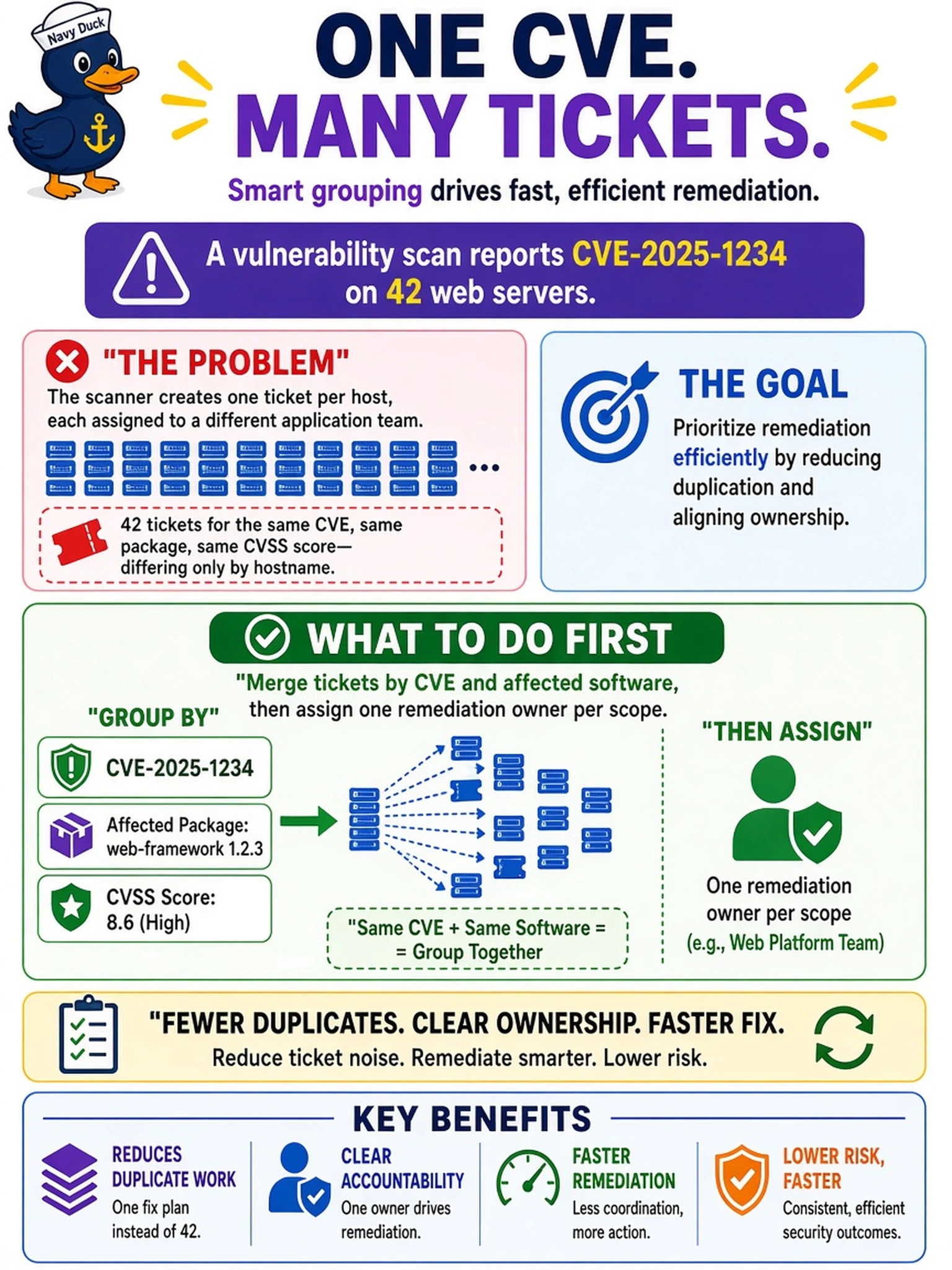
A vulnerability scan reports CVE-2025-1234 on 42 web servers. The scanner creates one ticket per host, each assigned to a different application team. The tickets share the same CVE, affected package, and CVSS score, but differ only by hostname. What should the analyst do first to prioritize remediation efficiently?
Select an answer to reveal the explanation.
Short Explanation
Think of it like this: forty-two tickets for one bug is forty-two chances to patch the wrong way. You don't group by hostname; you group by the vulnerability and affected scope, so one patch plan covers the mess.
Full Explanation
Prioritization in vulnerability management is strongest when work is organized by the remediation action, not by the number of affected assets. A single CVE with the same affected package and severity represents one root cause and usually one patch, configuration change, or compensating control. Consolidating tickets by CVE, affected software, and environment lets the analyst assign one owner, track one remediation deadline, and measure progress across the whole affected scope. Escalating each host separately duplicates effort, fragments ownership, and can slow patching because teams may choose inconsistent fixes or miss dependencies. Lowering the score because many hosts are affected is wrong; CVSS measures the vulnerability's intrinsic severity, while asset count affects exposure and business impact, not the base score. Closing tickets until active exploitation is proven is also incorrect; remediation should be risk-based and driven by vulnerability exposure, not delayed until confirmed compromise. Exam caveat: choose the answer that reduces duplicate remediation work while preserving accurate vulnerability data. Operational check: create a report grouped by CVE, affected package, and environment, then attach the host list to one remediation ticket.