
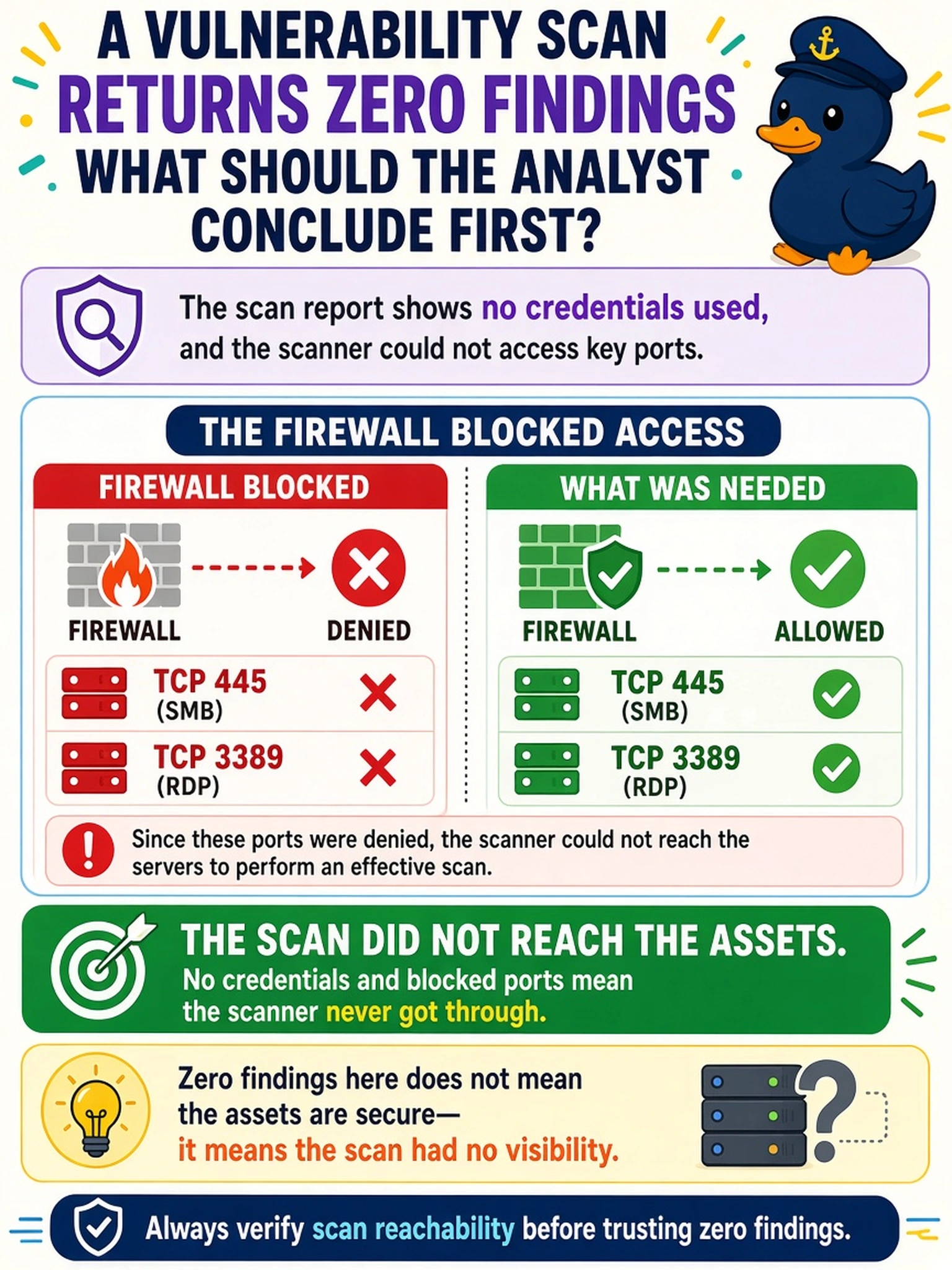
A vulnerability scan of a server subnet returns zero findings. The scan report shows no credentials used, and firewall logs show the scanner's IP was denied to TCP 445 and 3389. What should the analyst conclude first?
Select an answer to reveal the explanation.
Short Explanation
Zero findings never means zero risk when the logs show your scanner got blocked at the perimeter. Think of it like knocking on a locked door and writing down 'nobody's home.' You need to verify reachability before trusting the clean report.
Full Explanation
In vulnerability assessment, a null result is only meaningful when the scan had authenticated or unauthenticated reachability to the intended ports and services. If firewall logs show the scanner source IP was denied to key management or remote-access ports, the report is evidence of incomplete coverage, not remediation success. The analyst should correlate scanner destination ports, firewall deny events, and asset inventory before assigning a clean status to the subnet. An outdated plugin set can cause missed detections, but it would not explain a firewall deny for the scanner and would typically still produce some findings or plugin errors. A missing service can legitimately yield no findings on that service, yet the presence of deny events means the service state cannot be confirmed from the scan alone. A CVSS threshold or severity filter can suppress low results, but it does not prevent the scanner from attempting connections or generating blocked-port evidence. Exam caveat: choose the conclusion supported by the strongest telemetry, not the most optimistic vulnerability interpretation. Operational check: rerun the scan from an allowed scanner VLAN or with a firewall exception, then compare reachability logs before publishing a zero-finding report.