
A SOC analyst receives a high-severity EDR alert showing file encryption behavior on a production file server. The analyst wants to improve response efficiency. Which action best supports efficient incident handling?
Select an answer to reveal the explanation.
Short Explanation
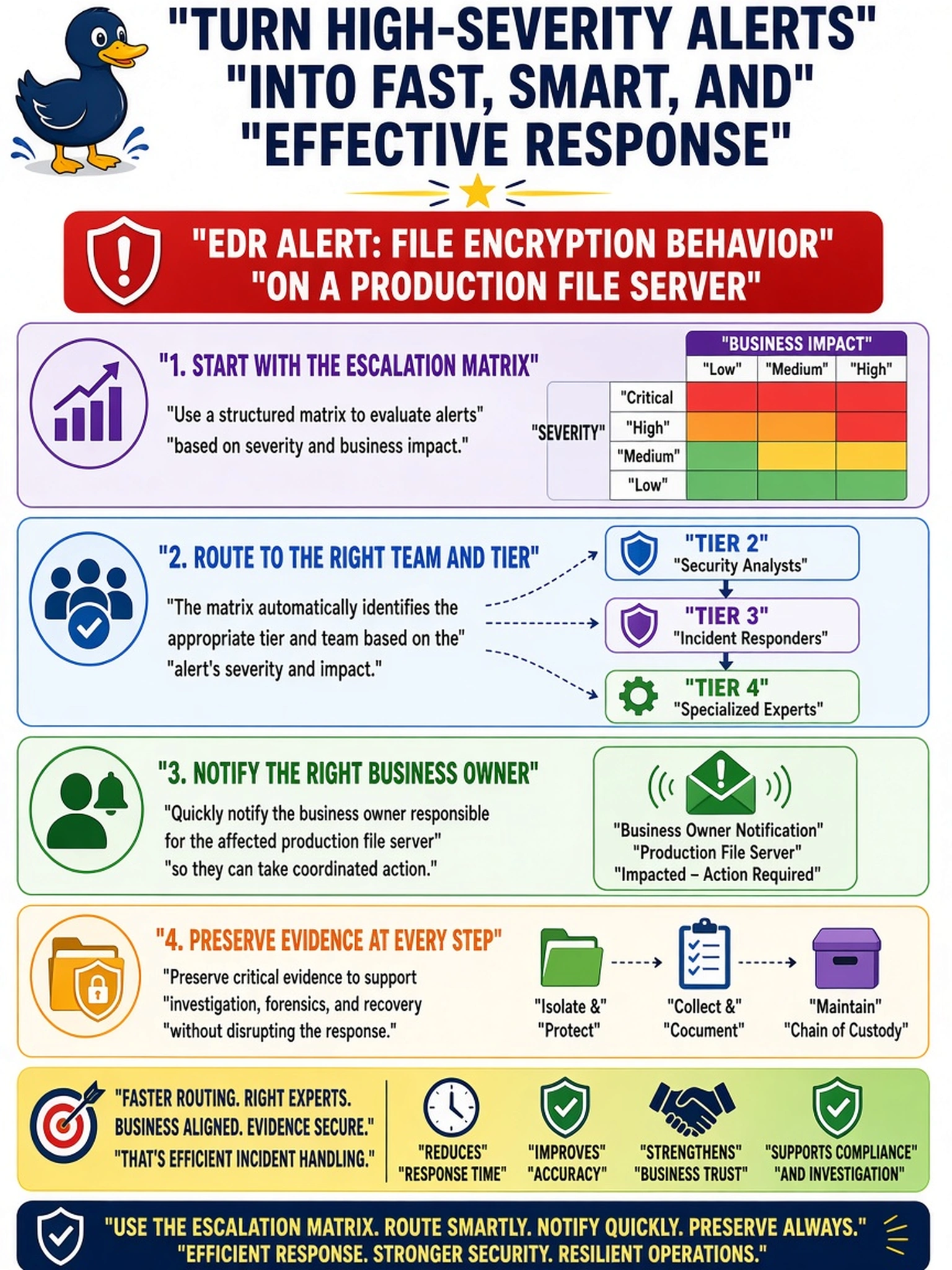
Think of an escalation matrix like a restaurant ticket system: you don't guess who cooks what, you send it to the right station. If you route by severity and business impact, the correct tier and owner act fast without everyone pinging everyone else. The trap is treating every alert as a CISO emergency; that burns trust and slows response.
Full Explanation
Escalation matrices improve security operations efficiency by converting severity and business impact into predefined notification paths. They tell the analyst which technical tier, incident manager, and business owner must be engaged, reducing hesitation, duplicate triage, and missed stakeholders. In a ransomware-like alert, routing by the matrix ensures containment, communications, and evidence preservation begin in parallel. Routing every high-severity alert to executive leadership is inefficient because executive escalation is reserved for defined thresholds, not every technical indicator. Reassigning an alert merely to balance queue load ignores the need for the appropriate responder with the right authority and context. Waiting for additional SIEM correlation before notifying anyone can delay containment and violates the purpose of escalation thresholds, which exist to prevent over-waiting when impact is already known. Exam caveat: the exam often rewards a process-driven action that matches severity and impact over ad hoc communication. Operational check: verify that the escalation matrix maps each severity level to named roles, contact methods, and response time objectives.