
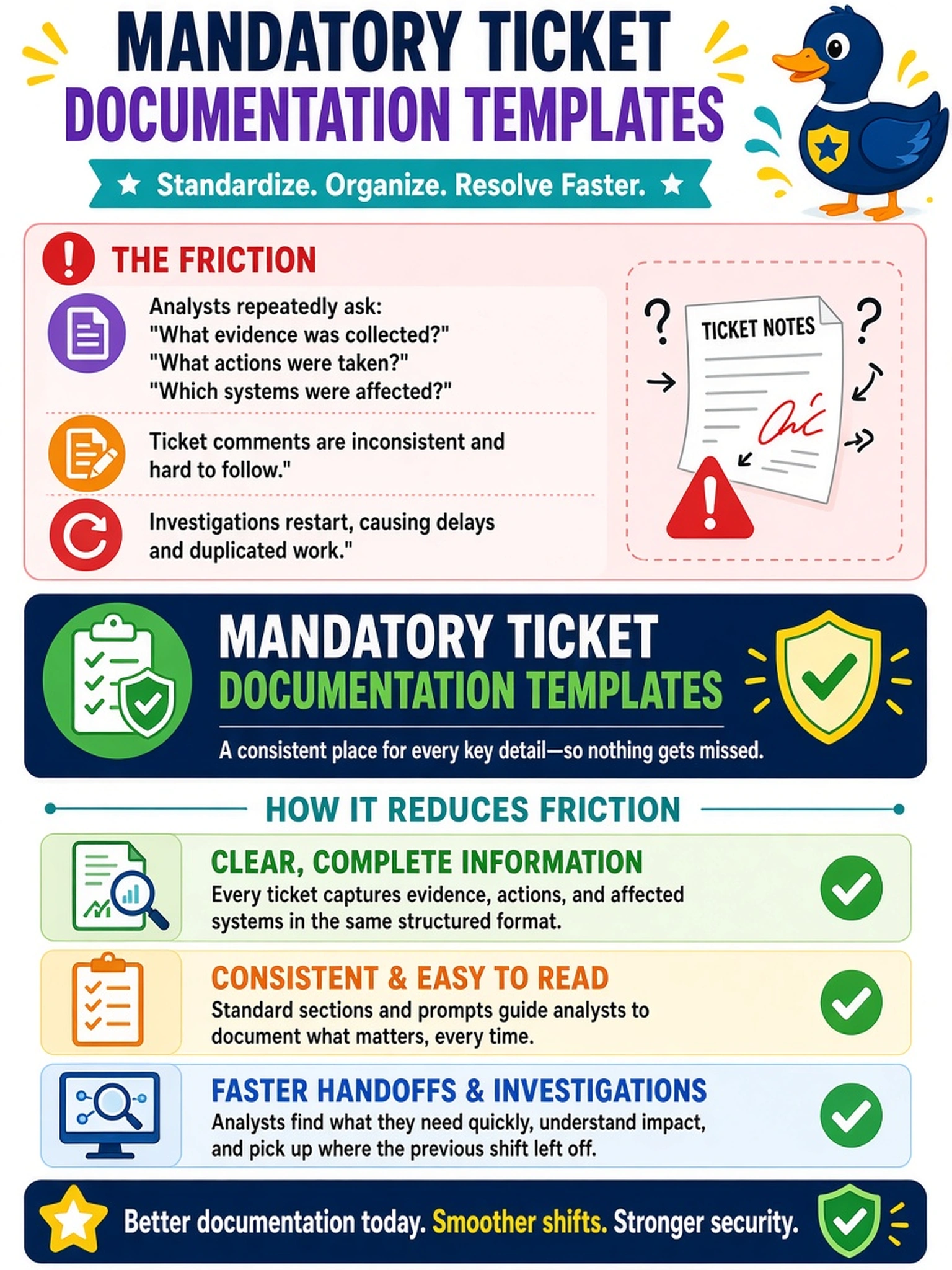
During a shift handoff, your SOC analysts repeatedly ask what evidence was collected, what actions were taken, and which systems were affected. Ticket comments are inconsistent, and investigations restart. What process improvement will most directly reduce this friction?
Select an answer to reveal the explanation.
Short Explanation
Think of a ticket like a shift handoff note at a hospital: if the next analyst has to guess, care slows down. Mandatory documentation templates give your team one place for evidence, actions, and affected systems. You don't fix this by chasing more alerts — you fix the handoff.
Full Explanation
Standardized ticket documentation improves efficiency because it converts analyst memory into reusable evidence. When every ticket captures the same required fields—indicator, affected asset, evidence collected, containment actions, and open questions—new analysts can resume work without interviewing the original owner. This reduces duplicate triage, supports incident timeline reconstruction, and gives managers reliable data for process metrics. Automated ticket assignment helps workload balance, but it does not improve the quality of the information inside the ticket; poorly written tickets still require investigation. Additional SIEM correlation rules can reduce noisy alerts, yet they do not solve inconsistent handoff notes or missing evidence after an alert becomes a case. Lowering severity thresholds may move alerts into different queues, but it can create more backlog and does not address the root cause of unclear analyst work. Exam caveat: efficiency questions often reward process controls that prevent rework, not tools that merely increase alert volume. Operational check: sample ten closed tickets from the last week and verify each contains affected systems, evidence artifacts, actions taken, and a clear disposition.