
An analyst is asked to explain why the SOC maintains a network diagram that records asset criticality alongside IP addressing. Which operational benefit is most directly enabled by recording criticality?
Select an answer to reveal the explanation.
Short Explanation
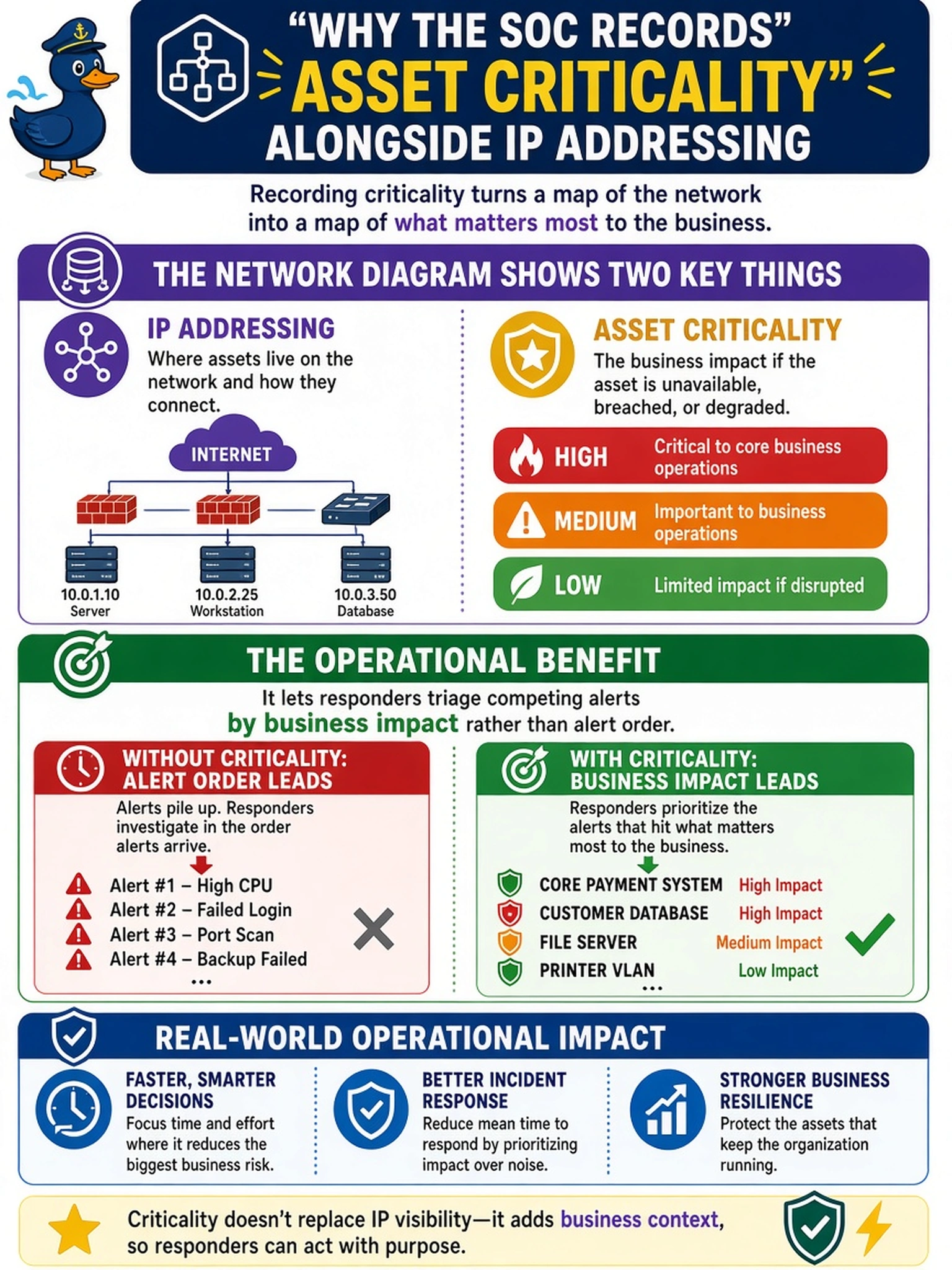
Picture two alerts landing at once — one on a test box, one on the system that takes payments. Same severity score, wildly different consequences, so which one do you chase first? When you know which asset actually matters, your alert queue turns into a priority list.
Full Explanation
Recording asset criticality converts a flat alert queue into a ranked one. Severity scores describe the technical seriousness of a finding in isolation; criticality supplies the business context that decides which of two equally severe findings is worked first. That mapping is what lets a responder justify touching a revenue-bearing system ahead of a lab host, and it feeds directly into vulnerability prioritization and incident escalation thresholds. Alert deduplication depends on identity correlation — hostname, MAC, and address reconciliation — and works the same whether or not criticality is recorded. Telemetry retention volume is driven by data sources, sampling, and the compliance retention period, not by how assets are labeled; if anything, understanding criticality tends to justify retaining more from important systems. Scanner authentication requires a credential store or an agent, and no amount of asset labeling substitutes for one. Operational check: take two open alerts of identical severity on assets of different criticality and confirm the triage order in your ticket queue reflects the criticality field rather than timestamp order.