
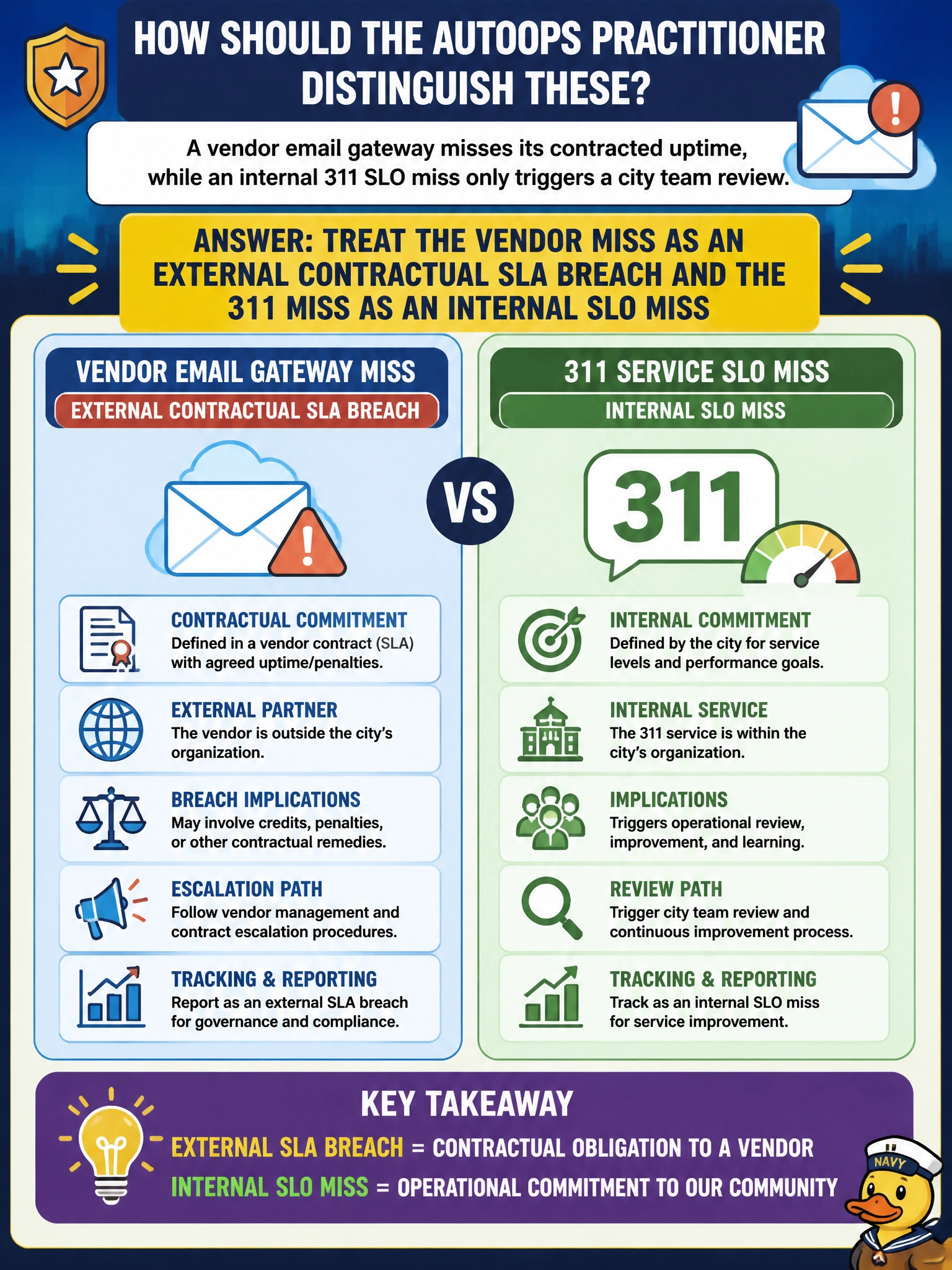
A vendor email gateway misses its contracted uptime, while an internal 311 SLO miss only triggers a city team review. How should the AutoOps practitioner distinguish these?
Select an answer to reveal the explanation.
Short Explanation
SLA breach means the vendor contract was missed; SLO miss means the city's internal 311 target slipped. Mixing them up either invents lawsuits or ignores real contracts.
Full Explanation
SLAs and SLOs are different instruments: an SLA is an external contractual commitment often with credits; an SLO is an internal reliability target with team-owned response. When a vendor email gateway misses its contracted uptime, that is an external contractual SLA breach; when an internal 311 SLO is missed, that triggers city team review and error-budget response—not automatically a vendor lawsuit. The AutoOps practitioner must distinguish owners, evidence, and remedies accordingly.
Treating both as identical marketing slogans with no operational difference erases remedies, owners, and escalation paths for both vendor management and SRE. Calling every internal SLO miss a legal breach of the vendor contract invents liability and misdirects incident response toward procurement theater. Ignoring contractual SLAs and only watching municipal chat emoji reactions abandons enforceable vendor commitments when credits are owed to the county.
Exam caveat: some organizations publish customer-facing SLOs, but the stem’s contrast is vendor contract versus internal 311 target—keep measurement owners and actions distinct in runbooks. Operational check: for the gateway miss, gather uptime evidence and open the vendor credit or claim process; for the 311 SLO miss, run the internal reliability review and adjust change policy or toil work.