
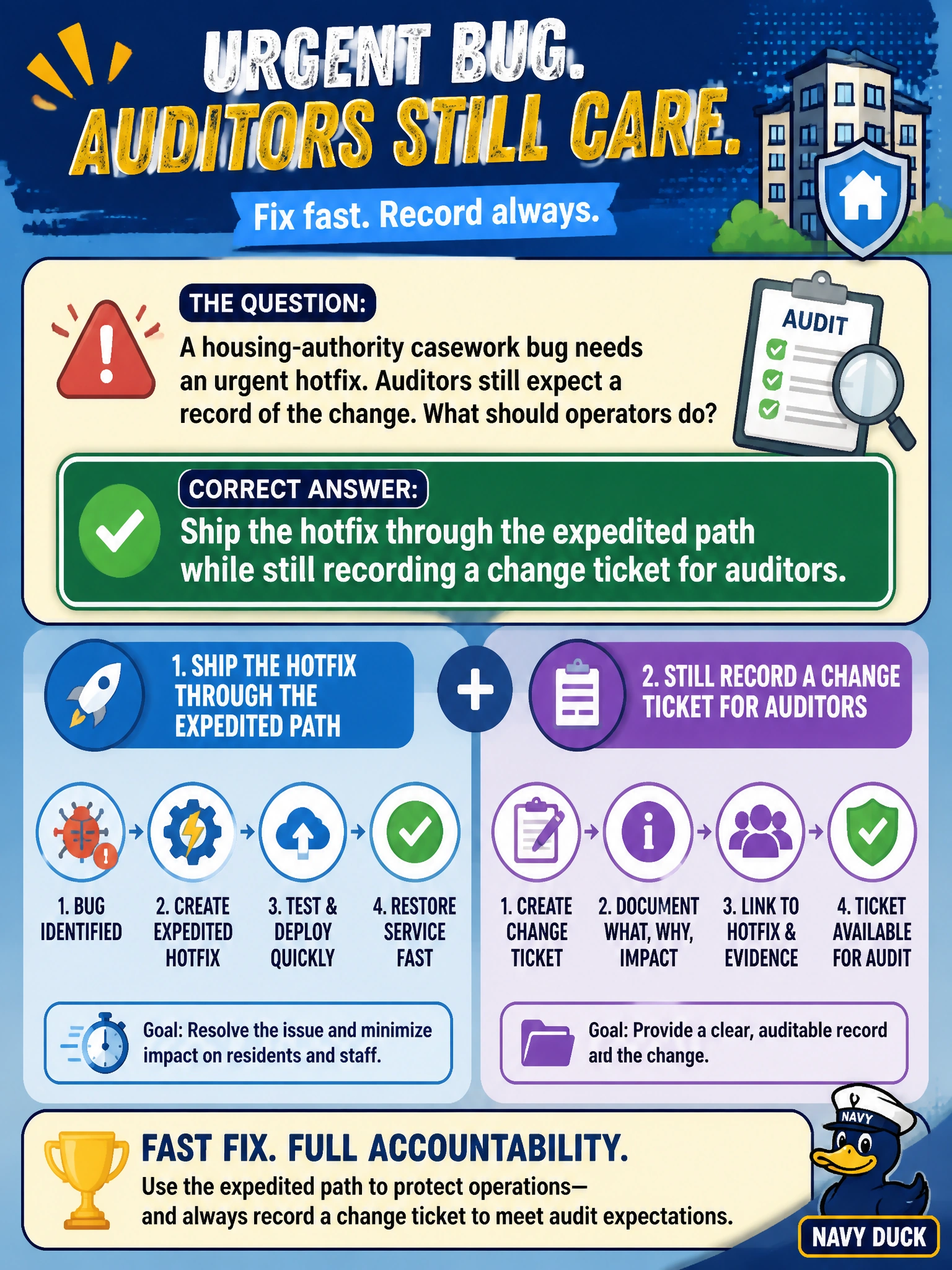
A housing-authority casework bug needs an urgent hotfix. Auditors still expect a record of the change. What should operators do?
Select an answer to reveal the explanation.
Short Explanation
Even a housing hotfix needs a paper trail—ship fast, but leave the change ticket for auditors. Skipping tickets or rewriting logs is how municipal reviews turn ugly.
Full Explanation
Urgent hotfixes and auditability are not mutually exclusive in municipal operations. A housing-authority casework bug can ship through an expedited path while operators still record a change ticket so auditors have who, what, when, and why. That practice preserves speed for residents stuck in casework workflows and preserves the control evidence reviewers expect after the fact.
Skipping all tickets and deploying from a personal laptop with no trail maximizes perceived speed and destroys provenance—unacceptable for housing systems under audit or grant review. Hiding the change by rewriting production logs after the fix is active concealment and typically a policy or legal failure, not operations excellence. Refusing any hotfix until the annual audit window opens prioritizes calendar theater over residents blocked by a live defect.
Exam caveat: expedited paths should still enforce a defined minimum gate set and required ticket fields; “break glass” without documentation is not a compliant municipal pattern. Operational check: open the hotfix ticket first or in parallel with the fix, deploy via the expedited pipeline, attach commit and deploy IDs to the ticket, verify casework recovery, and close only after verification so auditors can reconstruct the change.