
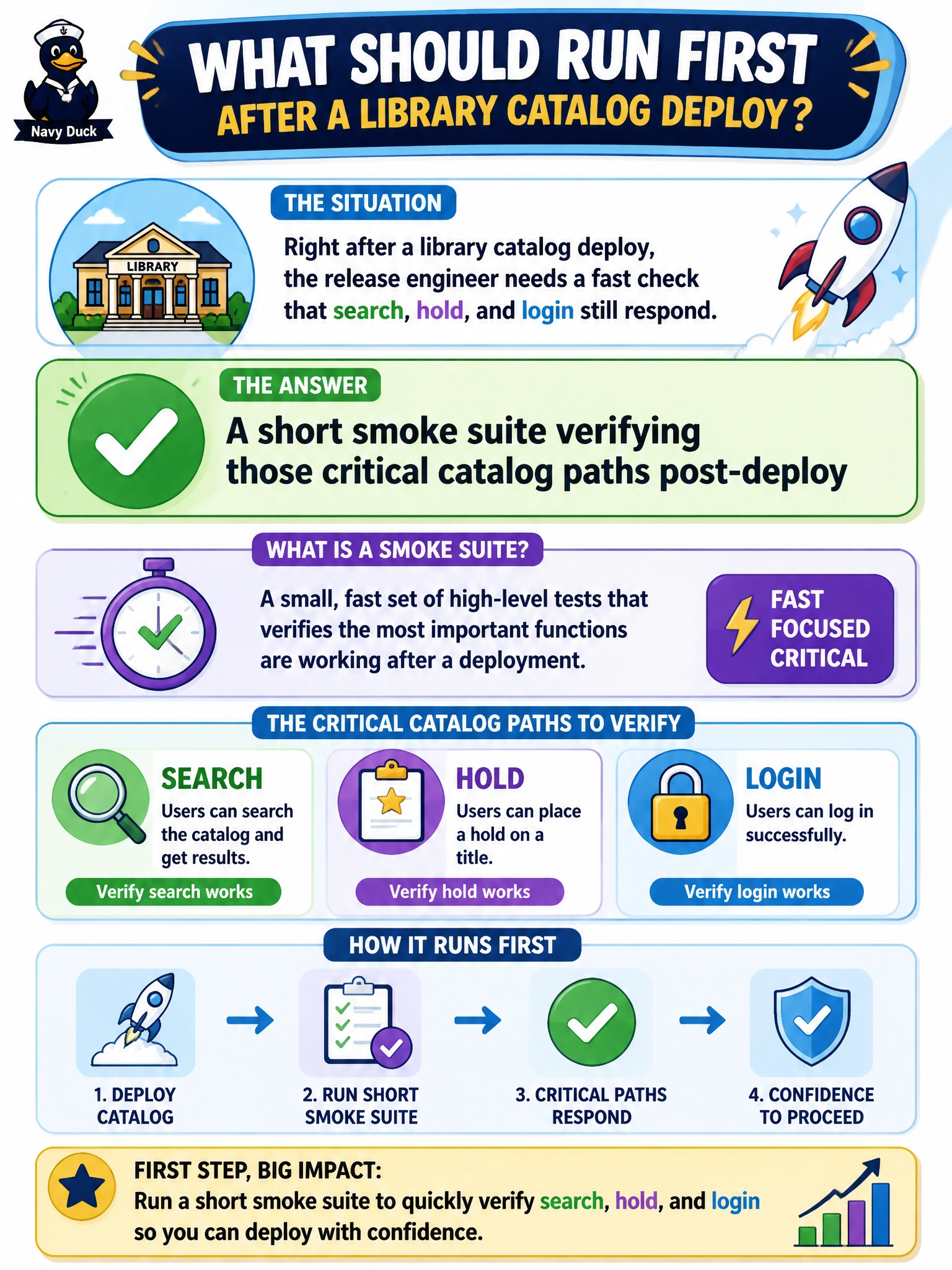
Right after a library catalog deploy, the release engineer needs a fast check that search, hold, and login still respond. What should run first?
Select an answer to reveal the explanation.
Short Explanation
Smoke tests are the quick "lights on" check after you open the library wing—search, holds, login. Save the multi-day catalog archaeology for later; first prove the critical paths answer.
Full Explanation
Smoke testing is a short, high-signal suite that confirms critical paths respond after a deploy before deeper testing or full traffic trust. Right after a library catalog deploy, the release engineer needs a fast check that search, hold, and login still respond—those are the citizen-facing “lights on” paths. A short smoke suite verifying those critical catalog paths post-deploy fits because it is fast enough to gate the release train and specific enough to catch catastrophic breakage immediately.
A multi-day soak test against every historical catalog record is endurance and data-coverage work; it is too slow as the first post-deploy gate and answers a different question than “do search, hold, and login answer right now.” A full accessibility audit of every library branch website is important compliance work, but it is not a rapid post-deploy health check of catalog APIs and login. A complete rewrite of the catalog schema before any check invents new risk instead of validating the build just shipped.
Exam caveat: smoke suites must stay small and stable—critical paths only—or they cease to be smoke and become slow gatekeepers teams bypass. Operational check: immediately after catalog deploy, run the smoke suite against search, hold, and login; treat any failure as a release blocker and roll back or hot-fix before expanding traffic.