
Citizen permit forms use sticky sessions, and a canary may skew results if the same users always hit one version. What caveat applies?
Select an answer to reveal the explanation.
Short Explanation
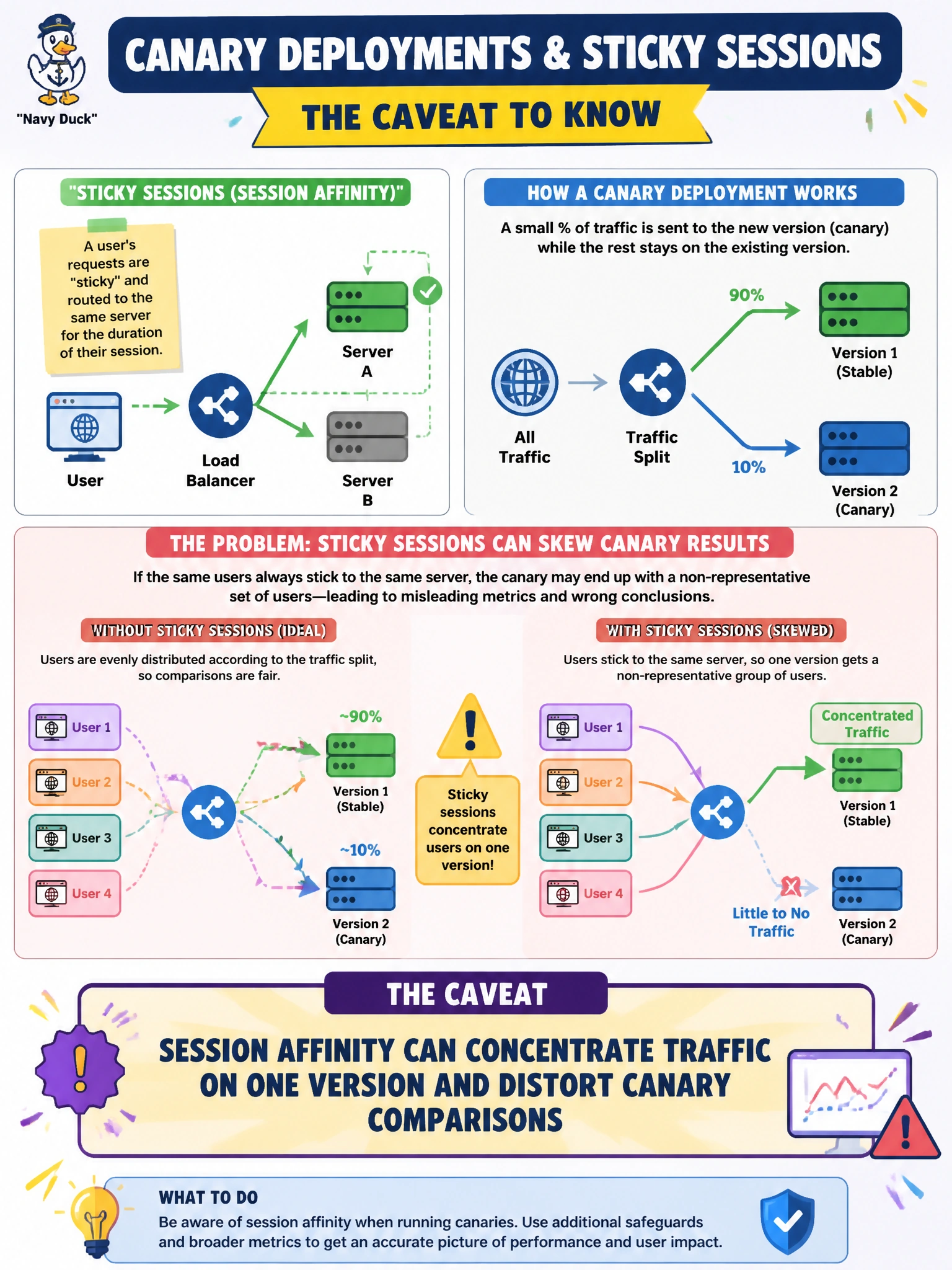
Sticky sessions can glue the same citizens to one permits desk—so the canary "sample" is really a glued clique, not a fair slice. Affinity can warp the scoreboard.
Full Explanation
Sticky sessions (session affinity) pin a citizen to the same backend for the life of the session. During a canary on permit forms, that pinning can concentrate many requests from the same users onto one version, so the canary sample is no longer a fair mixed slice of traffic. Metrics may look artificially good or bad because a glued cohort—not a random percentage—dominates one version. Municipal permit apps that keep affinity for form wizards must account for that skew when interpreting canary results.
Claiming sticky sessions always improve canary accuracy with no further analysis fails by concept because affinity biases which users land where rather than guaranteeing representative sampling. Saying session affinity can be ignored because canaries never interact with user sessions fails because canaries run on live user traffic and session routing directly shapes that traffic. Claiming canary metrics are unaffected by how load balancers pin sessions fails by denying the mechanism of skew.
Exam caveat: affinity skew is a measurement validity problem, not an automatic reason to forbid canaries. Mitigations include affinity-aware analysis, canarying at session-start boundaries, temporary affinity adjustments, or longer observation windows. Know that "sticky" can distort percentage-based comparisons.
Operational check: during a permits canary, compare unique session distribution versus request counts per version. If one version receives a sticky clique, treat error/latency comparisons cautiously and adjust routing or analysis before promoting.