
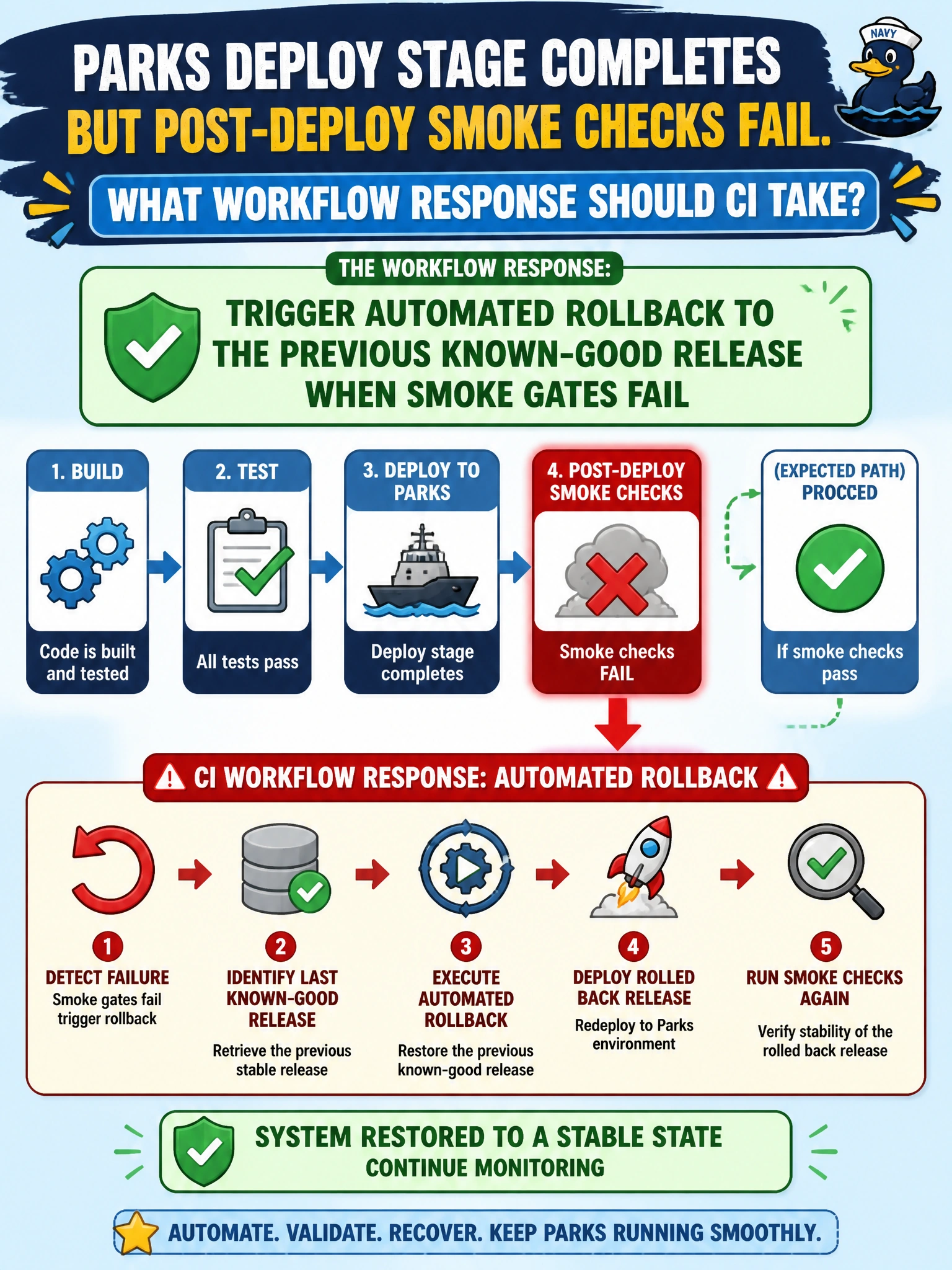
Parks deploy stage completes but post-deploy smoke checks fail. What workflow response should CI take?
Select an answer to reveal the explanation.
Short Explanation
Failed park-site smokes mean the new ride isn't safe—auto-rollback puts the last good build back on the track. Silencing alerts or painting the pipeline green leaves visitors on a broken ride.
Full Explanation
Auto-rollback restores the prior known-good release when post-deploy validation fails, limiting citizen impact from a bad parks deploy. When the deploy stage completes but smoke checks fail, CI should trigger automated rollback rather than leaving the broken release serving traffic. The correct response works because smoke gates exist to detect that the newly promoted build is not actually healthy; continuing to serve it converts a detected failure into an extended outage for park reservation, permitting, or site services.
Leaving the broken release in place and silencing the smoke alerts fails because silencing removes the signal without restoring service—visitors remain on a failed ride while operators pretend the alert was noise. Marking the pipeline green manually without changing the environment fails conceptually: painting the UI green does not repair the environment; it falsifies the deployment record and trains teams to ignore gates. Deleting monitoring so failed smokes cannot be detected again fails because eliminating detection guarantees the next bad deploy will also go unnoticed.
Exam caveat: rollback itself needs a retained previous artifact and compatible data migrations—forward-only destructive migrations can make instant rollback unsafe, so design parks releases with rollback-friendly schema steps. Operational check: in a non-production parks slot, deploy a build that fails a deliberate smoke check, confirm automatic rollback to the previous artifact, verify smokes pass on the restored version, and ensure alerts still fire (not silenced) during the incident window.