
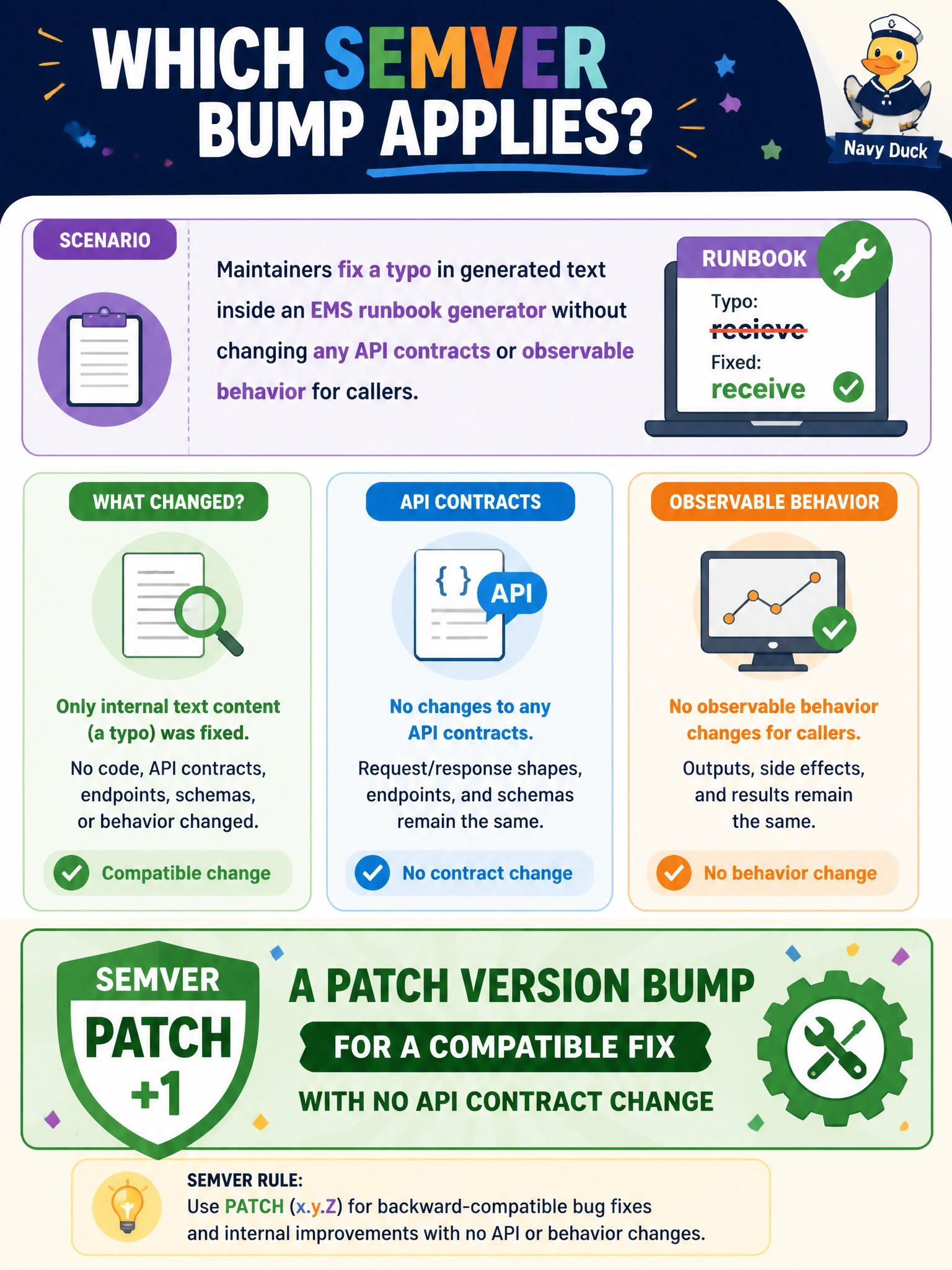
Maintainers fix a typo in generated text inside an EMS runbook generator without changing any API contracts or observable behavior for callers. Which SemVer bump applies?
Select an answer to reveal the explanation.
Short Explanation
A harmless typo fix is a PATCH — like correcting a misspelled street name on a runbook cover without redrawing the whole city map. Callers see the same contract; the version’s patch digit ticks up.
Full Explanation
PATCH versions communicate backward-compatible bug fixes that do not alter the API contract. Correcting a typo in generated text inside an EMS runbook generator—without changing API contracts or observable caller behavior—fits that category. Operators pinning the generator receive the textual fix without needing coordinated breaking-change migrations.
A MAJOR bump because “EMS software must always jump major numbers” is superstition, not SemVer. A MINOR bump treats typos as new features, which overstates the change and confuses consumers watching for additive APIs. Publishing with no version identifier at all prevents operators from pinning builds and breaks reproducible municipal deployments.
Exam caveat: if the typo fix somehow changed machine-parsed output contracts, classification might shift; the stem’s “no API contract change” locks PATCH. Operational check: bump patch, regenerate a sample runbook, diff against the prior patch for text-only change, and confirm integration tests that assert API/CLI contracts remain green. EMS maintainers should still run a quick golden-file or snapshot test on generated runbook text so the PATCH truly changes only the typo and not surrounding templates that callers scrape.