
A fire-station printer deploy script can change device settings across many sites. Operators want a preview of intended changes before anything is applied. Which parameter pattern best supports that?
Select an answer to reveal the explanation.
Short Explanation
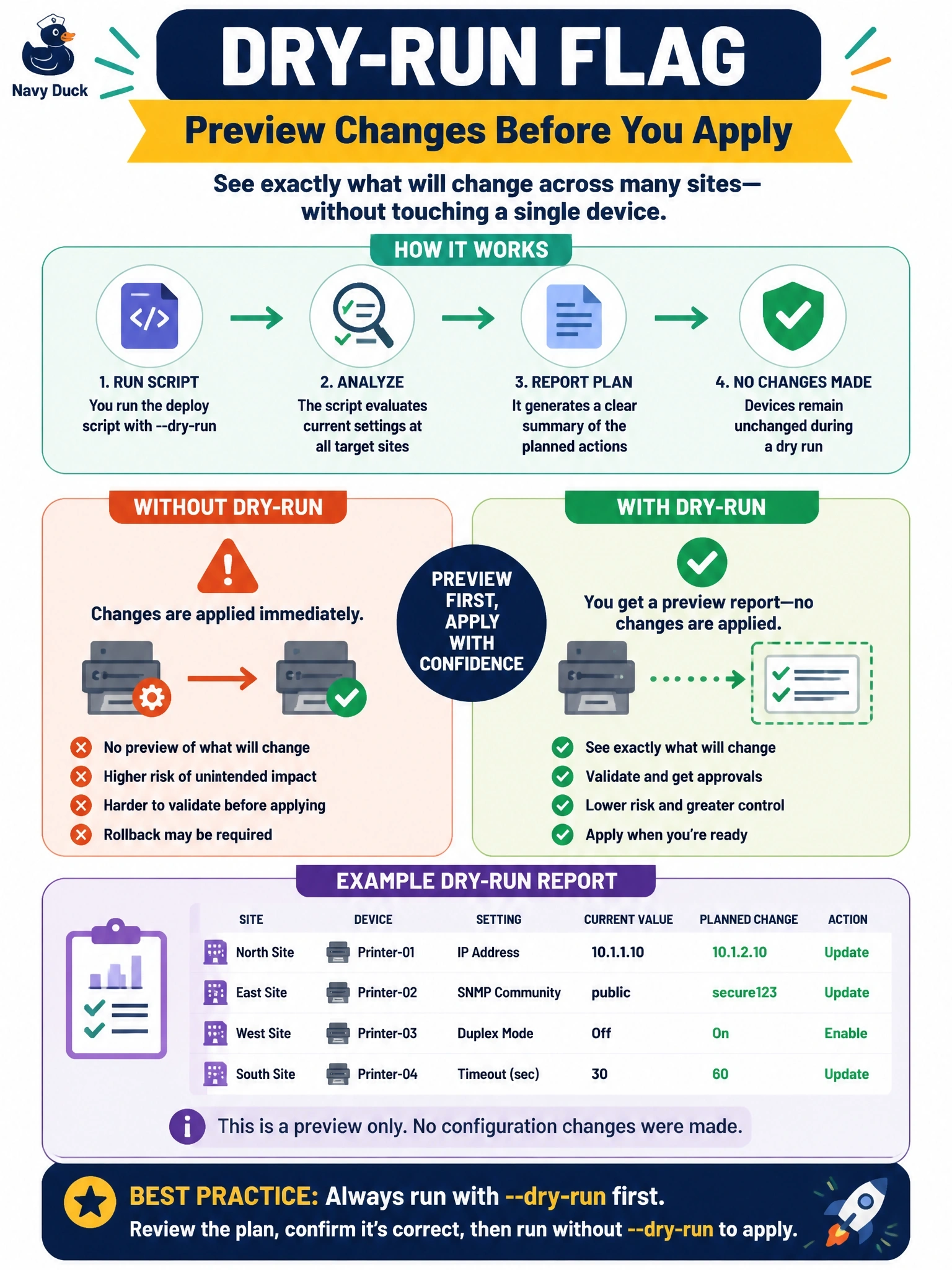
Use the dry-run flag so you can preview printer changes without touching devices. You'll see what would happen first, then run it for real only when the plan looks right.
Full Explanation
Fire-station printer deploy scripts that can change device settings across many sites need safe preview capability before mutation. The dry-run flag that reports planned actions without applying configuration changes lets operators inspect intended diffs—target devices, settings, and order of operations—then run again without the flag when preview is correct. The force flag that skips all confirmation and writes immediately increases blast radius; it is the opposite of preview controls. Removing parameters so every run always mutates production eliminates ability to inspect first and is unsafe for multi-site municipal printer fleets. The debug flag that only prints the operator's password leaks secrets and still does not preview device configuration changes. Exam caveat: dry-run output must reflect same targeting and policy checks as real runs (including skipped devices); misleading dry-run is worse than none. Combine dry-run with change tickets and limited pilot sites when rolling out printer baselines. Operational check: execute with dry-run against lab printer set, compare reported changes to desired baselines, confirm no device settings changed, then apply to pilot fire station and verify print services before wider deployment.