
A cloud bill rises in months when customers upload large files, and it does not rise the same way when they only download. Which metering matches the uploads?
Select an answer to reveal the explanation.
Short Explanation
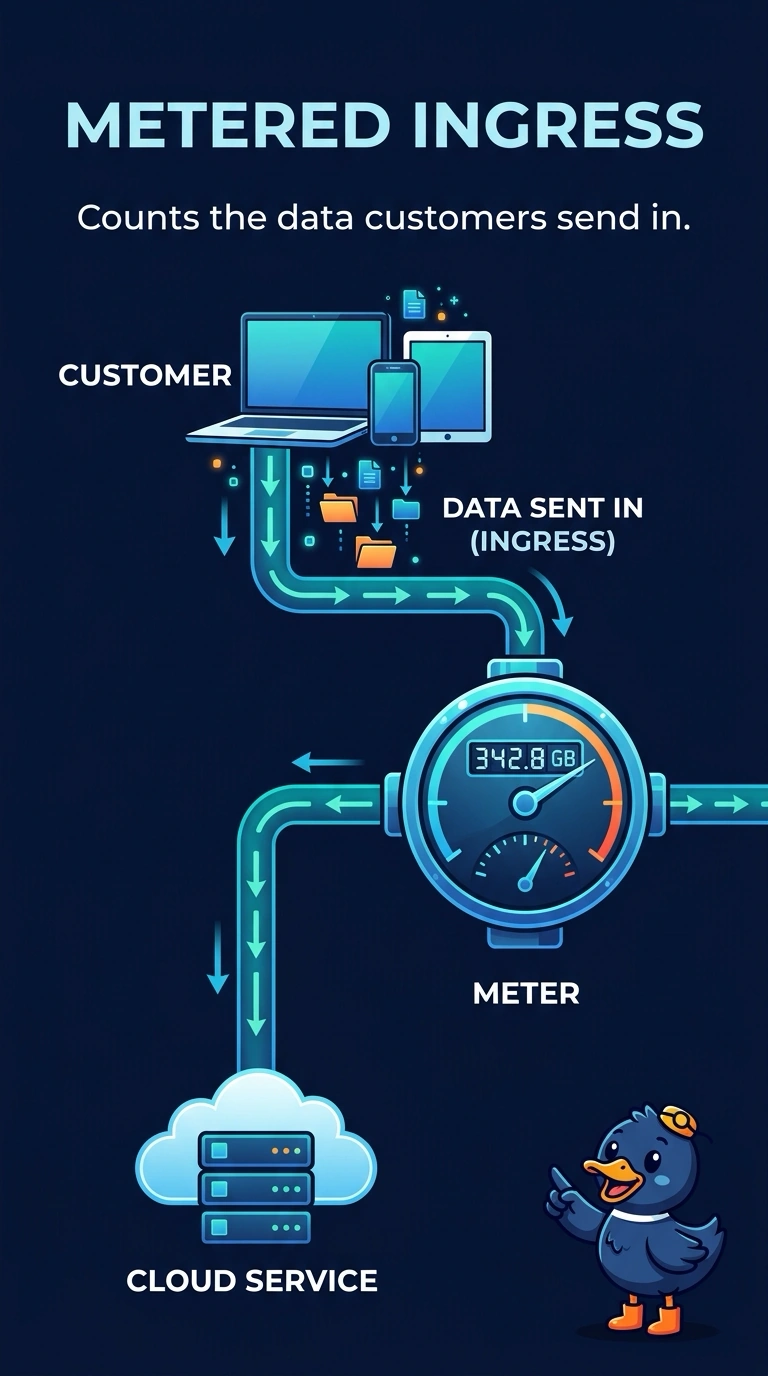
The bill moves when data comes in, and it stays quiet when data only goes out. You are being metered on ingress. The outbound meter, a disk mirror, and a port-test plug are not that upload charge.
Full Explanation
Ingress is data coming into the service. Uploads from customers are that inbound data, so a bill that rises with uploads and not with downloads matches metered ingress. Egress is data leaving the service. Calling it the charge for uploads swaps the two directions. A RAID mirror is local disk protection. It does not set a cloud upload price. A loopback plug tests a port. It does not meter files. Exam caveat: a provider can meter both directions, and many public clouds do not charge for inbound data at all, but this stem describes a provider that does. It rises on uploads, so the direction to name is ingress. Operational check: compare a month of heavy uploads with a month of downloads and confirm the charge follows the inbound traffic. Read the bill's inbound line before you change an outbound setting. Write what you found on the ticket.