
A video shop's cloud bill rises in months when a lot of data leaves the provider and falls when little data leaves. Which cloud trait is that bill?
Select an answer to reveal the explanation.
Short Explanation
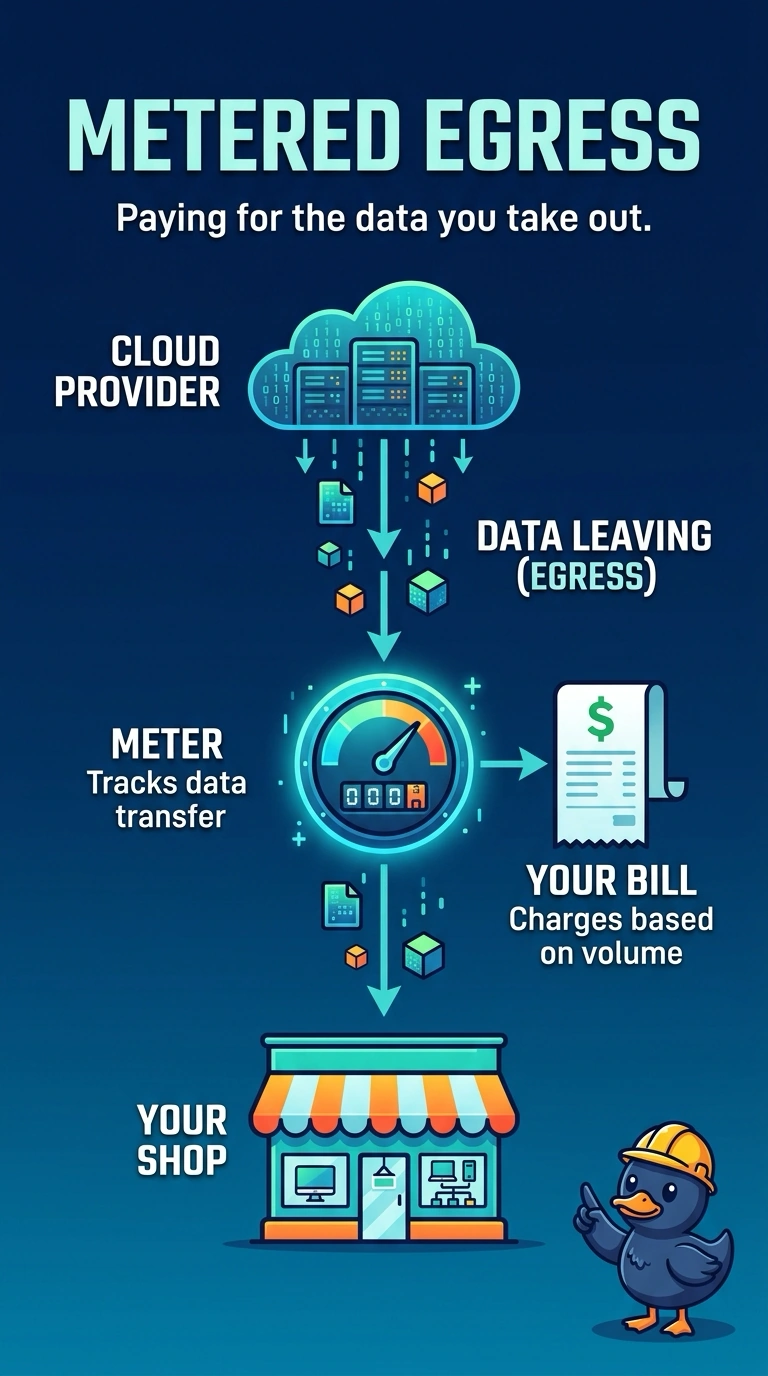
The bill follows the trucks leaving the warehouse, not the number of rooms you rented. You are looking at metered egress. Scaling the machine count, sharing the building, or calling the cloud private does not price the data that heads out the door.
Full Explanation
Metered egress is a charge based on the volume of data that leaves the cloud provider. A bill that rises when a lot of data leaves and falls when little leaves matches that trait. Rapid elasticity is the ability to add and remove resources as demand changes. It is not the name of the outbound data fee. Multitenancy means several customers share the underlying systems. Sharing does not set the price from this shop's outbound traffic. A private cloud runs for one organization. The label does not by itself meter every byte that leaves, and this bill is specifically tracking data volume. Exam caveat: ingress is often priced differently from egress. Read which direction the invoice is measuring before you redesign the application. Operational check: compare a month of heavy downloads by customers with a quiet month and confirm the outbound data line is what changed. Pull the outbound-data line out of the invoice and attach it to the ticket for the month you compared. Ask billing which direction they meter before you change the application.